Discover how halal earnings and consumption influence the acceptance of duʿā in Islam. Learn how mindful choices can strengthen your spiritual connection.
"And your Lord said: Call upon Me, I will respond to you." (Surah Al-Mu’min -40:60)
Allah did not say He might respond. He said He will. This is a direct promise, not reserved for the scholarly or the saintly, but open to anyone who turns and asks. Du'a is perhaps the most honest thing a believer does. At that moment, there was no performance, no audience and no pretense. Just a person and their Lord (Allah). It is the purest admission that we are insufficient on our own, and Allah alone is enough.
Which is why it matters so deeply when that door feels closed.
The tradition does not leave us guessing about why Scholars across centuries have pointed to the same cause with remarkable consistency; not weak faith, not distracted prayer, but something far more daily and concrete: what we earned, what we ate, what we brought into our homes and called our own.
The Prophet ﷺ made this vivid in a way that is hard to forget once you have heard it.
The Messenger of Allah ﷺ said:
“O people, Allah is Pure, and He accepts only what is pure. Allah has commanded the believers as He commanded the Messengers, saying: ‘O Messengers, eat from the good (halal) things and do righteous deeds,’ and ‘O you who believe, eat from the good things We have provided for you.’
Then he mentioned a man who travels a long distance, disheveled and dusty, raising his hands to the sky, saying: ‘Ya Rabbi, Ya Rabbi,’ while his food is unlawful, his drink is unlawful, his clothing is unlawful, and he is nourished with unlawful, so how can he be responded to?” —Sahih Muslim, Hadith 1015
The man is not negligent. He travelled, he was worn, he called on Allah with his hands raised and his need real. And yet. The verse in Surah Al-Mu’min promises a response. The hadith shows us what stands between the promise and its arrival. Both are true together, and sitting with that is where this conversation begins.
The Spiritual Weight of Du’a
There is something a person does when everything else has been tried. When the plan did not work, when the people around them could not help, when the situation was genuinely out of their hands, they sat quietly, or they stood with their palms open, and they asked Allah. Not because it is scheduled. Because there is nowhere else to turn.
That is du'a at its most real. And that rawness is precisely why Allah elevated it.
Duʿā is not a formality in Islam. The Prophet ﷺ called it the essence of worship — mukh al-ʿibādah — the very brain of it. It is the most direct form of worship a believer has with no intermediary, no appointed hour, and no specific language required. Any moment qualifies. Any need qualifies. The door does not close between salah times or outside the mosque or when life is messy. It stays open.
Allah does not tire of being asked. The hadith in Tirmidhi says, “He is displeased with the one who does not ask of Him”, which is unlike anything we know from human relationships. Repeated requests wear people down eventually. With Allah, the asking itself is beloved. It is an acknowledgment. It is a person saying, out loud or in silence, that they know who is actually in control.
So when du'a feels consistently unanswered, the first question is not whether Allah is listening. The first question is what we are bringing to that moment.
Relationship between Halal Living and Du'a.
Duʿa is a demonstration of the utter dependence of a believer on Allah. Although sincerity, humility and consistency are important. But they are not the only requirements to be accepted. An inner and outer life of the believer should be in balance, and it also involves adherence to the halal principles.
When one eats and drinks only the lawful and pure things, his heart is inclined of necessity to obedience and to remembrance. When, however, haram is eaten, usually without realisation, the heart becomes clouded and spiritual concentration may be diluted. The hadith is not intended to scare but rather to demonstrate the significance of a life that facilitates worship. Haram earnings do not simply affect the account. They soften the conscience in ways that tend to spread — in worship, in character, in the quality of what a person asks of Allah and what they expect in return.
Haram earnings do not simply affect the account. They soften the conscience in ways that tend to spread — in worship, in character, in the quality of what a person asks of Allah and what they expect in return.
Seeking to know before you earn, not after, is a religious obligation. Once a source is known to be impermissible, ignorance can no longer serve as a shield.
Influence of Pure Consumption on Spiritual Relationship.
Spiritual Awareness and Worship
The rewards extend beyond physical health when a believer makes a habit of making the right choices of halal. Spiritual awareness, sincerity in worship and inner peace all increase noticeably. Practices such as salah and duʿa are also enhanced with the aid of a pure lifestyle.
Heart and Moral Direction
Consumption and spirituality are not entirely abstract concepts. A heart that is fed on halal is easier to guide towards the right path, easier to do good, and basks in the mercy of Allah. On the other hand, this aspect should not be overlooked because it would result in a sense of disconnection that is detrimental to faith and practice.
Halal Earned, Haram spent
Halal living doesn’t involve just food but also clothing, which points to everything a person wraps themselves in and, by extension, what halal earnings are used to fund. A person may work with complete integrity and then direct those clean earnings toward what Allah has forbidden. The two sides of the transaction are not sealed off from each other.
Riba-based Transactions
Using a halal salary to service an interest-bearing loan, for a car, property, or consumer credit, is one of the most common crossings. Many Muslims assume the contamination is only in the earning. The spending channel carries its own weight.
Explicitly Forbidden Entertainment
Spending on alcohol, gambling platforms, or similar categories does not become permissible because the money came from a legitimate job. The source is clean; the destination is not.
Products with Haram Ingredients or Certification Issues
This is where daily shopping gets complicated. Gelatin from pork, E-numbers derived from forbidden sources, alcohol in flavorings, these appear in ordinary supermarket products with no warning on the front of the pack. Most people do not check.
Extravagance Beyond Measure
Israf, waste and excess, is condemned directly in the Quran. Directing halal earnings into conspicuous consumption while others lack the necessary means is its own form of misuse.
The operative principle is simple: halal money does not become sadaqah merely by being spent. Where it goes matters as much as where it came from.
Identifying Halal- The Contemporary Problem.
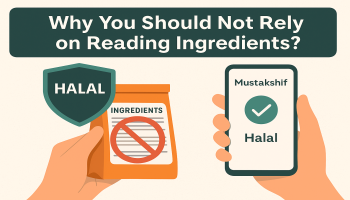
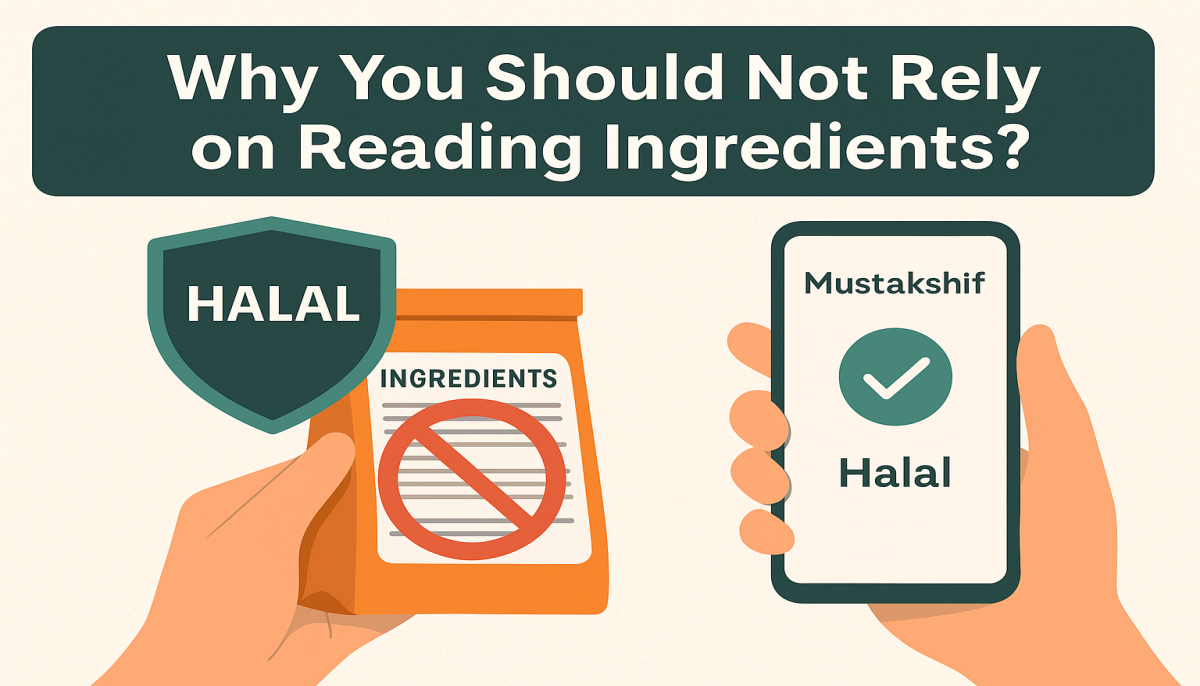
Previously, it was easy to locate halal food. The food industry in the world today is more sophisticated. Listing ingredients on products may be of a scientific or coded additive or of derivatives that cannot easily be traced. This is a complexity that many Muslims are struggling to cope with.
Certain products that appear to be acceptable on the surface might be classified under the doubtful category when examined closely. In this case, Islam recommends precautions. Another popular maxim is to abandon the dubious in favor of the unambiguous, which is present in collections like Jami at-Tirmidhi. This piece of advice is particularly applicable in cases when the food labeling is unclear.
Therefore, a halal lifestyle today does not just require a mindset, but it also demands sensitization and exertion. It demands proactive measures of knowing what we consume and making sure that it is in line with Islamic ethics.
Why Distrustful Things Backen the Faith.
It is a fundamental obligation to avoid haram, but Islam also supports believers to avoid dubious issues. This safeguards both faith and conscience. The individual who deliberately tries to shun uncertainty cultivates discipline and mindfulness that makes him even closer to Allah.
The skeptical consumption is not necessarily an outright sin, though it can eventually erode the sense of right and wrong in an individual. This may weaken the quality and the sincerity of worship. Living a life of clarity instead of convenience is an indication of a desire to live so as to please Allah.
This principle is directly connected with the acceptance of duʿa. When lifestyle is characterized by prudent observance of halal, it forms a base for genuine and acknowledged supplication.
Incorporating Halal Awareness in Life.
Halal consciousness does not entail perfection but consistency in life. Harmless, purposeful decisions may make a significant spiritual difference. Being conscious of what one consumes, scrutinizing the origin of products and choosing transparency over doubt are realistic measures towards a purer life.
A manual review of all products in a fast-paced world can be laborious and cumbersome. Technology can help.
Mustakshif removes the guesswork from the shelf. Scan a barcode or search a product name and get immediate clarity on ingredients, certifications, and flagged components, before the product enters your home and becomes part of what nourishes you.
Your halal earning deserves a halal destination. One scan before purchase is a small act inside a much larger intention.
Verdict: Select Purity, Strengthen Your Du’a.
The teachings of the Prophet (peace be upon him) are straightforward and sympathetic. Allah is a lover of purity, and he calls his servants to seek it in all spheres of their lives. Living in an uncertain world, wearing halal is a strong statement of faith. It defines what we eat and how we relate to Allah.
And by earning halal, and avoiding haram, and by being watchful about suspicious things, you precondition the hearing and acceptance of your du’a. By doing so, you get spiritual satisfaction and eternal peace.