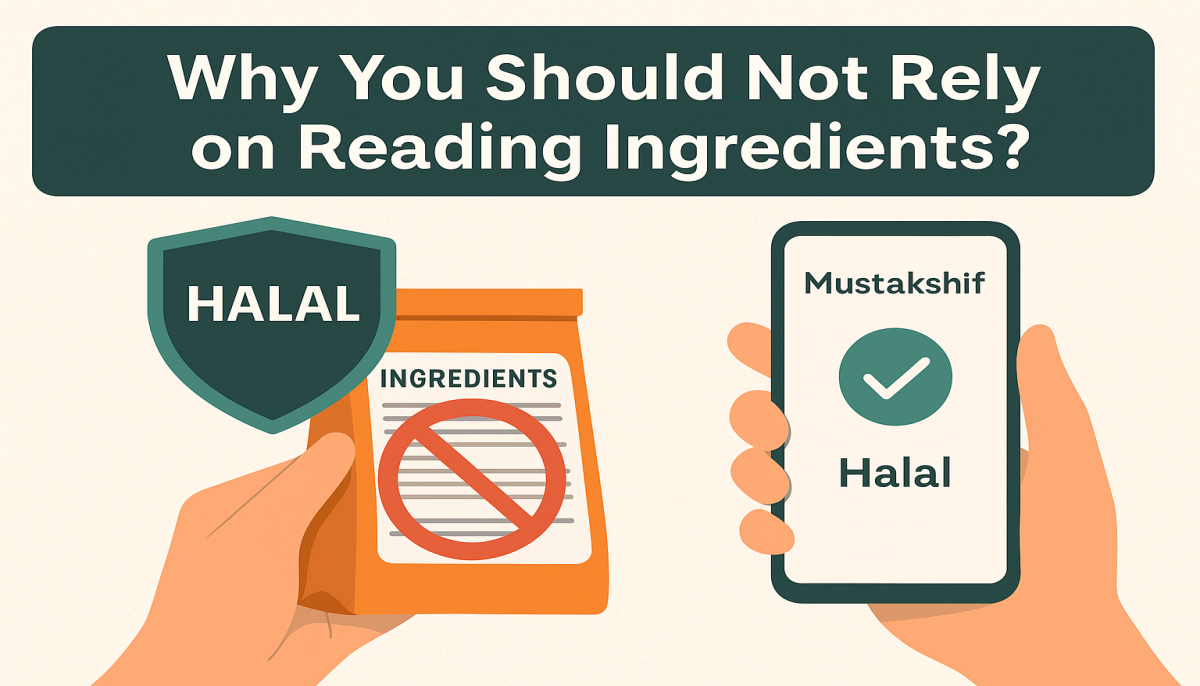
How to really check if a Product is Halal?
Most people think the easiest way to confirm if something is halal is by reading the ingredients on the packaging. Sounds simple, right? Just flip the packet, scan the list, and you’re done.
But here’s the truth: reading ingredients alone doesn’t guarantee that the product is halal. There are hidden risks, missing details, and things you can’t see on the packaging. So, how do you really know if a product is halal or not?
If you want to make sure your food is truly halal, you need to go beyond what’s printed on the packet. In this blog, we’ll cover:
- Why reading ingredients alone is risky
- What hidden ingredients you should know about
- How to really check if a product is halal
- How Mustakshif makes it easy for you
Some Common Causes
1. Ingredients Don’t Tell the Whole Story
When you look at a product’s ingredients, you usually see simple words like sugar, flavourings, or colour. At first glance, everything seems fine. But here’s the problem: ingredients only show the name or e-code, not the source or how it was made.
Two key questions matter for halal compliance:
- Where did the ingredient come from? Was it sourced from animals, plants, or something else?
- How was it processed? Was the process halal, or did it involve haram materials or alcohol?
Unfortunately, the ingredient name doesn’t answer these questions.
Why This Matters
- Some ingredients are derived from animals, but the name doesn’t say which animal.
- Even if the ingredient sounds plant-based, it could have been processed with haram materials.
Examples That Prove the Point
- E441 – Gelatin: Commonly found in desserts, jelly, gummy lollies, yoghurts, and even capsules. Gelatin comes from animal bones or skin. If it’s from pork, it’s haram. If it’s from beef, it’s only halal if the cow was slaughtered according to Islamic law. The ingredient list just says gelatin or E441; it never tells you the source.
- E120 – Carmine (Cochineal): A natural red colouring used in drinks, sweets, and cosmetics. Sounds harmless, right? But it’s made by crushing insects (cochineal beetles). Clearly haram for Muslims, yet the ingredient list simply says E120 or colouring (natural).
- Flavouring: When you see “natural flavours” or “flavouring”, it sounds plant-based. But these can come from meat, alcohol, or other animal extracts. For example, a “natural vanilla flavour” might use alcohol as a solvent.
- Colour Additives: Some colours, like E153 (carbon black), are plant-based, but others, like E120, are insect-based. The name doesn’t explain which one you’re getting.
2. Use of Synonyms of Alcohol
Alcohol isn’t always written as alcohol. You might see:
- Rum
- Liqueur
- Syrup
- Stubby flavour
These are used in chocolates, sauces, desserts, and even ice creams. If you don’t know these names, you’ll miss them or wrongly consider the product halal.
3. Some Ingredients Don’t Even Appear in the Ingredient List
Some ingredients are used during processing and don’t make it to the final printed list.
Example: Apple juice sounds like the safest drink, right? Just apples and water, maybe a bit of sugar. But the truth is more complicated. Many commercial juice manufacturers use animal-based products during the filtration process, and you’ll never see this mentioned.
Why Isn’t Gelatin Listed?
- Gelatin acts as a processing aid, not an actual ingredient that remains in large amounts.
- Food regulations in many countries don’t require companies to declare processing aids in the ingredient list.
- So, the final apple juice bottle just says: Ingredients: Apple juice concentrate, water, sugar. Looks perfectly safe but is it really halal?
Halal Concern
- If the gelatin is from pork, it’s definitely haram.
- If it’s from beef but not halal-slaughtered, it’s still haram.
- Even if only traces remain, the process matters in Islamic law.
The Big Problem:
You can’t tell by reading the ingredients list. You can’t guess by looking at the drink. The only way to know is by asking the company if their filtration process uses halal-certified gelatin or by using a verified source like Mustakshif that checks for you.
4. Ingredients Information Can Fade or Rub Off
Products stay on shelves for months. Over time:
- Ink fades
- Printing smudges
- Stickers peel off
- Some ingredient details become unreadable
You might pick up a product and only see half the ingredient list. It looks fine at first glance, but the missing section could have listed something haram like E441 (Gelatin) or alcohol-based flavouring.
Why this is a Big Risk:
- Even a single missing word can change the halal status.
- Faded printing is common on clearance items or products stored in heat and humidity.
5. Supplier Changes without Notice
Companies frequently change ingredient suppliers for:
- Cutting costs
- Improving supply chain
- Adjusting to shortages
But here’s the problem: The ingredient name doesn’t change even if the supplier does.
Why This Matters for Halal
Halal status isn’t just about the ingredient name it depends on source and process.
Example:
- Today, a juice company may use a halal-certified supplier for gelatin.
- Tomorrow, they switch to a non-halal source for cost reasons.
The ingredient list? Still says “gelatin.” You’d never know unless you check every time.
Reality Check:
- Even if you confirmed it once, it might not stay halal.
- Next batch = new supplier = possible haram risk.
So, How Do You Stay Updated?
- Option 1: Contact the manufacturer every time (long, stressful).
- Option 2: Use Mustakshif, which monitors these changes for you.
- When a product that was halal yesterday becomes haram today due to a supplier change, Mustakshif updates its system immediately. Mustakshif provides you with a real time updated scan. You scan once, and you always get the latest halal status without guesswork.
Other Things to Consider When Checking Halal Status
- Flavourings: Many artificial flavours use alcohol as a solvent.
- Colours: Some food colourings (like carmine) come from insects.
- Emulsifiers: Common in chocolate and bakery items; sources vary.
- Enzymes: Used in cheese, bread, and dairy products; can come from animals.
- Vegan ≠ Halal: Vegan products don’t contain meat, but they may include alcohol or be processed with haram substances.
How Do You Check if a Product is Halal?
Here are the main ways people try:
1. Look for Halal Certification
If a product has a trusted halal logo, that’s the easiest sign. But:
- Some logos are fake or unrecognised.
- Some certifications only apply in certain countries.
2. Contact the Manufacturer
Email or call and ask:
- Where the ingredients come from.
- If alcohol or haram sources are used in processing. The problem? It takes time, and answers can change anytime.
3. Do Research Yourself
Search online, learn ingredient codes, and keep track of changes. But this is hard work, and information gets outdated quickly.
4. Use Mustakshif (The Smart Way)
Skip the stress. One barcode scan with Mustakshif, and you get:
- Latest halal status
- Real-time updates if suppliers or ingredients change
- Verified info from trusted sources
How Mustakshif Helps You Stay Updated
By now, you’ve seen how hard it is to know if a product is truly halal. You can’t realistically email every company, research every E-number, or keep track of supplier certifications every time you shop. That’s where Mustakshif comes in.
What is Mustakshif?
Mustakshif is a multi-featured halal scanner app designed to make your shopping stress-free. It gives you real-time halal status of any product by simply scanning its barcode.
How Does Mustakshif Work?
· Scan the Product Barcode
Open the Mustakshif app and scan the barcode of the item you want to check. Instantly, the app shows you whether the product is Halal, Haram, or Doubtful.
· Verified Information, Not Guesswork
Mustakshif collects data from multiple reliable sources, including:
- Halal certification bodies
- Manufacturer disclosures
- Supplier and processing details
· Automatic Updates on Changes
If a product that was halal yesterday becomes haram tomorrow because of a supplier change or ingredient modification, you don’t have to do anything. Mustakshif updates its database and gives you the latest status in real time. The company checks include processing aids, alcohol-based flavourings, E-number origins, and filtration methods. Even things not listed on the packaging are considered in evaluation.
· Global Product Coverage
Mustakshif works across a wide range of regions and brands. Perfect for frequent travellers or anyone shopping in different markets.
Conclusion:
This blog explains the hidden risks behind relying only on ingredients of a product—like undisclosed processing aids, alcohol under different names, and supplier changes—and why these factors affect halal status of a product. It also guides you toward a practical solution: using Mustakshif for accurate, real-time halal verification so you can make informed, confident, and worry-free choices every time you shop.
FAQs
Is Vegan Always Halal?
No. Vegan means no meat or animal products, but it doesn’t guarantee no alcohol. Many vegan products use wine or alcohol in sauces, or flavourings with alcohol.
How Can Alcohol Be in Food Without Being Listed?
If it’s used in small amounts for flavouring or processing, it might not appear on the product packaging. It’s legal in many countries, but still haram.
Why Do Companies Use Beef Gelatin in Juice?
It helps clarify the juice by removing impurities. Even if the gelatin doesn’t remain in the final product, it affects the halal status.
What about “Natural Flavours” on Packaging?
This is a big grey area. Natural flavours can come from plant or animal sources. Unless you check with the manufacturer, you can’t be sure.
Is Halal the Same Everywhere?
Not always. Some countries allow alcohol in small amounts and still consider it halal. But many Muslims don’t accept that. That’s why updated info matters.