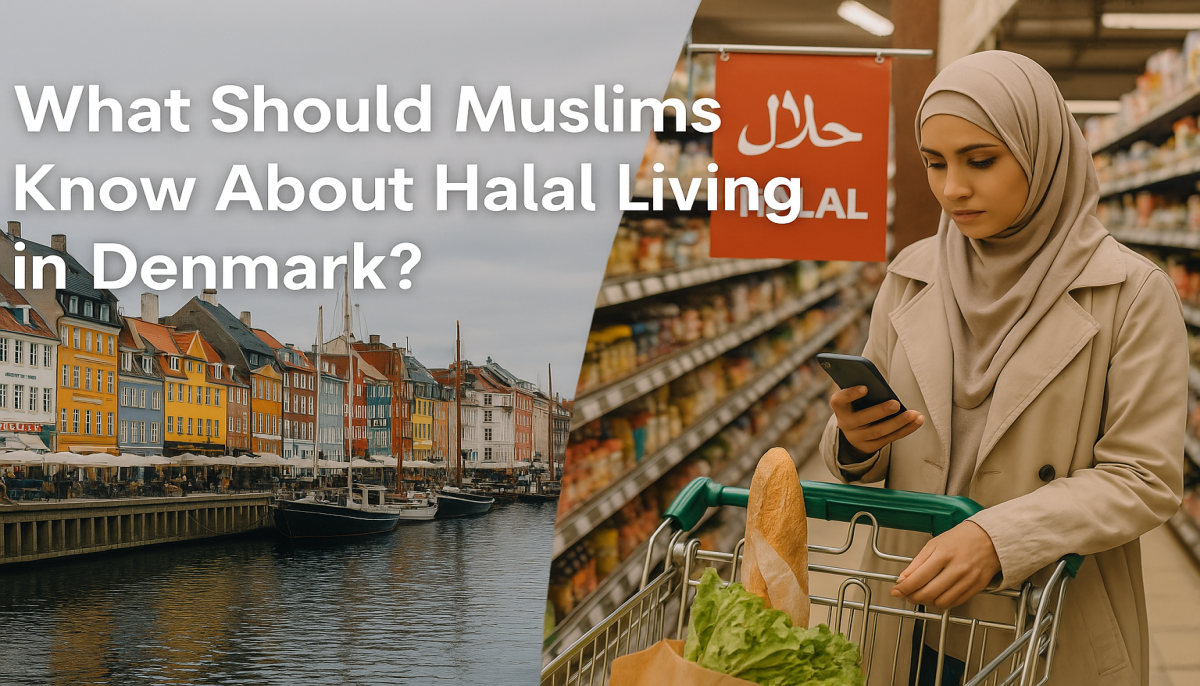
Denmark is known for its high quality of life, clean cities, and efficient systems. From the colourful streets of Copenhagen to the academic hubs in Aarhus and Odense, it offers a lot to residents and visitors alike. But for Muslims trying to live halal (whether they’re tourists, newly arrived immigrants, or international students), there are a few things worth knowing.
While Denmark is a secular country with a predominantly non-Muslim population, it has a growing Muslim community. This has led to the development of halal-friendly services in many areas, though they may not always be obvious.
This guide covers everything you need to live halal in Denmark, from food and prayer spaces to modest shopping and your legal rights.
Why Denmark Works for Halal Living?
- Safety & Peaceful Society: Copenhagen ranks high in the Global Peace Index—welcoming to Muslim travellers.
- Respect for Diversity: Danish society encourages freedom of expression and religious openness.
- Transport & Infrastructure: Excellent transit options (metro, bikes) make navigating halal-friendly areas easy.
Quick Glance at Muslims in Denmark
- Muslims make up around 5.5% of the population, mostly from Turkey, Pakistan, the Middle East, and North Africa.
- The majority live in cities like Copenhagen, Aarhus, Odense, and Aalborg.
- Denmark has over 150 mosques and Islamic centres.
- Halal options exist, but you need to know where and how to find them.
Halal Food Options in Denmark
Finding halal food isn’t hard if you know where to look. In larger cities like Copenhagen and Aarhus, you’ll find halal restaurants, grocery stores, and butchers in neighbourhoods with dense Muslim populations. Nørrebro in Copenhagen is one of the most Muslim-friendly districts, full of Turkish and Middle Eastern eateries.
Halal-friendly restaurant types:
- Turkish kebab shops
- Lebanese and Syrian grills
- Pakistani and Indian restaurants
- Somali and Moroccan food spots
- Fried chicken joints with halal certification
Popular Halal Restaurants in Copenhagen:
Top districts for halal eats: Nørrebro (Copenhagen) and Gellerup (Aarhus). These neighbourhoods feature Turkish, Lebanese, Indian, Pakistani, Somali and Moroccan restaurants.
Must-visit spots:
· Al Diwan – Pakistani cuisine hotspot
· Liban Cuisine – Burgers, wraps, 100% halal, near Nørrebro
· Street food & snacks: Turkish kebabs, halal fried chicken, and halal-certified sweets are easy to find.
Grocery stores & butchers: Look for “halalslagter” signage. Mainstream chains like Bilka, Føtex, and Netto occasionally stock halal meat and frozen options in Muslim neighbourhoods.
Where to Pray in Denmark?
Denmark has mosques in every major city, though they are often low-profile buildings or community centres.
Main mosques in Copenhagen:
- The Grand Mosque of Copenhagen (Det Islamiske Trossamfund) – The largest mosque in Denmark, with minarets and regular services.
- Hamad Bin Khalifa Civilisation Center – A large mosque funded by Qatar, offers space for prayer, Islamic education, and events.
- Mosque in Nørrebro & Tingbjerg – Smaller but accessible for daily prayers.
University Prayer Rooms:
Campuses like the University of Copenhagen, DTU, and Aarhus University provide prayer spaces for students, though you may need to ask student services for access.
Modest Clothing & Islamic Shops
Copenhagen's Nørrebro and Ishøj, as well as Aarhus's Gellerup, are home to Islamic stores that sell hijabs, abayas, and prayer clothes.
You’ll also find:
- Islamic books in Arabic, Turkish, Urdu, and Danish
- Perfumes without alcohol
- Miswak, prayer beads, and Quran speakers
For online modest fashion, platforms like Modanisa and Haute Elan deliver to Denmark.
Scan Halal Products with Mustakshif
Mustakshif is more than just a barcode scanner. It’s a multi featured halal scanner for every aspect of halal living. With a mission to help Muslims globally live aligned with Shariah, Mustakshif offers transparency and support through cutting-edge technology and trusted Islamic scholarship.
Key Features of Mustakshif
- Powerful Barcode Scanner
Use AI-powered scanning to instantly verify the halal status of food, cosmetics, toiletries, and medications. Mustakshif translates ingredients into English, checks them against a 3‑million‑entry database, and flags items as Halal, Haram, all verified by a Shariah board.
- Ingredient Translator & Search Tool
Struggling with Danish or foreign labels? Mustakshif translates ingredients and allows manual search for confident product verification.
- Customise to Your Needs
Apply filters for vegetarian, allergen, gluten‑free, or kosher preferences. Mustakshif adapts to your dietary choices and suggests suitable alternatives instantly.
- Halal Restaurant & Mosque Finder
Beyond groceries, Mustakshif guides you to halal restaurants, takeaways, mosques, wudu areas, and prayer spaces near you, complete with ratings, opening hours, reviews, and directions.
- Ramadan & Islamic Lifestyle Features
Includes prayer and Azan notifications, Qibla direction, virtual Tasbeeh, Quran audio, live feeds from Makkah & Madina, English/Arabic Dua phrases for Salah, and e‑gift greetings.
- Trusted Database & Verification Process
Everything in Mustakshif is backed by its multilingual AI and verified by a dedicated Shariah board. Ingredient listings are correctly confirmed through manufacturer contacts when needed.
Free & Premium Options
The app is free to download and use. A premium version removes ads, offers advanced filters, deeper ingredient insight, and rewards for scans supporting the platform’s openness and sustainability.
Just open the Mustakshif App, scan the barcode, and get instant classification:
- Halal
- Haram
- Vegetarian
- Gluten-Free
- Kosher
The app is especially useful when reading Danish ingredient labels becomes difficult or when shopping in regular supermarkets. It works across categories: food, snacks, personal care items, cosmetics, and even medicines.
Mustakshif- Halal Place Finder in Denmark
The “Halal Places Near Me” feature on Mustakshif helps you find:
- Halal restaurants
- Takeaways and grill houses
- Grocery stores with halal products
Features that help:
- Sort by rating or opening hours
- Read verified user reviews
- Filter by cuisine type (e.g., Turkish, Pakistani, Somali)
- See whether the restaurant sells alcohol or not
Islamic Education and Mosques with Classes
Some mosques in Denmark offer Quran classes for children and adults of immigrants, Arabic lessons, and halaqahs. The language of instruction is typically Arabic or Danish.
Institutes to check:
- Det Islamiske Trossamfund (Copenhagen)
- Islamic Center Aarhus
- Gellerup Moske (Aarhus)
These institutions often have weekend schools and host events during Ramadan and Islamic holidays.
Ramadan and Eid in Denmark
Muslims immigrants in Denmark observe Ramadan with full community involvement. Mosques serve iftar meals, and some Islamic centres organise night prayers (taraweeh).
Things to expect during Ramadan:
- Iftar at community mosques
- Dates and halal Ramadan food in local ethnic stores
- Taraweeh in all major mosques
- Quran recitations in different languages
Eid Celebrations:
- Large Eid prayers in sports halls or mosques
- Family-style celebrations in parks
- Halal Qurbani services booked through registered butchers
Halal Travel Tips for Tourists in Denmark
As a tourist, halal travel in Denmark is the smoothest in major cities.
Tips:
- Stick to halal-heavy districts like Nørrebro (Copenhagen) or Gellerup (Aarhus)
- Use Mustakshif to avoid haram ingredients
- Carry a travel prayer mat. Masjids can be sparse in small towns
- Ask locals for directions to halal eateries. They’re friendly and used to such questions
- Choose vegetarian or seafood options where halal meat isn’t confirmed
Muslim Student Life in Denmark
Denmark is a top destination for higher education. Universities are inclusive, and student unions often support cultural and religious diversity.
What’s available?
- Muslim student groups (MSAs)
- Prayer rooms in university buildings
- Support for observing Ramadan
- Halal food in or near campus cafeterias
Popular universities like DTU, The University of Copenhagen, and Aarhus University all have sisable Muslim student populations.
Muslim immigrants Rights and Legal Considerations in Denmark
Denmark protects religious freedom under its constitution, but cultural debates around Islamic practices are ongoing. Still, many Muslims live freely and practice their faith without interference.
Key legal facts:
- You can wear the hijab freely
- Halal slaughter is legal but only under veterinary supervision
- Schools and workplaces may not automatically offer prayer breaks discussion is needed
- Islamic marriages are not legally recognised unless also registered at the civil office
- Burqa/niqab bans exist in public institutions (since 2018), but hijab is unaffected
Despite occasional political tension, the legal structure generally respects religious rights.
Challenges Muslims Tourists and Immigrnts May Face in Denmark
While Denmark offers halal options, religious freedom, and modern infrastructure, some Muslims—especially newcomers—can face challenges when trying to live according to their values. These aren’t always barriers but rather things to be aware of and prepare for:
1. Limited Halal Options in Smaller Towns
Outside of major cities like Copenhagen, Aarhus, or Odense, halal-certified restaurants and stores become much harder to find. In smaller towns, Muslims often rely on vegetarian meals or seafood and shop for halal meat during occasional city trips.
2. Language Barrier
Danish is the national language, and while many Danes speak English well, product labels, signs, or official paperwork are usually in Danish. This can make identifying halal ingredients in food and cosmetics more difficult without tools like the Mustakshif app.
3. Lack of Visible Prayer Facilities
Mosques in Denmark are often tucked away in residential neighbourhoods or industrial areas. You won’t find large public mosques on every corner. This can make it hard for tourists or students to find a nearby prayer space, especially during long days out.
4. Workplace Accommodation
While praying at work is not illegal, many workplaces don’t have designated prayer spaces or break policies that explicitly allow it. This requires individual negotiation with managers, which may feel uncomfortable for some.
5. Religious Dress Misunderstandings
The Hijab is generally accepted and worn freely, but the niqab or Burqa is legally banned in public spaces under the 2018 "face covering law." In rare cases, even hijabis may face social discomfort or judgment, particularly in less diverse areas.
6. Islamophobia and Social Bias
Though Denmark protects religious freedom, media narratives and political discourse have sometimes portrayed Muslims negatively. Some Muslims report feeling like they must constantly explain or defend their beliefs, especially in discussions about integration, gender roles, or halal practices.
7. Islamic Marriages & Legal Recognition
Marriages conducted only in mosques are not legally valid. Couples must also register their marriage with the Danish civil authorities. Some new immigrants or students are unaware of this and face complications later with housing, visas, or children.
Final Thoughts
Living halal in Denmark is not only possible, but it’s getting easier. Whether you’re exploring Copenhagen as a tourist, starting university in Aarhus, or building a life as an immigrant, the country offers options for practicing Muslims—if you know how to find them.
With tools like Mustakshif, a growing network of halal services, and a welcoming Muslim community, you can maintain your values and lifestyle wherever your journey takes you in Denmark.