Why Some Halal Stamped Products Are Marked as Mushbooh or Haram in the Mustakshif App
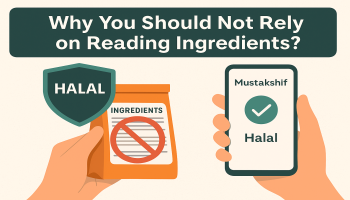
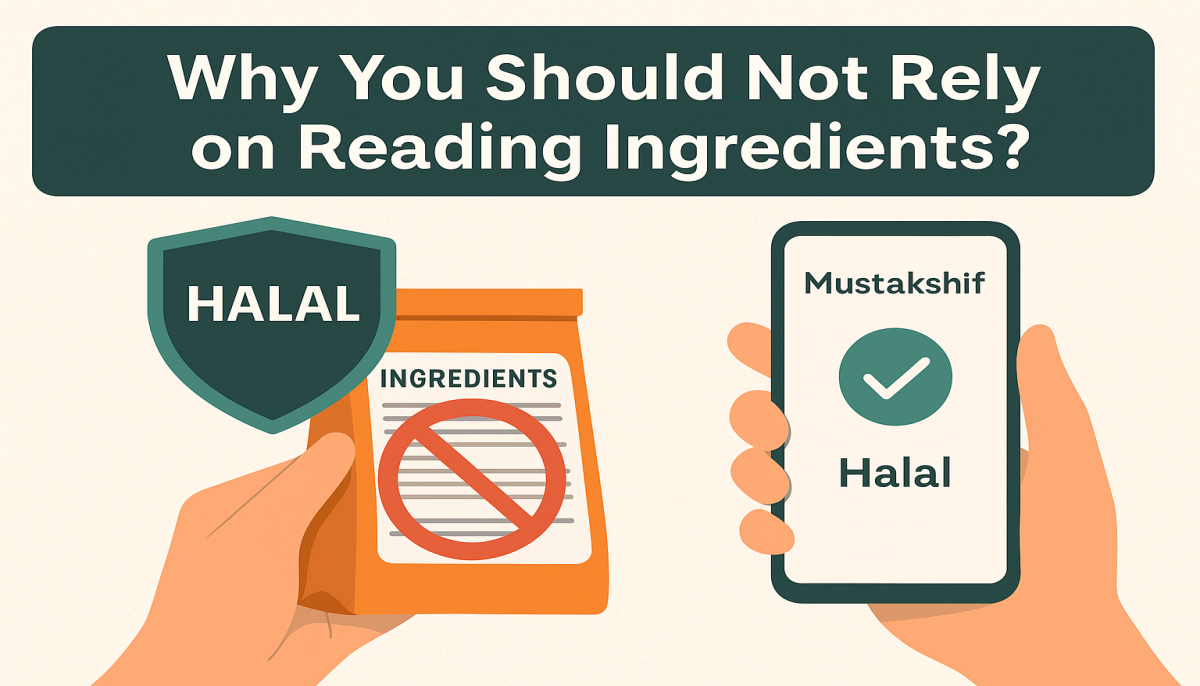
At Mustakshif, the mission is clear: to help Muslims find halal products by providing accurate, reliable information. However, many users may notice that some products that are halal-certified by authorities are flagged as mushbooh (doubtful) or even haram (forbidden). This can be confusing, but it’s essential to understand the principles behind how Mustakshif works and why these discrepancies can occur.
Manual Verification, Not AI
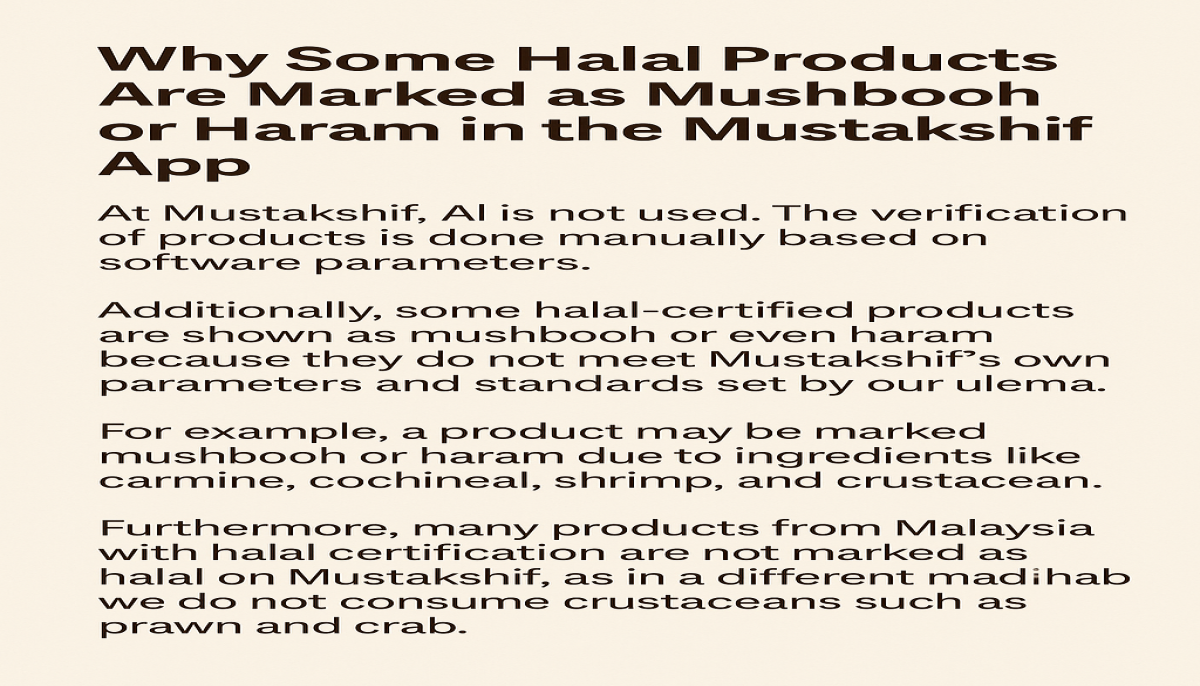
Unlike some halal product scanning apps that rely heavily on artificial intelligence (AI), Mustakshif does not use AI for its validation process. Instead, the team at Mustakshif carries out manual checks based on well-defined parameters set by scholars and experts. This approach ensures the accuracy and authenticity of each product’s halal status, but it also means that some products may not meet the specific standards set by Mustakshif, even if they have been certified halal by other authorities.
Mustakshif’s Unique Parameters
One of the most important factors that sets Mustakshif apart is its use of specific criteria for determining whether a product is truly halal. These parameters are not solely based on third-party halal certifications but are shaped by the collective knowledge and guidance of Mustakshif’s team of ulema (Islamic scholars). This approach is grounded in the understanding that halal certification can vary depending on different cultural interpretations and schools of thought.
For example, some halal products may carry a certification that declares them permissible to consume, yet they are flagged as mushbooh or haram in the Mustakshif app. This happens because these products may contain ingredients or additives that do not meet Mustakshif’s rigorous standards.
Halal Certification Does Not Guarantee Halal Status
It’s important to understand that halal certification does not guarantee that a product meets Mustakshif’s standards. Different certification bodies may have different criteria for what constitutes halal, and these criteria can sometimes allow ingredients that some Islamic scholars and communities consider impermissible.
For instance, in the case of food products from Malaysia, many are certified halal by local authorities. However, Mustakshif’s ulema adhere to stricter guidelines, which may result in products being flagged as mushbooh or haram due to the presence of ingredients that are problematic according to their standards.
Ingredients That Raise Concerns
A significant reason why certain halal-certified products are marked as mushbooh or haram on Mustakshif is the presence of ingredients such as carmine (also known as cochineal), lobster, and crustaceans. Here’s why these ingredients might raise concerns:
- Carmine/Cochineal: Derived from insects, this red pigment is commonly found in food and cosmetics. While halal certification may permit its use, many scholars consider it problematic due to its animal origin.
- Crabs and Crustaceans: In some Islamic schools of thought, particularly those within the Hanafi madhab, consuming crabs, lobster, and other crustaceans is considered haram or at least mushbooh. Even though products may be halal-certified in some regions, Mustakshif’s ulema may classify them as haram based on the teachings of certain madhabs.
- Other Ingredients: Various additives, flavorings, and colorings, even if they’re halal-certified, might be scrutinized by Mustakshif’s manual checks. This can include ingredients like alcohol-derived substances, gelatin, and others that may not meet the strict halal standards according to the ulema.
A Different Perspective Based on Madhabs
The diversity in Islamic legal schools (madhabs) further complicates the matter. The different madhabs (Hanafi, Shafi'i, Maliki, and Hanbali) have varying rulings on what constitutes halal and haram, particularly when it comes to certain types of seafood and other specific ingredients. Mustakshif takes these differences into account when marking a product, ensuring that it aligns with the standards of multiple schools of thought, not just one.
For example, products from Malaysia, while carrying a halal certification, might include ingredients that are acceptable in one madhab but not in another. As a result, Mustakshif may choose not to mark those products as halal, adhering to a more universal standard that accommodates diverse Islamic interpretations.
Conclusion
The Mustakshif app provides a unique and reliable resource for Muslims seeking halal products, but it’s crucial to understand the distinction between Mustakshif’s approach and conventional halal certification. While halal certification can be a useful guide, Mustakshif goes above and beyond by adhering to its own parameters, backed by ulema and scholarly standards. This ensures that the products listed on the app meet a higher level of scrutiny, which is why some halal-certified products are marked as mushbooh or haram. It’s a commitment to the authenticity and integrity of halal living, ensuring that users can confidently choose products that align with their faith and values.