Mustakshif Shariah Board Rulings on Benzyl alcohol E1519
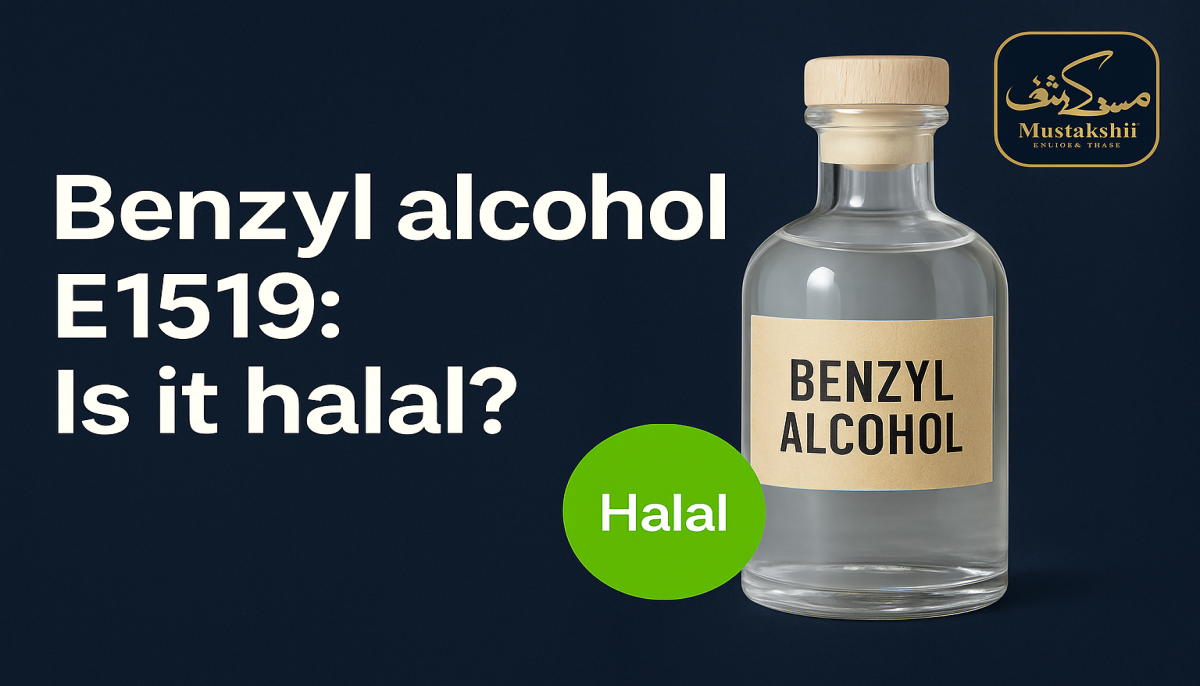
According to Mustakshif Shariah Board, Benzyl alcohol E1519 is classified as Halal This judgement comes from its sources and processing methods, which involve either plant derivatives or chemical synthesis, free from prohibited substances. No animal-based inputs or cross-contamination concerns make it compliant with halal dietary laws.
Islamic verdicts — clarity from scholars
While official fatwas specifically addressing E1519 remain limited, broader consensus on chemically synthesised compounds like benzyl alcohol supports its permissibility. Provided there’s no use of haram solvents or additives, the ingredient remains suitable for Muslim consumers.
Ingredient overview
Benzyl alcohol, designated as E1519, is an aromatic organic compound with the chemical formula C₆H₅CH₂OH. This flavouring agent is known for its subtle, sweet scent and serves dual roles in food production. It is also marked under several aliases, including phenylcarbinol, benzenemethanol, and benzyl hydroxide. The compound holds the E-number 1519 and is mainly employed in food for its flavour and shelf-extending qualities.
Origin and sourcing — from petals or lab benches
Benzyl alcohol finds its roots in two distinct worlds and is classified as both a flavour enhancer and preservative. It is extracted from natural oils such as jasmine or ylang-ylang, offering a plant-based origin. Alternatively, manufacturers create it synthetically, typically via hydrolysis of benzyl chloride or oxidation of toluene. Another route involves catalytic hydrogenation, reflecting its adaptable production options.
Purpose of consumables
In culinary settings, benzyl alcohol plays a dual role. It subtly lifts the aroma and taste of processed foods while also helping to delay spoilage. This twin action makes it an appealing addition for producers looking to maintain both quality and safety.
Final thoughts
Benzyl alcohol remains a valuable additive that serves a practical purpose in food production without breaching halal dietary codes. Its flexible sourcing and preservative benefits make it a staple in flavour management, all while maintaining religious acceptability.