Mustakshif Shariah Board Rulings on E472B
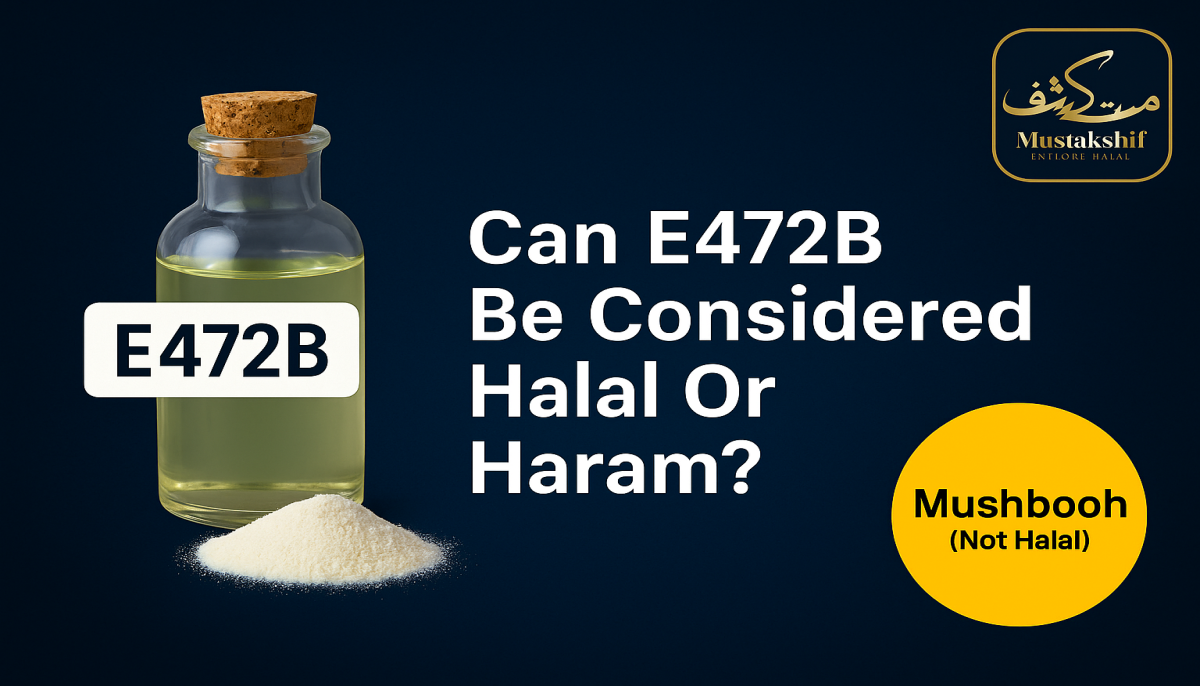
According to Mustakshif Shariah Board, E472B ingredient is considered mushbooh because the source of its fatty acids and glycerol isn’t always known. If derived from animals not slaughtered according to Islamic guidelines, it isn’t halal. Therefore, without specific details from the manufacturer, its permissibility remains doubtful.
Scholars’ opinion
Various Islamic scholars have issued statements urging caution with E472b. Since the ingredient can originate from non-halal sources, consumers are advised to verify its origin. Some fatwas suggest avoiding it unless the manufacturer confirms plant-based sources.
Overview of E472b ingredient
E472B refers to lactic acid esters of mono- and diglycerides, also called lactoglycerides. This ingredient is widely used in processed foods as an emulsifier. Other names include LACTEM, glycerol esters of lactic acid, lactoglycerides, and lactylated mono- and diglycerides. It falls under the broader category of E472 compounds, each with distinct properties.
Where does E472b come from?
E472B is created through a combination of glycerides and lactic acid. The fats used can come from vegetable oils like sunflower, soybean, or palm. However, animal fats may also be used in some cases. The lactic acid is generally produced by fermenting sugars with bacteria. During production, the mono- and diglycerides are heated with lactic acid, forming esters through a catalytic reaction. These are then processed and purified for use in food.
Practical uses
E472B is used to improve the stability and texture of various food products. It keeps ingredients from separating, especially in items with both fat and water. In baked goods, it helps the dough to rise better and results in a softer texture. In margarine and spreads, it ensures smoothness by maintaining a stable mix. In confectionery, it prevents fat separation and keeps chocolate consistent. In dairy items, like ice cream or whipped toppings, it enhances creaminess and prevents ice crystals. It is also used in meat products to retain moisture and in beverages to keep flavours evenly distributed.
Final paragraph
E472b is a functional emulsifier that improves food quality and texture. Yet, due to its uncertain origin, it carries a mushbooh status in Islamic dietary laws. Consumers concerned with halal compliance should seek clarification from producers before use.