Mustakshif Shariah Board Rulings on Bacon
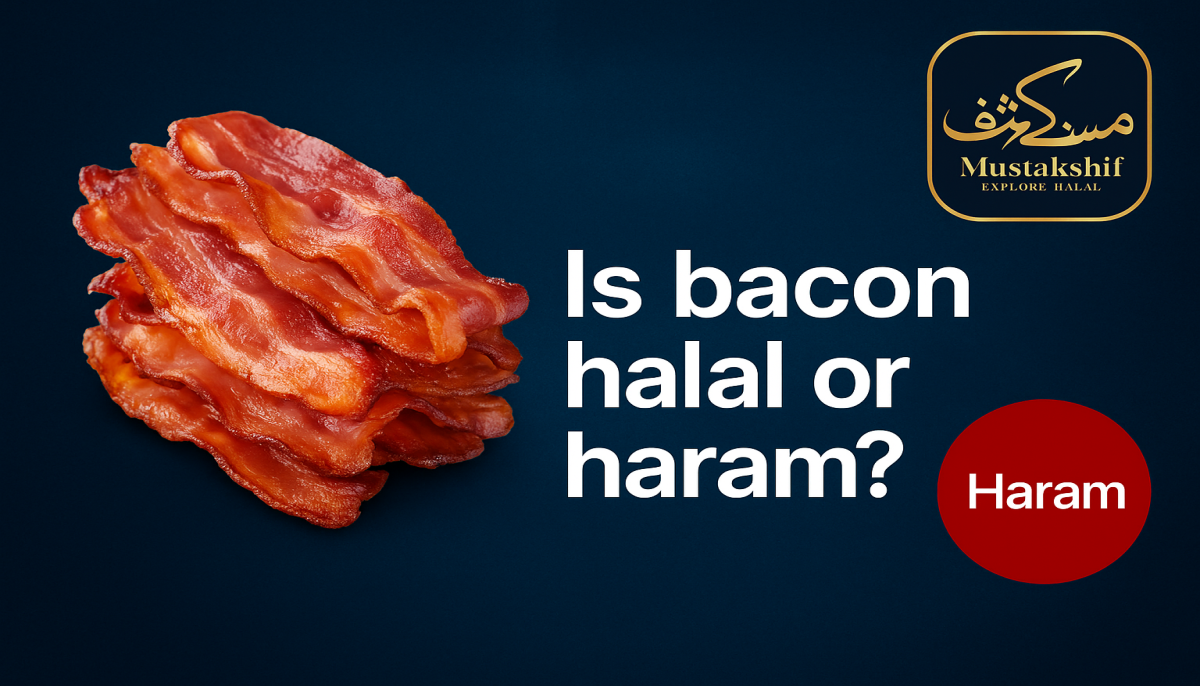
According to Mustakshif Shariah Board, Bacon is haram in Islam because it is derived from pigs. Pork and all its by-products are forbidden in Islamic dietary laws, regardless of the preparation method or how it is cured or smoked. Consumption is strictly prohibited.
Fatwas Concerning the Ingredient
Islamic scholars and fatwa authorities worldwide have consistently ruled that bacon is haram. References from recognised Islamic organisations like Dar al-Ifta and various halal certification bodies confirm that any product containing pork, including bacon, must be avoided by Muslims.
Introduction of ingredients
Name of Ingredient: Bacon
E-code of the ingredient: Not applicable
Synonyms: Cured pork belly, Streaky bacon, Rashers, Pork belly (uncured)
Bacon is a type of cured meat primarily made from pork belly. Unlike many food additives, it does not have an E-code, as it is classified as a whole food product rather than a specific additive. Bacon is known under different names globally, such as streaky bacon, rashers, or simply cured pork belly. When not cured, the same cut is called pork belly. Its distinct taste and texture make it a staple in many Western dishes.
How is it extracted?
Type of Ingredient: Meat product, flavour enhancer
Source: Bacon is sourced from pigs. The meat is taken from the belly, back, or side of the animal, depending on the desired texture and taste.
The process begins with butchering. Selected cuts are separated into slabs, which are then cured to preserve the meat and add flavour. Dry curing involves rubbing salt, sugar, nitrates, and seasonings onto the surface. Wet cure means soaking pork in a seasoned brine solution.
Once cured, the meat is often smoked to deepen its taste. The smoking step uses various types of wood, such as hickory or applewood, giving bacon its distinct aroma and character. Finally, the meat is sliced into thin strips or left in whole slabs, depending on its final use.
Uses of the Bacon
In food preparation, bacon is prized for its intense flavour and cooking properties. It adds richness to meals through its saltiness, aroma, and fat content. When cooked, it offers a crisp or chewy texture. Its rendered fat is used for cooking other foods, adding depth to the flavour.
Conclusion
Bacon, though a favoured ingredient in many non-Muslim countries, is clearly not suitable for halal diets. Its origin from pigs places it under the haram category, making it impermissible for Muslims, regardless of its culinary appeal.