Mustakshif Shariah Board Rulings on Adenosine
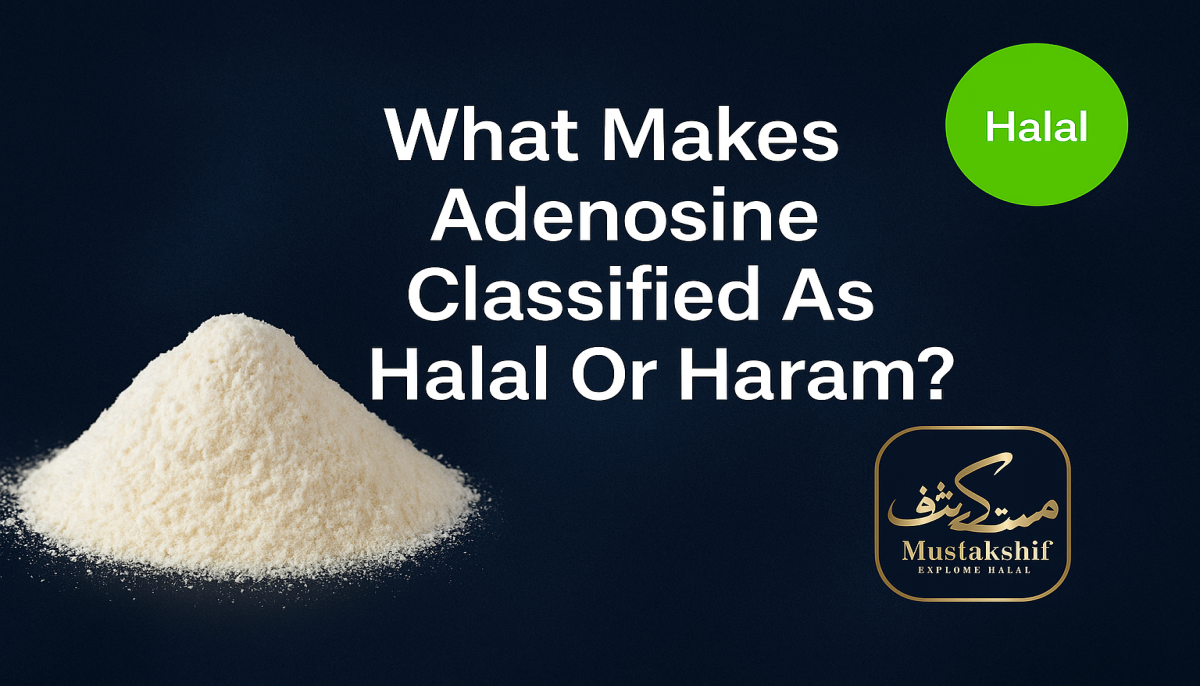
According to Mustakshif Shariah Board, Adenosine is considered Halal. Its sources—whether microbial, plant, or chemical synthesis—do not involve any non-permissible elements under Islamic dietary laws. When derived from halal-certified biological materials or synthesised in a controlled lab, its status remains permissible.
Fatwas Concerning the Ingredient
There are no widely published fatwas specifically addressing Adenosine (E-1510). However, scholars generally approve bio-synthesised or naturally occurring compounds like adenosine as Halal, provided the origin and process align with Islamic standards.
Introduction of adenosine
Adenosine is a naturally occurring bioactive compound. Scientifically, it’s called 9-β-D-Ribofuranosyladenine or adenine riboside. Sometimes, it's also written as Adenine-9-β-D-ribofuranoside. It consists of adenine bonded to ribose sugar and plays a vital part in energy transfer and cell signalling.
How is adenosine sourced?
Adenosine is classed as both a nutraceutical and a bioactive compound. It's sourced from all living cells, particularly where ATP, ADP, and AMP are present. Extraction methods vary: they can be drawn from yeast or animal tissues, chemically synthesised in labs, or produced through microbial fermentation using genetically modified microorganisms.
Uses of adenosine
Adenosine supports biological energy through ATP metabolism, indirectly helping to boost energy in food applications. It also promotes healthy cardiovascular activity and maintains signal transmission in cells. Because of these properties, it’s widely included in food-related applications for supporting bodily functions.
Conclusion
Adenosine stands as a safe and Halal ingredient in the health, food, and pharmaceutical sectors. With its natural presence in all living cells and significant role in energy and cellular function, it's both scientifically respected and religiously permissible.