Mustakshif Shariah Board Rulings on Calciferol
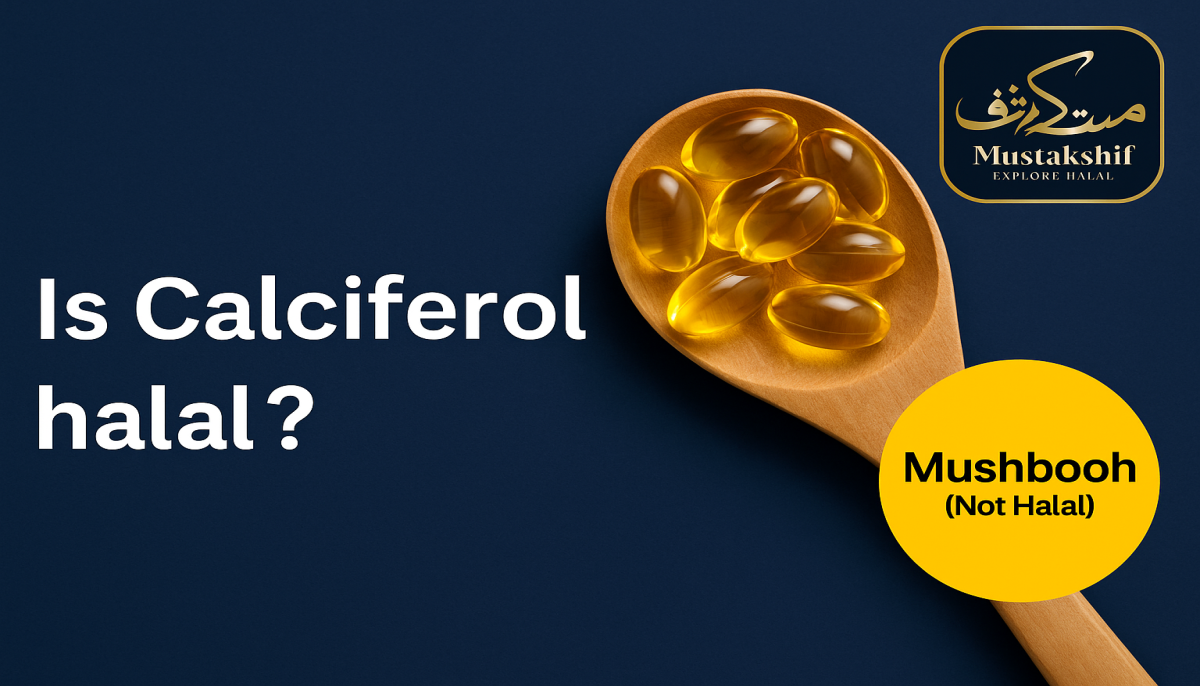
According to Mustakshif Shariah Board, Calciferol is classified as Mushbooh (not Halal) because its legality is debatable. Its production process is the primary source of this uncertainty. It could raise religious issues if it comes from lanolin or cholesterol from non-halal animals. Under Islamic dietary rules, the resulting ingredient is still dubious if the animal-based source is not certified halal.
Religious rulings and recommendations
Some fatwas suggest that if vitamin D3 is derived from halal-certified sheep wool, it may be acceptable. However, doubts persist when the origin of the base material remains undisclosed or sourced from animals not slaughtered according to Islamic principles. Muslim consumers are advised to verify the source before consumption or opt for vitamin D2 when plant-based sourcing is confirmed.
Uncovering the identity of calciferol
Calciferol refers to a fat-soluble nutrient commonly found in two forms: ergocalciferol and cholecalciferol. Known in everyday terms as vitamin D2 and D3, this compound supports calcium balance and bone strength. The ingredient appears on labels under various synonyms, including vitamin D2, vitamin D3, ergocalciferol, and cholecalciferol. While D2 originates from UV-treated fungi, D3 is found in animal-based products like fish liver oil and lanolin.
How is it made?
As a dietary additive and nutritional fortifier, calciferol stems from both plant and animal sources. For vitamin D2, fungi or yeast undergo ultraviolet exposure, prompting them to produce the vitamin. Vitamin D3, on the other hand, typically comes from lanolin, obtained from sheep wool, or cholesterol exposed to ultraviolet rays.
The ingredient exists in a class of naturally occurring and industrially modified nutrients used for human consumption.
How does calciferol function in food and health?
Regular intake of calciferol helps maintain calcium and phosphorus levels in the bloodstream, supporting the body’s skeletal structure. Manufacturers frequently add it to cereals, milk, and juices. Beyond its presence in fortified foods, it's found in many over-the-counter vitamin supplements aimed at curbing deficiency-related conditions like rickets or osteomalacia.
Summing up
Calciferol, or vitamin D, supports essential functions related to bone maintenance and calcium regulation. Although beneficial, its origin determines whether it's suitable for halal diets. Due diligence in sourcing and labelling transparency remains key for Muslim consumers seeking clarity.