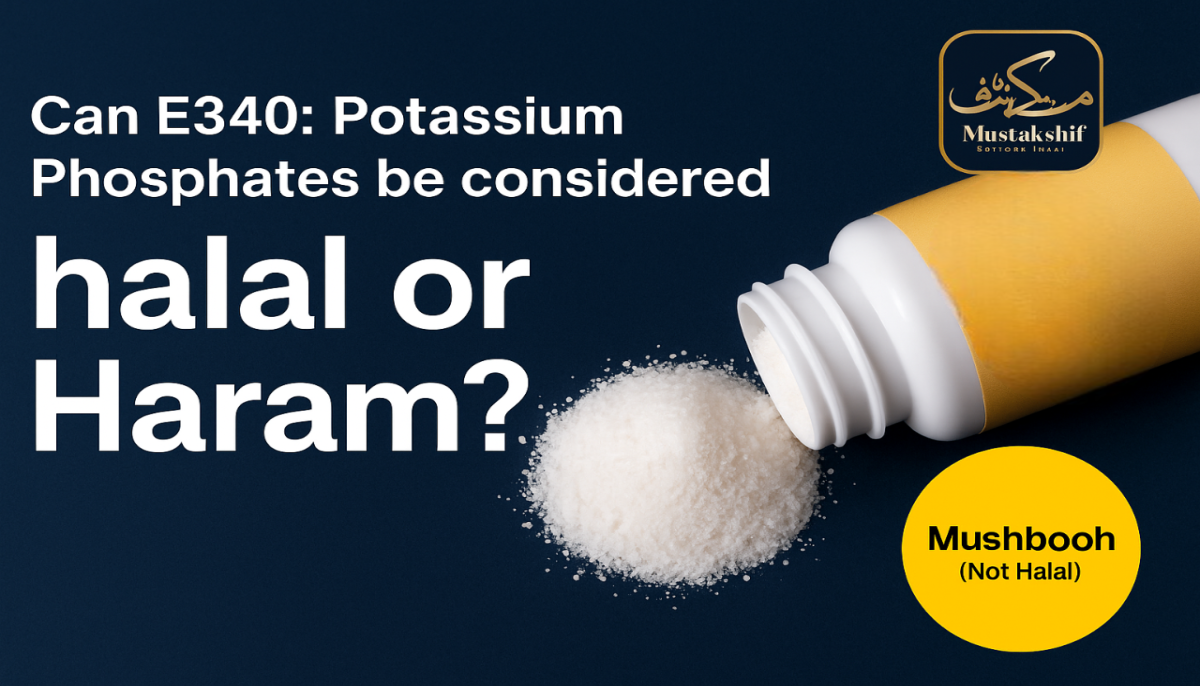
Mustakshif Shariah Board Rulings on E340: Potassium Phosphates
According to Mustakshif Shariah Board, E340 or Potassium Phosphates is regarded as mushbooh (doubtful). The halal certification of E340 remains uncertain due to its synthetic origin and potential processing aids. Without verified plant-based or permissible animal-derived sources, scholars classify it as mushbooh (doubtful). Consumers should seek halal-certified alternatives when strict adherence is required.
Scholarly opinions and religious guidance
Certain fatwas raise concerns over the purifying procedures and the potential usage of equipment or filters derived from animals that are shared with non-halal products. Because of this uncertainty, many academics are reluctant to render a definitive opinion in the absence of product-specific information. When halal-certified substitutes are available, they advise looking for them
Introduction of e340
Known by the E-number 340, potassium phosphates refer to a group of compounds that appear frequently in processed foods. Also called monopotassium phosphate (e340(i)), dipotassium phosphate (e340(ii)), and tripotassium phosphate (e340(iii)), these ingredients act as functional additives. Their main tasks involve buffering, emulsifying, stabilising, and texturising food items.
Where does it come from?
These are inorganic substances produced through laboratory synthesis rather than natural extraction. Phosphoric acid reacts with potassium hydroxide or potassium carbonate during manufacturing. The mixture undergoes careful purification, crystallisation, drying, and inspection before it's considered food-grade.
Key functions in food and industry applications
Potassium phosphates offer essential benefits in food science.
- pH Regulation: Neutralises acidity, maintaining product stability.
- Emulsification: Binds water and oil, preventing separation in items like cheese or dressings.
- Texture Enhancement: Improves mouthfeel in baked goods and meats.
- Preservation: Extends shelf life by inhibiting spoilage.
Beyond food, pharmaceutical companies use them to maintain drug consistency, while agricultural producers apply them as nutrient-rich fertilisers.
Closing remarks
E340, also known as potassium phosphates, is still used in many commercial meals due to its technical benefits. However, its mushbooh status warrants cautious evaluation, particularly for those adhering to halal requirements. Always look for credible certification, and if in doubt, seek competent scholars or reputable halal authorities.