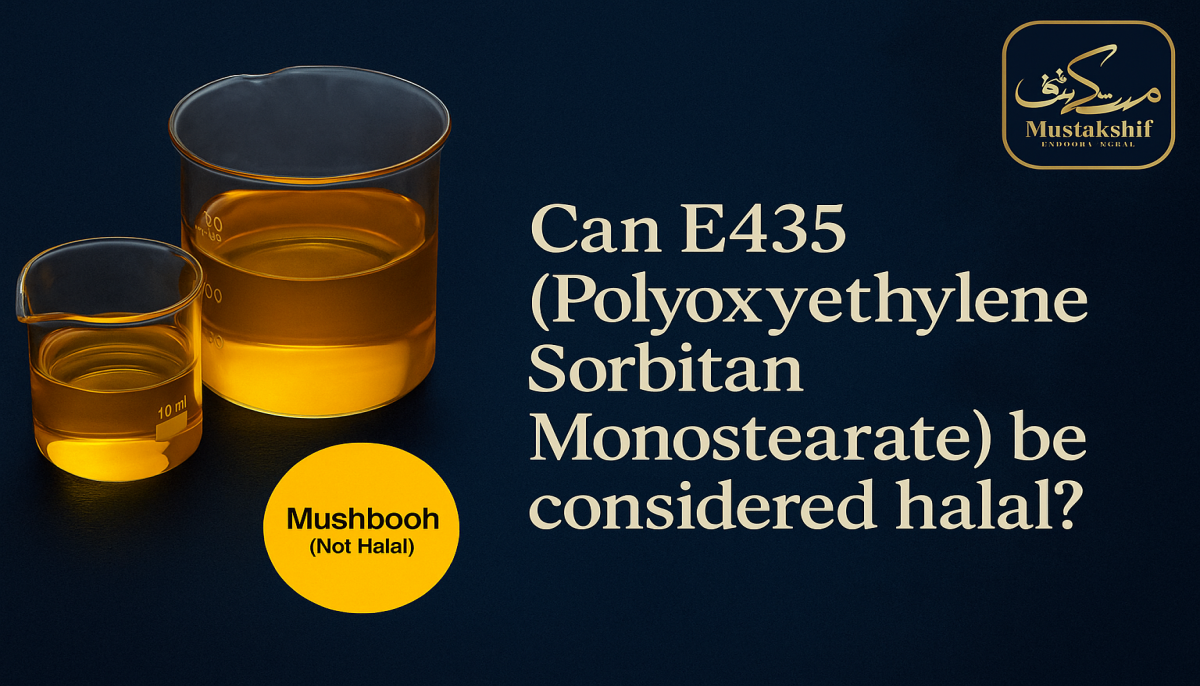
Mustakshif Shariah Board Rulings on E435 (Polyoxyethylene Sorbitan Monostearate)
According to Mustakshif Shariah Board, The halal status of E435 depends on its source of stearic acid. If stearic acid comes from plant-based oils, E435 is considered halal. However, if it is from non-halal animal fats, it is haram. Without clear information or certification, E435 is marked as mushbooh due to uncertainty about its origin.
Fatwas Concerning the Ingredient
Islamic scholars and halal certifiers recommend verifying the source of stearic acid in E435. Many fatwas advise using E435 only when it is confirmed to be from halal-certified plant sources.
Introduction
E435 is known as Sorbitan monostearate ethoxylated, commonly called Tween 60 or Polyoxyethylene (20) sorbitan monostearate. It belongs to the group of emulsifiers used in food and cosmetic products. This additive helps mix ingredients like oil and water that normally do not blend easily.
How is it extracted?
E435 is a synthetic compound made by reacting sorbitan (derived from sorbitol) with stearic acid and then adding ethylene oxide. Sorbitol often comes from plant sources like corn or wheat. Stearic acid may be sourced from either vegetable oils or animal fats. The addition of ethylene oxide transforms these into a stable emulsifier. Because stearic acid can be from animal or plant origin, the source of E435 may vary depending on the manufacturer. This affects its halal status.
Functions of E435
E435 is widely used as an emulsifier and stabilizer in food products like baked goods, ice cream, and sauces. It ensures a smooth texture by preventing ingredients from separating. It is also used in pharmaceuticals and cosmetics for the same reasons.
Conclusion
E435 is an important emulsifier used in many products. Its halal status depends entirely on its raw materials, so always look for halal certification to ensure compliance with Islamic dietary laws.