Mustakshif Shariah Board Rulings on E443 (Brominated Vegetable Oil)
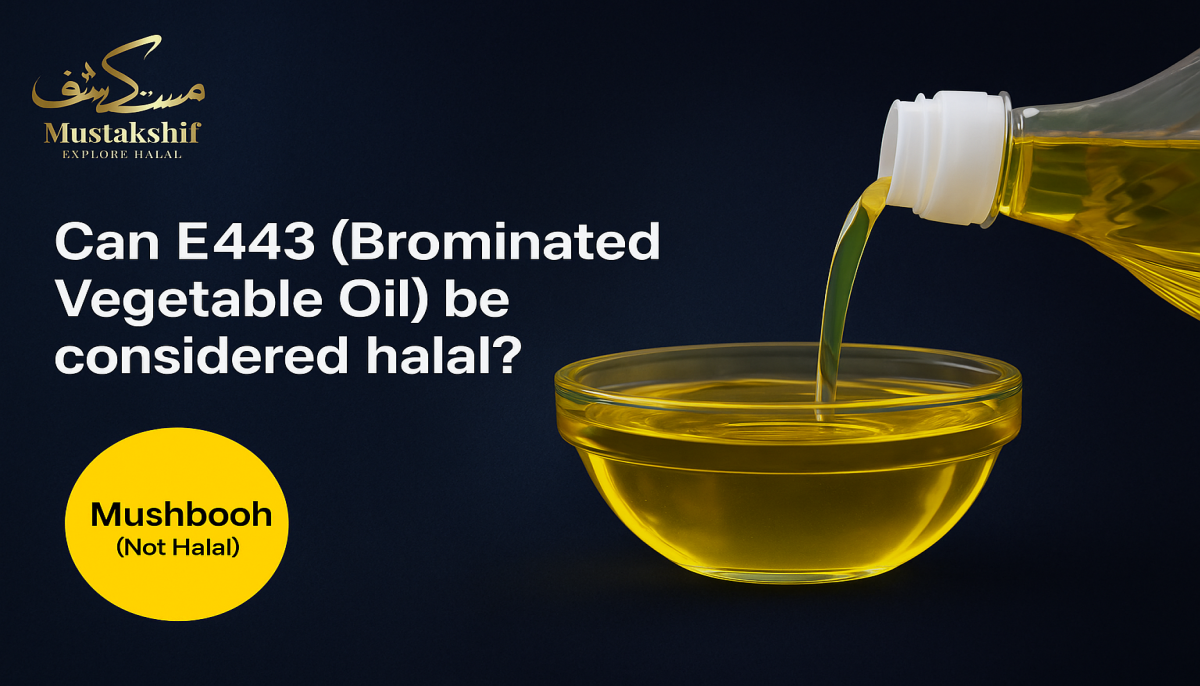
According to Mustakshif Shariah Board, E443 is considered mushbooh (doubtful). While it originates from vegetable oil, the bromination process involves a synthetic chemical not naturally found in food. There are also health concerns linked to high consumption, such as effects on the nervous system and thyroid. Because of its unusual chemical nature and lack of traditional food use, many scholars hesitate to mark it clearly as halal. Some countries have even banned it due to safety concerns.
Introduction of Ingredient
E443 is known as Brominated Vegetable Oil (BVO). It is a synthetic food additive used to stabilise citrus-flavored drinks. Common synonyms include BVO and brominated oils. The ingredient is made by bonding vegetable oil with bromine, a chemical element.
Source and production
Brominated vegetable oil is synthetically produced. The base is usually soybean or corn oil, which is chemically treated with elemental bromine. The purpose of bromination is to make the oil denser so it can mix with water-based liquids like soft drinks. Although vegetable oil is plant-based, the chemical treatment with bromine raises concerns.
Usage
BVO is mainly used as a stabiliser in carbonated beverages, especially those with citrus flavors. It prevents the flavoring from separating and floating to the top. It helps maintain a uniform appearance and texture in soft drinks.
Conclusion
E443 (Brominated Vegetable Oil) is a processed ingredient that falls into the mushbooh category due to its chemical treatment and safety concerns. When in doubt, check for certified halal alternatives or avoid products that list BVO in their ingredients.