Mustakshif Shariah Board Rulings on Sodium Lauryl Sulfate (SLS)
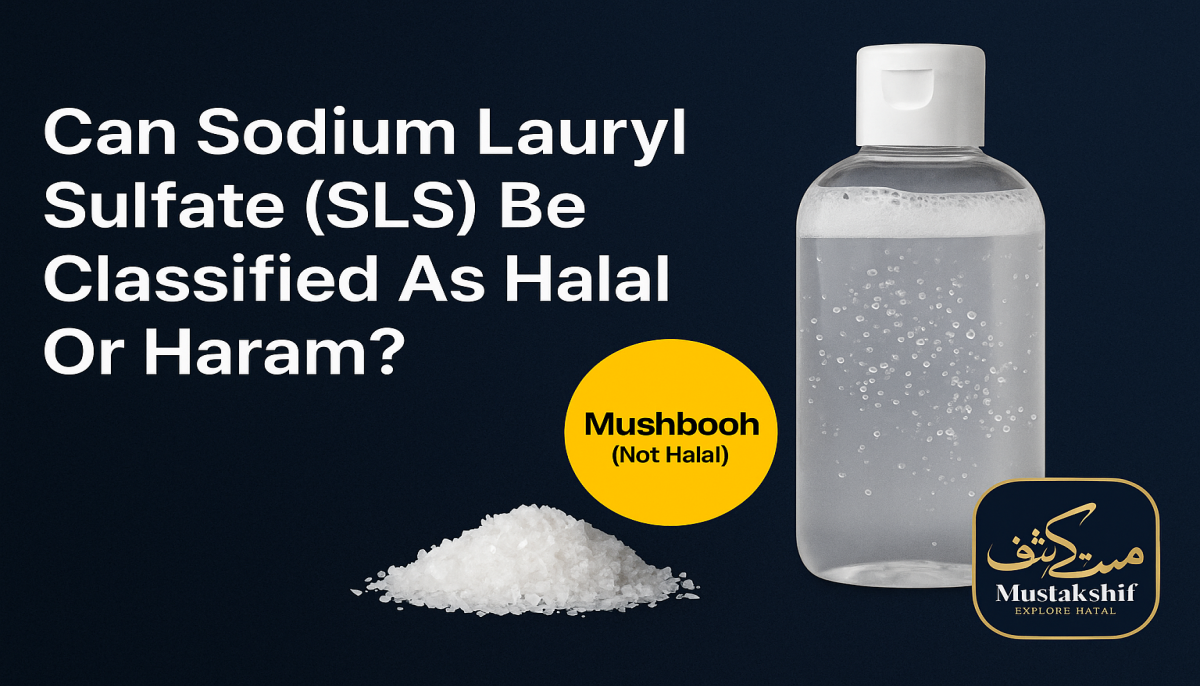
According to Mustakshif Shariah Board, Sodium Lauryl Sulfate (SLS) is considered Mushbooh (doubtful). While the primary sources—coconut and palm kernel oils—are plant-based and generally halal, concerns arise from the chemical processing methods and potential use of animal-derived ingredients in some cases. Without clear certification or disclosure of the production process, the permissibility of SLS remains uncertain.
Scholars' views on this ingredient
There is no specific fatwa addressing SLS directly. However, Islamic scholars advise caution with ingredients of ambiguous origin. The general principle in Islamic dietary law is to avoid doubtful substances unless their halal status is confirmed. Therefore, unless SLS is certified halal, it is recommended to avoid products containing it.
Introduction of Ingredient
Sodium Lauryl Sulfate (SLS), also known as sodium dodecyl sulfate, is a widely used anionic surfactant. It appears in many personal care products, cleaning agents, and some food items with different names, such as Sodium dodecyl sulfate (SDS), Sodium n-dodecyl sulfate, Sulfuric acid monododecyl ester sodium salt, Lauryl sulfate sodium salt, Sodium monododecyl sulfate, Aquarex methyl, Duponol, Stepanol, and Texapon. Its primary function is to create foam and remove oils and dirt, making it a common ingredient in shampoos, toothpastes, and detergents.
Source and production
SLS is typically synthesized from lauryl alcohol, which is derived from either coconut oil or palm kernel oil. The production process involves the sulfation of lauryl alcohol, followed by neutralization with sodium carbonate or sodium hydroxide, resulting in the formation of SLS. While the base materials are plant-derived, the chemical processing classifies SLS as a synthetic compound.
Functions of the Ingredient
SLS serves multiple functions across various industries:
Personal Care Products: It is used in shampoos, body washes, toothpastes, and soaps for its foaming and cleansing properties.
Cleaning Agents: SLS is found in household cleaners, dishwashing liquids, and laundry detergents due to its ability to break down grease and oils.
Food Industry: In the United States, SLS is approved as a food additive. It functions as an emulsifier and whipping agent in products like marshmallows and dried egg whites, within specified concentration limits.
Conclusion
Sodium Lauryl Sulfate is a common ingredient in many products due to its effective surfactant properties. While it is generally derived from plant sources, the synthetic nature of its production and potential for animal-derived additives render its halal status questionable. Consumers concerned with halal compliance should seek products with verified halal certification to ensure adherence to dietary guidelines.