Mustakshif Shariah Board Rulings on Collagen in food :
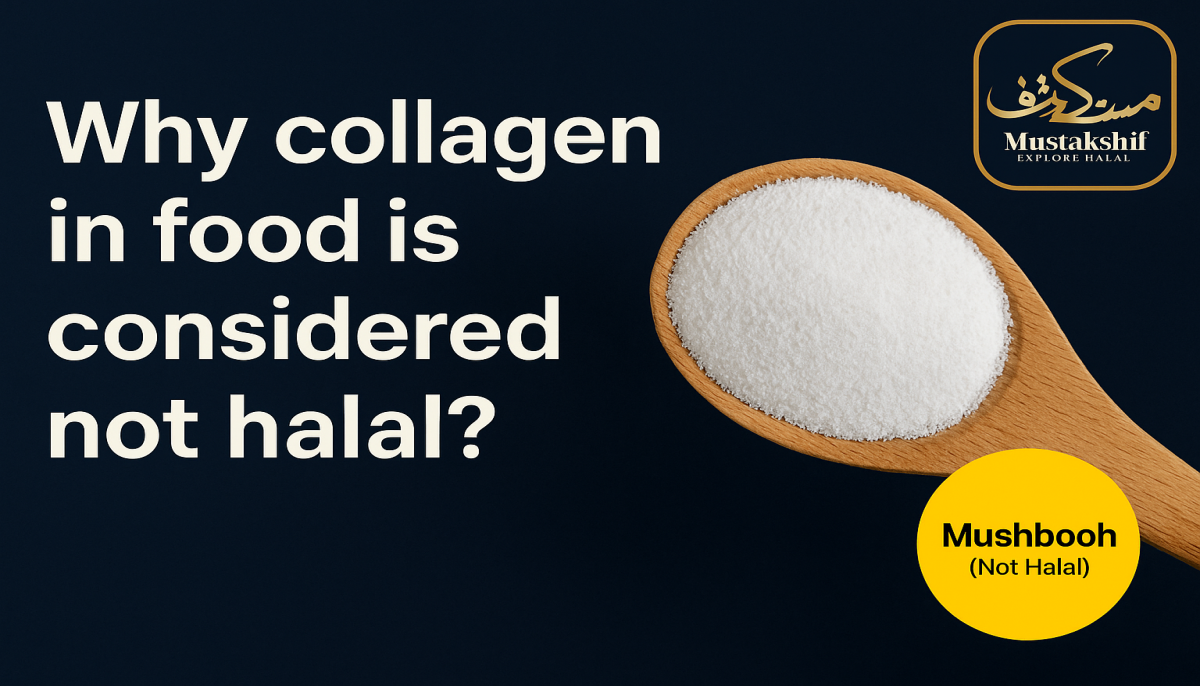
According to Mustakshif Shariah Board, collagen in food is classified as Mushbooh (not Halal) as it indicates doubt regarding its halal status. The main concern lies in the origin. If it comes from pigs, it becomes clearly haram. If sourced from halal-slaughtered animals or marine life, it may be acceptable. However, when the source is not declared, it remains uncertain.
Islamic perspectives on consumption
Scholars advise checking whether collagen is sourced from halal-certified animals and processed without prohibited substances. Some Islamic scholars permit fish-based or halal-certified bovine collagen. However, most caution against using products that lack full transparency. Therefore, verification is key for observant consumers.
What is collagen?
Collagen is a natural protein present in animals. It helps build and maintain skin, joints, bones, and other body parts by providing elasticity and strength. You might also hear it called hydrolyzed collagen, collagen peptides, or even plain gelatin.
How is collagen derived?
Collagen belongs to the group of functional proteins often added to foods and supplements. It’s collected from animals’ connective tissues. Common sources of collagen include fish skins, cow hides, and pig bones. The extraction process involves boiling these parts to separate collagen, which is then dried and processed for use in edible or supplement form.
How collagen is used in food products
Collagen performs several functions in food production. It can bind liquids, giving products a smooth feel. It also forms gels, adds to the body, and provides extra protein. Many foods, such as jellies, soft sweets, drink mixes, and supplement powders, contain this protein to enrich texture and nutritional value.
Sumup
Collagen plays a major role in many modern foods and health supplements. It offers functional benefits in food and supplements and raises protein levels in drinks and powders. But its animal origin means its halal status can’t always be guaranteed. If source details are unclear, the ingredient remains doubtful and should be assessed carefully before consumption.