Mustakshif Shariah Board Rulings on E-428 (Gelatine)
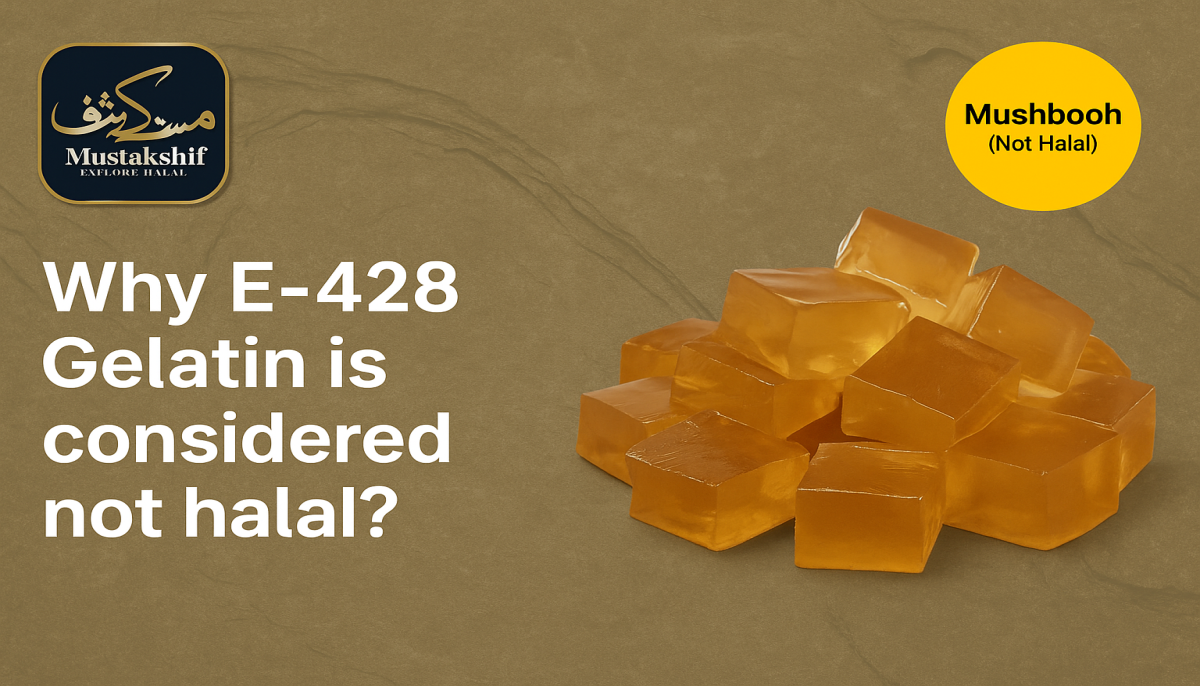
According to Mustakshif Shariah Board, E428 Gelatin is classified as Mushbooh (not Halal) because the source of gelatine is often not specified on the packaging. While gelatine from fish or halal-slaughtered animals may be permissible, most commercial gelatine is derived from pigs or non-halal animals, which raises concerns about Islamic dietary laws. Without a traceable origin, it's not possible to confirm its permissibility.
Fatwas Concerning the Ingredient
Multiple Islamic scholars and institutions have issued fatwas addressing the issue of gelatine. Opinions vary depending on the source and the transformation during processing. Some scholars argue that the chemical transformation (istihalah) purifies the substance, while others maintain that the origin still renders it non-halal if derived from prohibited animals. Due to this difference, gelatine remains in the mushbooh category unless the source is clearly halal-certified.
Ingredient overview :
Gelatine, carrying the E-code E428 and sometimes labeled Gelatin, is a familiar additive found in many food and pharmaceutical items. It serves a key function in forming the texture and stability of these products.
How is it extracted?
Classified as a gelling agent, thickener, and stabiliser, Gelatine is a protein that comes from animal collagen. This collagen is found in the bones, skin, and connective tissues of animals like pigs, cattle, and fish. Extraction occurs through hydrolysis, a process that involves hot water or acid to break down the collagen into a soluble gelatin.
Functions of E428
Gelatine performs gelling, thickening, and stabilising roles in commercial products. Its gelling ability gives form to jellies and gummy sweets. As a thickener, it enhances the mouthfeel in sauces and dairy-based foods. It also adds shelf-life stability to items like ice cream and yoghurt, helping maintain structure and preventing separation.
Conclusion
E-428 (Gelatine) plays a critical role in shaping food textures, but brings religious concerns due to its animal origin. Given the uncertainty of its source in many products, it remains mushbooh unless clearly labelled as halal-certified.