Mustakshif Shariah Board Rulings on Acetylated Distarch Glycerol (E1423)
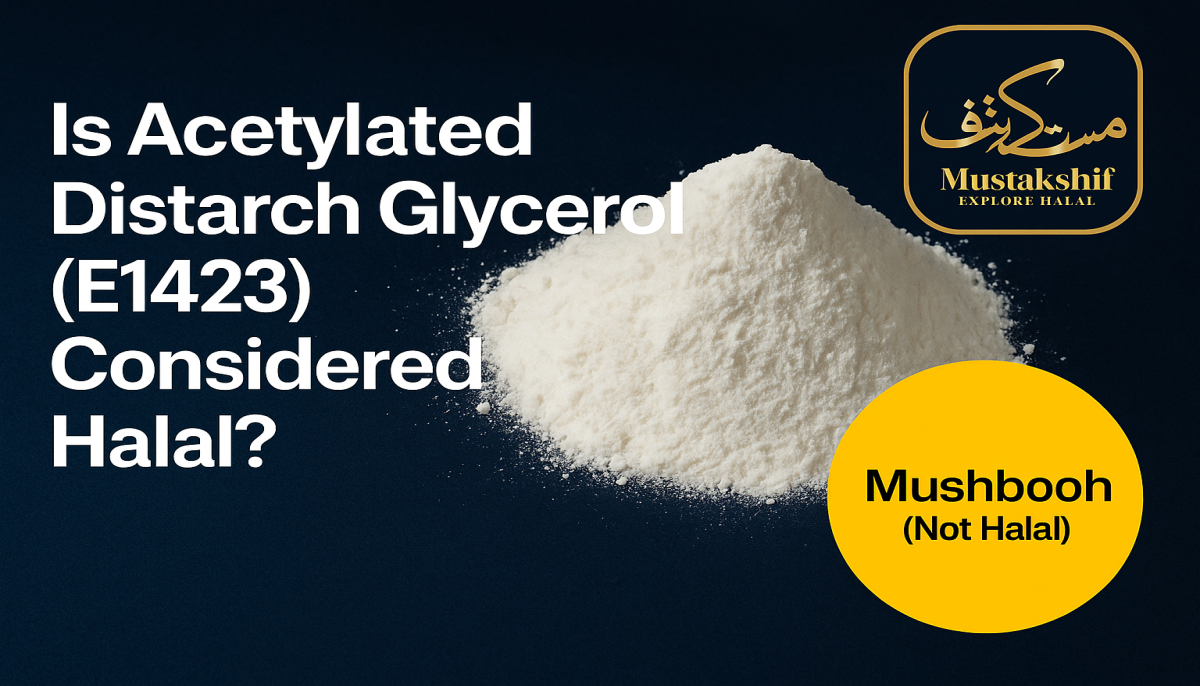
According to Mustakshif Shariah Board, E1423 falls under the classification of mushbooh, meaning its permissibility in Islam is questionable. The uncertainty arises from the chemical agents used during processing. While the starch base is plant-derived and acceptable, the source of glycerol and other additives used during modification may not always be traceable or halal-certified. Without clear assurance on these elements, it doesn't remain very certain for consumption under Islamic law.
Scholarly perspectives and religious guidance
Although detailed fatwas are limited, many Islamic scholars advise caution. Unless the complete production process is transparent and certified halal, products containing this additive should be avoided. The ambiguity surrounding its processing agents has led to varied opinions within the religious community.
What is Acetylated Distarch Glycerol?
One food ingredient often listed on packaging is acetylated distarch glycerol, identified as E1423. It’s a food additive that’s also recognised by other names, such as acetylated dextrin, acetylated starch, and glycerol acetate starch. This substance is widely used in food manufacturing. It’s categorised as a modified starch with thickening abilities, offering enhanced stability and improved texture to many items.
Where does it come from?
This additive is not naturally occurring in its final form. It begins as a plant-based starch, typically from corn, wheat, or potatoes. The original starch undergoes a controlled chemical process, where it’s exposed to acetylating agents and glycerol. This treatment changes its structure, giving it properties that outperform basic starch in heat and acid resistance. The result is a more robust and versatile ingredient, especially useful in products requiring stable consistency.
How does the food industry benefit from E1423?
Acetylated distarch glycerol is valued for its multiple roles. It helps thicken sauces and gravies, prevents water and oil from separating in salad dressings, and maintains a uniform texture in ready-made soups. In baked goods, it contributes to a smoother crumb and longer shelf life. It acts as an emulsifier, a stabiliser, and a binder, depending on the product’s specific needs.
Closing thoughts
Acetylated distarch glycerol (E1423) improves texture and stability in a wide range of foods, making it a valuable ingredient in modern food production. However, due to the unclear origins of its chemical components, its halal status remains disputed. Until transparency improves, those seeking to follow halal dietary laws may choose to avoid it.