Mustakshif Shariah Board Rulings on Cetyl Alcohol
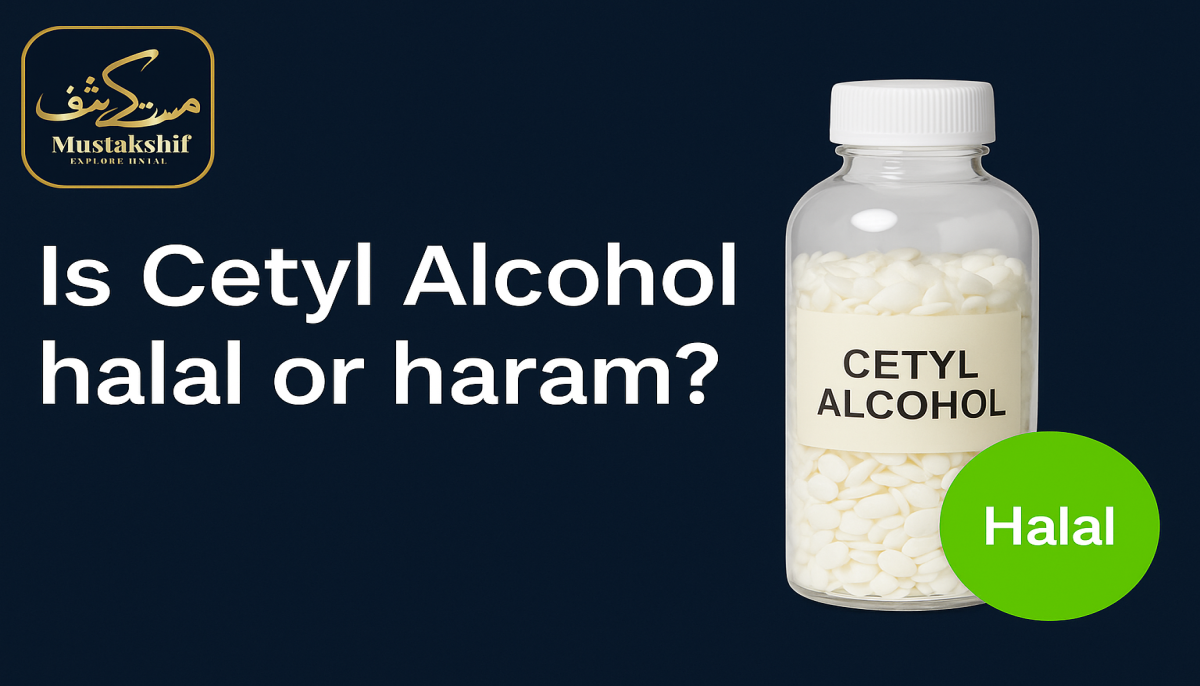
According to Mustakshif Shariah Board , Cetyl Alcohol is considered Halal.This is because it is primarily sourced from plant oils, which are halal by nature. There is no evidence of it being derived from haram sources in common industrial use. The extraction and processing do not involve anything prohibited under Islamic law.
Fatwas concerning the ingredient
No specific fatwas oppose cetyl alcohol when it is plant-derived. Halal certifying bodies accept products containing cetyl alcohol from plant sources. Scholars agree it is permissible due to its natural origin and harmless processing.
Introduction of Ingredient
Cetyl Alcohol is a fatty alcohol commonly used in cosmetics and food products. It is also known as hexadecanol, 1-hexadecanol, or simply cetyl alcohol. This ingredient appears as a waxy, white solid with a mild odor. It mainly serves as an emulsifier and thickening agent.
How is it extracted?
Cetyl Alcohol is mostly extracted from plant-based oils such as palm oil and coconut oil. It is obtained through the hydrogenation of fatty acids (palmitic acids) found in these oils. This process refines and purifies the raw oils to isolate cetyl alcohol in solid form. Although synthetic versions exist, the natural plant-based extraction is more common.
Uses of the Ingredient
Cetyl Alcohol functions as an emulsifier, thickener, and stabilizer. It helps mix oil and water components in creams, lotions, and other personal care products. In foods, it can act as a stabilizer or anti-foaming agent. It improves texture and consistency in pharmaceuticals and cosmetics.
Conclusion
Cetyl Alcohol is a widely used ingredient in cosmetics and foods. Its halal status is clear when derived from plant oils. It is safe and permissible to use in halal products. Always check product certification for full assurance.