Mustakshif Shariah Board Rulings on Dried Milk
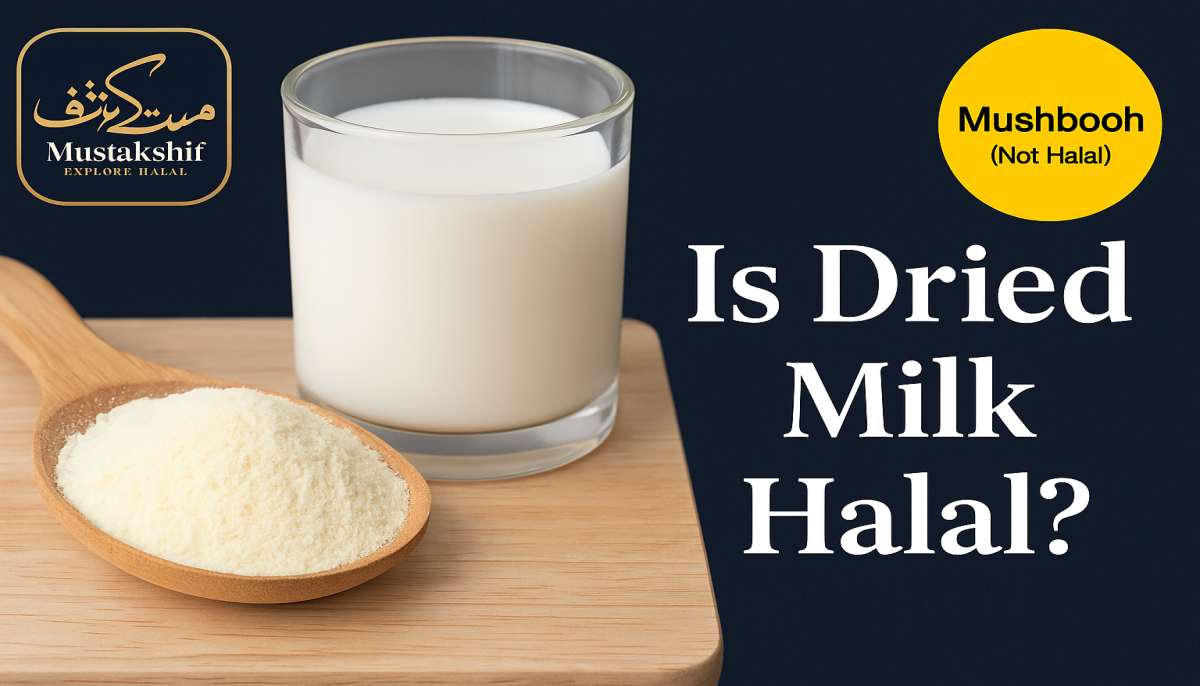
According to Mustakshif Shariah Board, Dried milk is considered Mushbooh (not halal) due to uncertainty about its source and processing. While milk itself is halal, concerns arise if the animal source or processing methods involve non-halal substances or contamination. Some drying processes may use additives or enzymes that are non-halal. Without clear certification, its permissibility remains doubtful.
Fatwas concerning the ingredient
Many Islamic scholars advise caution with dried milk. Some fatwas highlight that if milk is pure and processed without haram ingredients, it is halal. However, in cases of unknown additives or cross-contamination, it is better to avoid or seek halal-certified products.
Introduction of Ingredient
Dried milk, also called milk powder, is milk that has been dehydrated to remove water content. It is not assigned an E-code as it is a natural milk product. Sometimes, it’s referred to as powdered milk or milk solids. Dried milk retains most nutrients of fresh milk but in a shelf-stable powder form.
How is it obtained?
Dried milk is produced by spray drying or drum drying fresh milk. In spray drying, fresh milk is sprayed into hot air to quickly evaporate moisture, leaving behind fine powder. Drum drying uses heated drums to dry milk into flakes or powder. The source is always fresh milk, which may come from cows, goats, or other animals, depending on the manufacturer.
Uses of the Ingredient
Dried milk is widely used in food manufacturing and households. It serves as a convenient milk substitute, especially in areas lacking fresh milk access. It’s found in baked goods, confectionery, dairy products, and beverages. It helps improve texture, flavor, and nutritional value in processed foods.
Conclusion
Dried milk is a useful food ingredient but carries a mushbooh halal status without clear source verification. For safe consumption, choose products with proper halal certification