Mustakshif Shariah Board Rulings on E1100 (Amylase)
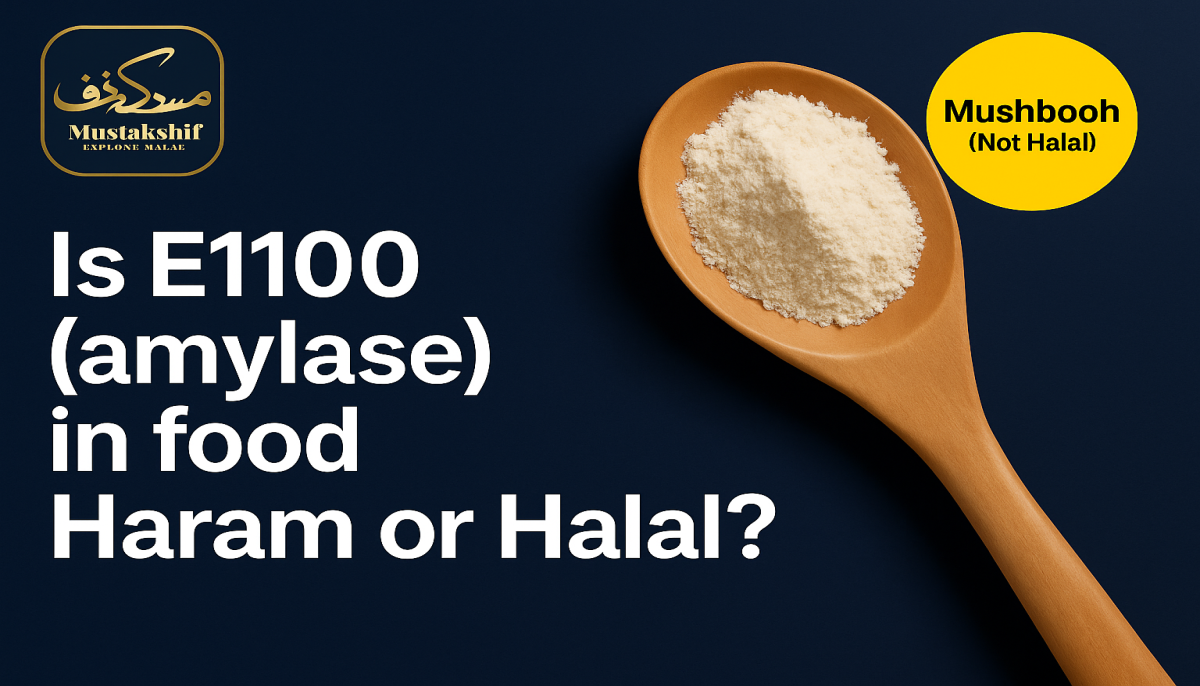
According to Mustakshif Shariah Board, E1100 (Amylase ) is classified as Mushbooh (not Halal) indicating uncertainty around its permissibility. The status hinges on how and from where the enzyme is derived. Plant and microbial sources raise minimal concerns. However, when animal sources are used, especially if not slaughtered according to Islamic guidelines, doubt arises. Without confirmation about the exact source and processing method, the halal status remains inconclusive.
Views from Islamic scholars
At present, detailed fatwas on E1100 vary. Some scholars accept it when obtained from plant or microbial sources. Others advise caution due to the ambiguity of animal-derived content. Consensus suggests verifying the enzyme's origin before consumption. If derived from certified halal methods, its use may be considered acceptable.
Uncovering the basics of E1100
E1100 refers to amylase, an enzyme group responsible for breaking starch down into simpler sugars. These enzymes are popular with various names, notably alpha-amylase and beta-amylase. They play a key part in modifying starchy ingredients during food processing.
Where does E1100 come from?
Amylase acts as both an enzyme and a processing aid. It's sourced in several ways. Microbial fermentation leads the way in commercial settings. Species such as Aspergillus niger and Bacillus subtilis produce enzymes during a controlled fermentation process. Alternatively, plants like barley and wheat naturally contain amylase. Though animal-derived amylase exists, taken from the pancreas or saliva, these forms are rarely used in large-scale food production.
How does E1100 perform in food-making?
- Amylase supports multiple roles across food processing. It transforms starch into sugars, enriching flavour and improving fermentation.
- In baked items, it boosts dough softness, enhances structure, and contributes to longer freshness.
- In brewing, it unlocks fermentable sugars, thereby supporting the formation of alcohol.
- Dairy makers apply it to stop starch thickeners from clumping.
- In sweets, it ensures even texture and consistent flow, especially in syrups and caramel products.
Final thoughts
E1100, or amylase, is a staple in food production thanks to its role in starch conversion. Whether softening bread or perfecting beer, it’s vital in shaping food textures and flavours. Yet, for those observing halal dietary laws, its source must be confirmed. When in doubt, seeking guidance or choosing certified products is the safest approach.