Mustakshif Shariah Board Rulings on E1101 or Proteases
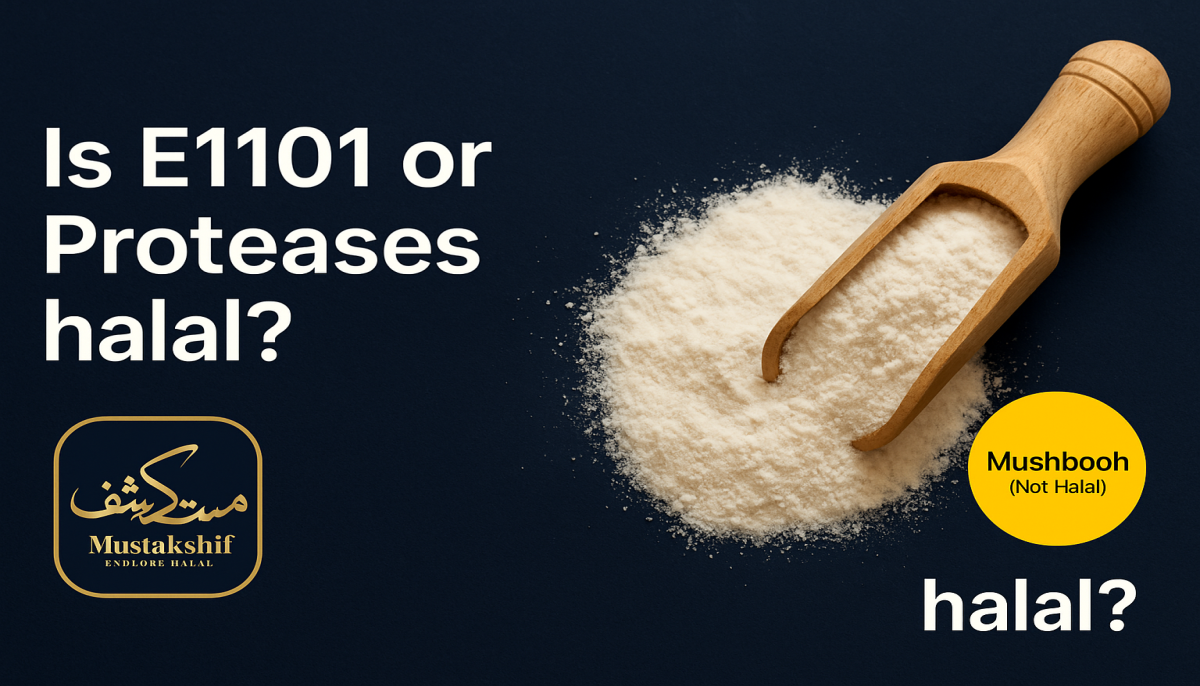
According to Mustakshif Shariah Board, E1101 or Proteases is Classified as mushbooh. ITS permissibility under Islamic dietary laws depends on its origin. If obtained from halal-slaughtered animals or microbial and plant sources, it may be acceptable. However, uncertainty arises when animal-derived enzymes lack traceable slaughter methods. This ambiguity makes its status questionable without verified sourcing.
Religious guidance and fatwas
Various Islamic scholars and organisations recommend caution regarding proteases from animal origins. Without clear halal certification or verified origin, many urge Muslim consumers to avoid such products unless sourced from plant or microbial alternatives.
Introduction to E1101
E1101, better known as proteases, falls under the category of food processing aids. Also referred to as proteolytic enzymes, proteinases, or peptidases, these substances break proteins into smaller peptides or individual amino acids. Their enzymatic action makes them highly valued in various sectors, especially in food manufacturing and pharmaceuticals.
Where does it come from?
This set of enzymes can arise from a variety of sources. Microbial sources dominate industrial output, notably bacteria, fungi, and yeast. There are other animal proteases, such as trypsin and chymotrypsin, extracted from the pancreas. Plant-based alternatives include papain (derived from papaya) and bromelain (found in pineapple).
Bacteria produce these enzymes through controlled fermentation. Following cultivation, the enzymes are collected and carefully purified. Later, they are concentrated and stabilised into liquid or powdered form. Final quality inspections ensure they satisfy food-grade standards.
How is e1101 used in foods?
Proteases perform various roles in food preparation and processing.
They tenderise meat by breaking down muscle proteins, making it easier to chew.
In dairy products, they help refine texture and develop complex savoury notes.
During baking, they alter the gluten structure, which results in softer bread and improved dough elasticity.
Brewers use them to limit foam and prevent cloudiness in beer.
Wrap-up
E1101 plays a vital role in modern food science. It softens meat, refines dough, enhances cheese, and stabilises beer. Although widely used, its mushbooh status requires attention, especially among consumers following halal guidelines. Selecting products with clearly labelled plant or microbial proteases ensures both function and faith alignment.