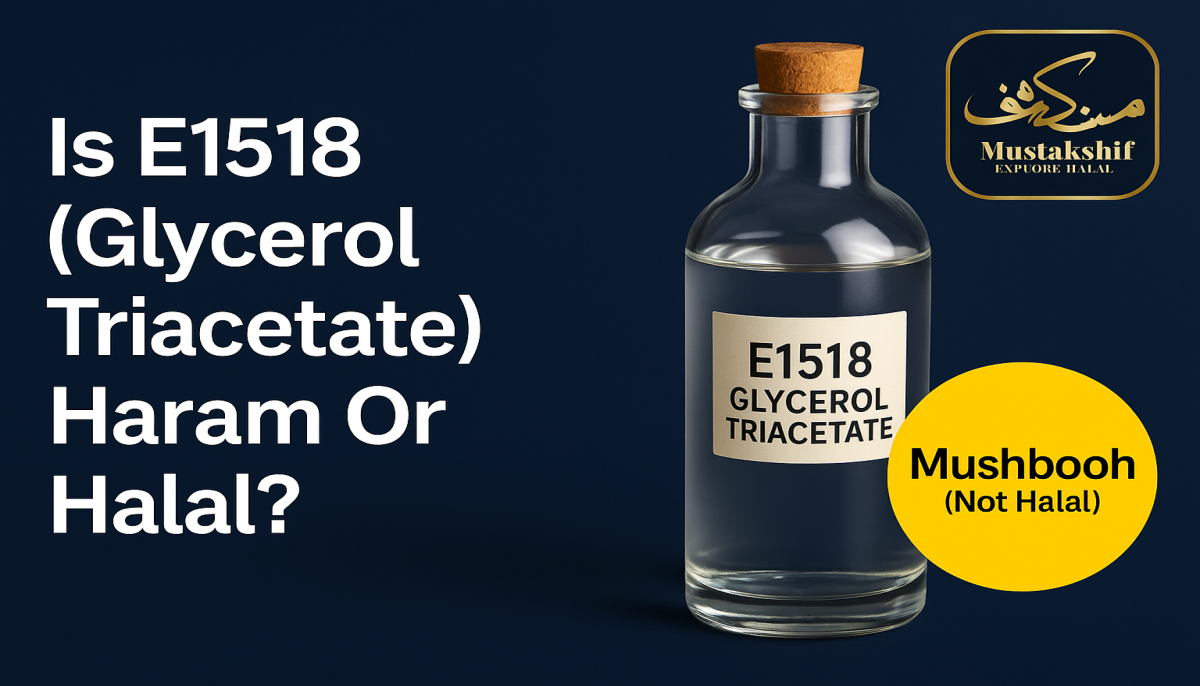
Mustakshif Shariah Board Rulings on E1518 ( Glycerol Triacetate)
According to Mustakshif Shariah Board, E1518 ( Glycerol Triacetate) is classified as Mushbooh (not Halal) .This uncertainty arises when the glycerol source isn't mentioned. If the base is plant-based, it aligns with halal standards. However, if it originates from animals not slaughtered under Islamic law, it would be haram.
Ingredient overview :
E1518 is the food additive code for Glycerol Triacetate. This ingredient is also known by the names Triacetin or Acetylated Glycerol. From snacks to cosmetics, it’s widely used to lock in moisture and evenly distribute flavour.
How is E1518 obtained?
Glycerol Triacetate (E1518) is obtained through a chemical process known as esterification. This involves a reaction between glycerol, a type of alcohol, and acetic acid (or acetic anhydride) under carefully controlled conditions. The process is designed to ensure a high degree of purity and consistency in the final product.
The procedure involves the following steps:
- Glycerol reacts with acetic acid in the presence of a catalyst, typically under heat. This reaction results in the formation of glycerol triacetate.
- After synthesis, the mixture undergoes purification to remove any unreacted raw materials, byproducts, and other impurities. This may involve distillation or filtration to ensure the final product meets food-grade or industrial standards.
Uses of the Glycerol Triacetate
- Food Industry:
Glycerol Triacetate is widely used as a solvent and carrier for flavorings, food colorings, and various additives. It is
commonly present in products such as chewing gum, baked goods, and confectionery to enhance texture and stability.
- Cosmetics and Personal Care:
In cosmetic and personal care formulations, it serves as both a solvent and an emollient, contributing to the smooth
application and consistency of products.
- Pharmaceuticals:
Within the pharmaceutical sector, Glycerol Triacetate serves as a plasticizer, primarily in the film coatings of tablets and
capsules, helping improve the flexibility and durability of the coating layer.
Conclusion
E1518 plays a significant role in preserving and enhancing food products, but its origin can make it unsuitable for certain dietary restrictions. Always look for clear halal certification if source details are not available.