Mustakshif Shariah Board Rulings on E305 (Ascorbyl Stearate)
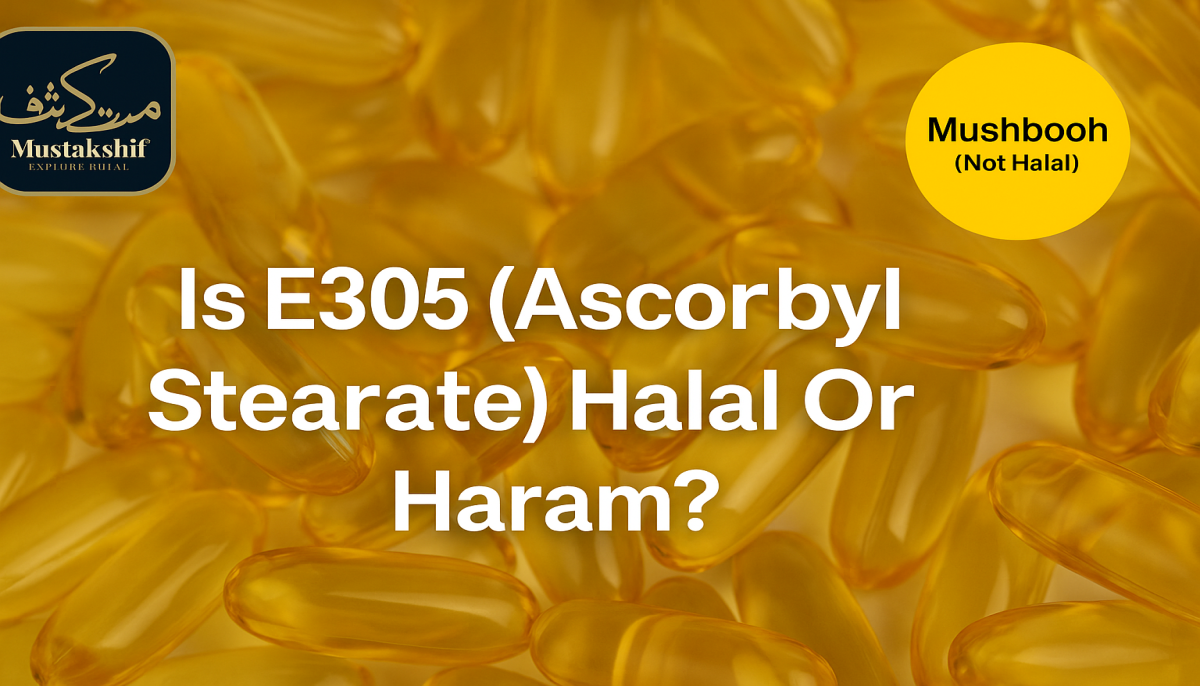
According to Mustakshif Shariah Board,E305 (Ascorbyl Stearate) is classified as Mushbooh (not Halal) because of the uncertain source of stearic acid. If stearic acid is from vegetable sources, it is halal. However, if it comes from animal fats, especially from non-halal animals, it becomes haram. Since manufacturers rarely specify the origin, many Islamic scholars classify E305 as mushbooh until proven halal.
Fatwas concerning the ingredient
Several halal certification organisations advise caution with e305. They recommend confirming the source of stearic acid or choosing products with clear halal certification to avoid doubt.
Ingredient overview
E305 is called ascorbyl stearate, an antioxidant used in foods to prevent oxidation. it is also known as ascorbyl monostearate. This ingredient appears as a white or off-white powder and helps extend the shelf life of food products by protecting fats and oils.
How is it extracted?
The source of ascorbyl stearate is primarily synthetic, although it is based on natural components like ascorbic acid, which is found in many fruits and vegetables, and stearic acid, a saturated fatty acid that can be derived from animal fats or plant oils. Ascorbyl stearate is synthesized by esterifying ascorbic acid with stearic acid. The process typically involves heating ascorbic acid with stearic acid in the presence of a catalyst to facilitate the esterification reaction. The resulting product is a waxy, off-white substance that is then purified for use.
Functions of E305
E305 is primarily used as an antioxidant in processed foods. it helps prevent oils and fats from going rancid. Common applications include baked goods, margarine, and snack foods. it also contributes to maintaining food texture and freshness.
Conclusion
Ascorbyl Stearate (E305) is a widely used antioxidant in many food products. However, its halal status remains mushbooh (doubtful) due to the uncertain origin of stearic acid, which can be sourced from either plant oils or animal fats. Since manufacturers often don’t specify the source, it’s best to exercise caution and look for halal certification to ensure the product complies with Islamic dietary requirements.