Mustakshif Shariah Board Rulings on E313 (Ethoxyquin)
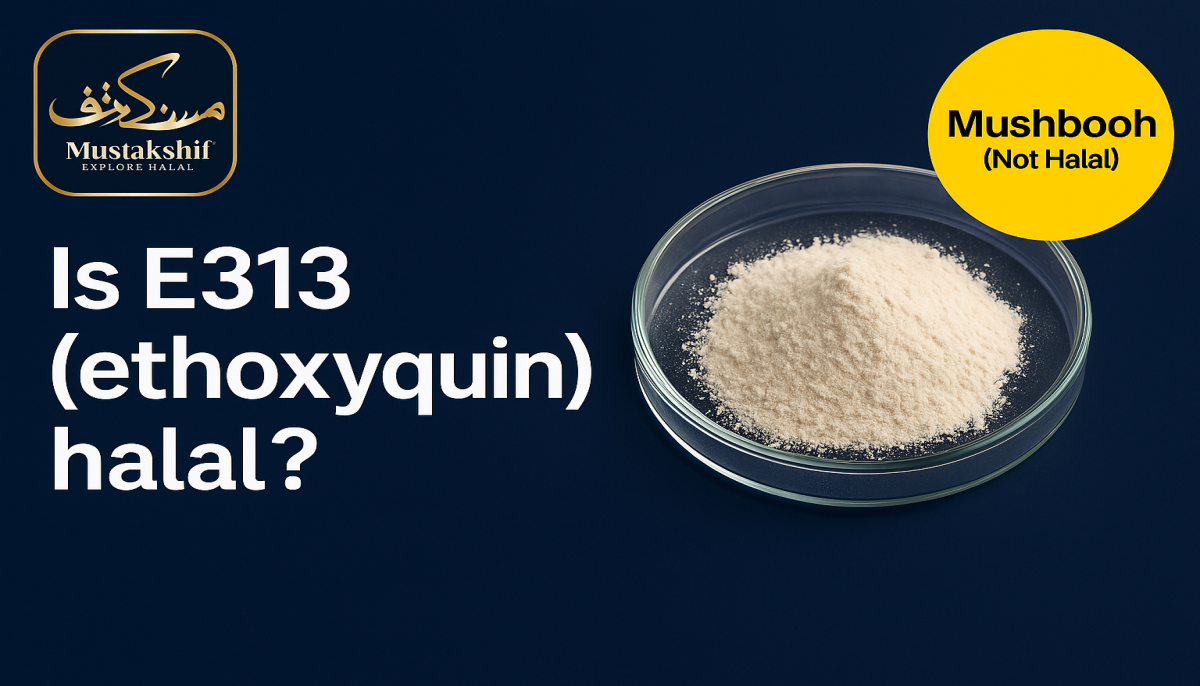
According to Mustakshif Shariah Board, E313 (Ethoxyquin) is classified as Mushbooh (not Halal) meaning its halal status is uncertain. The ingredient’s synthetic nature raises questions about potential contamination during production. There's also the possibility that certain chemicals used in the synthesis may not meet halal criteria, especially if solvents or catalysts of animal origin are involved. Due to this doubt, many scholars often offer caution, neither declaring it halal nor outright haram without further clarification.
Any religious rulings?
As of now, no definitive fatwa has universally confirmed or denied the permissibility of E313. Muslim consumers are advised to consult their local scholars or halal certification bodies, especially if the product forms a regular part of their diet.
A brief insight into ingredient E313
Known by the chemical name ethoxyquin, E313 is a synthetic antioxidant commonly used as a preservative in food and animal feed. This compound is also known by alternative names like EQ and Santoflex. Its primary purpose is to combat rancidity in fatty products by stopping oxidation in its tracks.
How is ethoxyquin created?
Ethoxyquin is entirely synthetic, not derived from plants or animals. The process starts with quinoline as the base. Through ethoxylation, a method of adding an ethoxy group to the structure, scientists develop the active form. After synthesis, the compound is purified to eliminate any leftover residues or unwanted by-products. Once refined, it undergoes rigorous testing to ensure it meets safety and quality standards set for food-grade substances.
Why is ethoxyquin added to food and feed?
E313 functions as both an antioxidant and a preservative. It plays a vital role in extending the freshness of food by stopping fats and oils from turning rancid. Maintaining flavour, appearance, and nutrition helps prolong the usable life of products. Beyond human food, it’s extensively used in the livestock sector. It protects the quality of animal feed, especially those high in fat content. In agriculture, it’s applied post-harvest to fruits like apples and pears, protecting their skin from scalding during storage.
Summing up
Ethoxyquin, labelled as E313, serves an important technical role in food preservation. Yet its synthetic origin and the ambiguity around its production methods place it in a grey area for halal-conscious consumers. Awareness, informed choices, and ongoing research will help clarify its acceptability in the future.