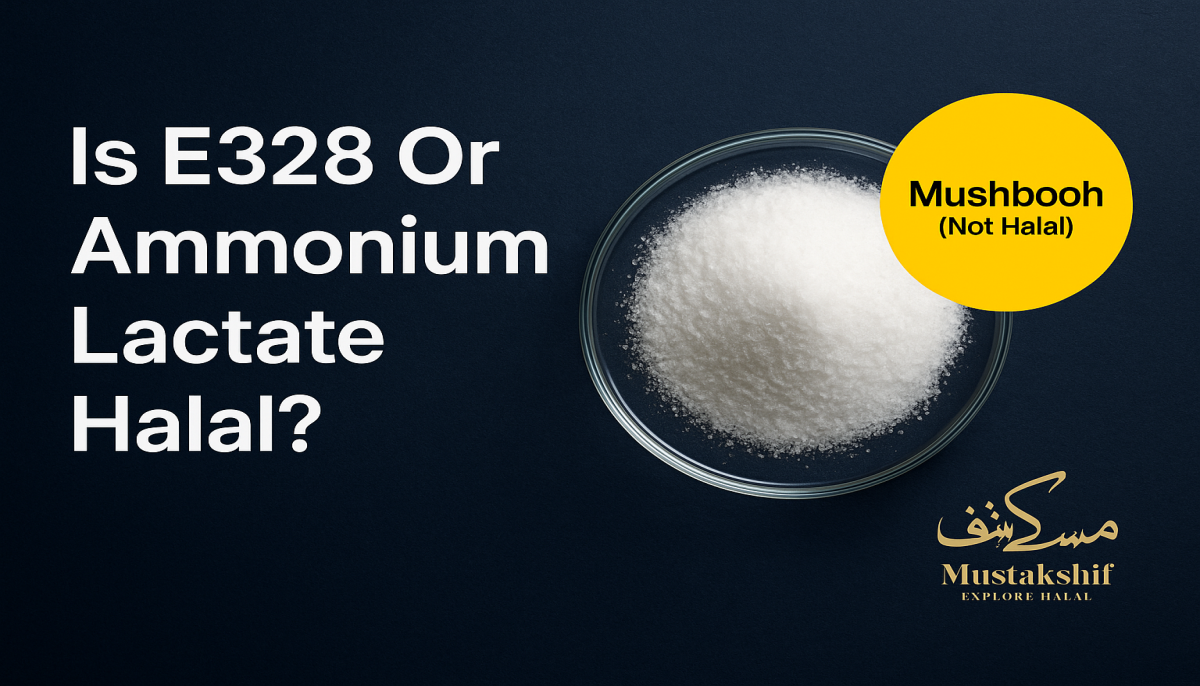
Mustakshif Shariah Board Rulings on E328 or Ammonium Lactate?
According to Mustakshif Shariah Board, E328 or Ammonium Lactate is classified as mushbooh, a term meaning ‘doubtful’ in Arabic. Though its source, lactic acid, is plant-based and often derived from foods like yoghurt or sauerkraut, concerns arise around the origin of fermentation agents and the ammonia used. If animal-derived enzymes or non-halal substances play any role, the end product’s status becomes unclear, leading scholars to mark it as questionable.
Religious opinions and fatwas
Specific fatwas addressing E328 are limited. However, general guidelines suggest caution with ingredients whose sources cannot be clearly verified as halal. Some scholars advise avoidance unless manufacturers can confirm all components are plant-based or halal-certified.
What is E328 – ammonium lactate?
Ammonium lactate, labelled as E328, belongs to a category of food additives that regulate acidity and maintain pH balance. Known chemically as ammonium 2-hydroxypropanoate, this ingredient is commonly used across the food, cosmetic, and pharmaceutical industries.
Where does ammonium lactate come from?
This compound is derived from lactic acid, a by-product of fermenting natural carbohydrates like glucose using lactic acid bacteria. The production involves:
- Fermentation: Lactic acid bacteria break down sugars into lactic acid.
- Neutralisation: The acid reacts with ammonium hydroxide to form ammonium lactate.
- Purification & Testing: Impurities are removed, and the final product is dried to meet food-grade standards.
How is E328 applied to products?
E328 serves as both an acidity regulator and a buffering agent in various food items.
Balancing Acidity: Improves flavour and shelf life in baked goods, dairy, and beverages.
Stabilising pH: Prevents undesirable changes in processed foods.
Beyond edibles, it’s utilised in pharmaceuticals and cosmetics for its buffering properties.
Conclusion
E328, or ammonium lactate, plays a valuable role in food and pharmaceutical products due to its ability to stabilise acidity. While technically sourced from natural fermentation, its halal status remains uncertain without transparency in production. Individuals concerned with halal compliance should seek products with clear certification or verified sourcing.