Mustakshif Shariah Board Rulings on E336: Cream of Tartar
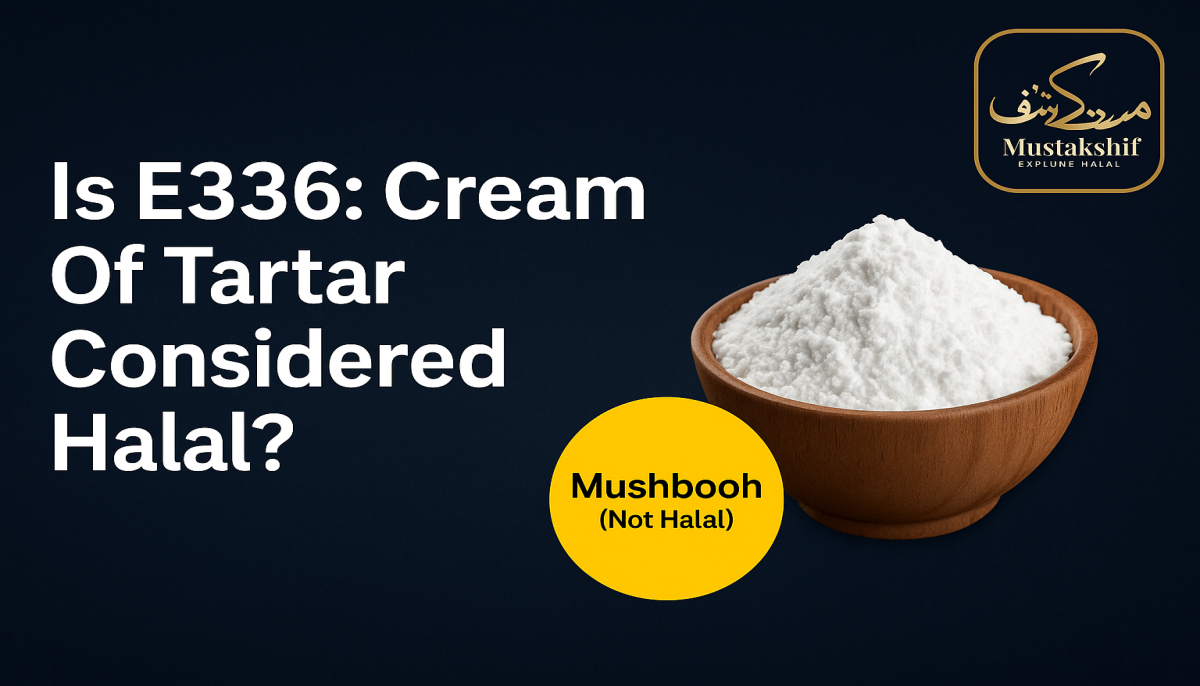
According to Mustakshif Shariah Board, The status of e336 is marked as mushbooh, meaning doubtful. Although the base material, tartaric acid from grapes, is naturally occurring and generally permissible, uncertainties arise during the purification process. Equipment used or additives introduced in this phase may not always align with halal standards. If derived entirely from grapes through traditional wine residue extraction and processed without questionable additives, it may be halal. However, without detailed sourcing information, scholars classify it as unclear.
Scholarly views and fatwas
Fatwas on e336 remain cautious. Islamic scholars often advise consumers to verify the origin or seek alternatives if clarity isn’t provided. Organisations suggest avoiding cream of tartar unless confirmed halal-certified, given the grey area in its production.
Getting to know the additive E336
Cream of tartar, commonly labelled as E336, plays a subtle yet vital role in both home kitchens and industrial food production. It goes by several names – potassium bitartrate, potassium hydrogen tartrate, tartaric acid, and potassium salt – and acts as a leavening agent and stabiliser.
Source and how it’s obtained
This ingredient originates from tartaric acid, a natural compound found in grapes and similar fruits. The source is typically winemaking residues, where potassium tartrates form deposits inside wine barrels. These are collected, purified, and crystallised into the fine powder known as cream of tartar. Production includes thorough testing to meet safety and performance standards.
Culinary and industrial applications
In baking, E336 contributes to rising by combining with baking soda to produce carbon dioxide. It also keeps whipped egg whites firm and stabilised. Confectioners rely on it to stop sugar from crystallising, giving sweets a smoother feel. Aside from baking and sweets, cream of tartar helps maintain the consistency of dairy-based treats like mousses and whipped creams. Manufacturers include it in items like baking powders, fruit jellies, dried egg whites, jams, and juices. Its applications stretch beyond the kitchen, too, appearing in denture powders, nail whiteners, hair rinses, and hair removal creams.
Summary
E336, or cream of tartar, is a familiar name in home kitchens and industrial food lines alike. With wide functionality, from stabilising cream to aiding in the perfect bake, its versatility is undisputed. However, when it comes to religious dietary laws, its mushbooh status urges careful inspection before consumption.