Mustakshif Shariah Board Rulings on E337(Potassium wodium Tartrate)
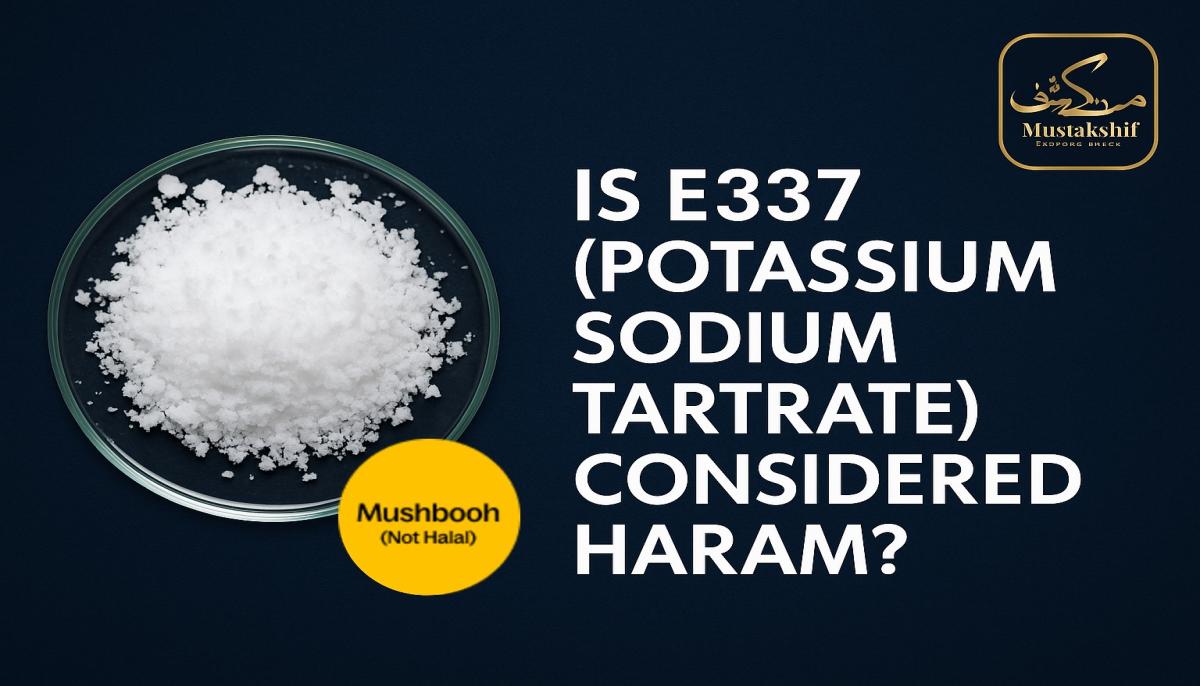
According to Mustakshif Shariah Board, E337 holds a mushbooh (doubtful) classification. Although made from tartaric acid sourced from fruit, the synthetic processing raises concerns. The status depends on the exact origin of the raw materials and the chemical treatment, which isn’t always disclosed. This uncertainty leads many scholars to advise caution unless more clarity is provided.
Religious guidance and scholarly views
There are limited official fatwas specifically addressing e337. However, general rulings on synthetic food additives indicate that ingredients processed through ambiguous methods fall under mushbooh unless full transparency is given. Those concerned with halal compliance are advised to consult trusted certification bodies or avoid products containing this additive if unsure.
Understanding the additive: E337
Potassium sodium tartrate carries the E-number 337 and is more commonly recognised as Rochelle salt. Also known by alternative names such as seignette’s salt and Rochelle salt, this additive plays a vital role in food processing. Used in multiple industries, it supports both texture and stability in consumables.
How is this compound formed?
E337 is a synthetic ingredient made through controlled chemical processes. Although not directly extracted from whole fruits, it begins with tartaric acid, usually sourced from grapes and similar fruits. When tartaric acid is combined with potassium carbonate and sodium carbonate, the result is potassium sodium tartrate. The process continues with crystallisation, followed by purification to meet safety standards for food use.
Where does e337 fit in the food and non-food sectors?
In food manufacturing, e337 functions primarily as a stabiliser and acidity regulator. Its main roles include:
- Maintaining pH balance to preserve food quality
- Preventing unwanted reactions with metal ions
- acting as a buffering agent in acidic or alkaline systems
- Improving texture and lifespan in processed foods
- Contributing to the rising action in baking powder
Outside the kitchen, it also appears in the pharmaceutical field and even in mirror production. You’ll also find it in products like mouthwash and certain medicinal laxatives.
Closing views
Potassium sodium tartrate is a valuable yet debated ingredient. While widely used in food and non-food industries, its halal status demands further scrutiny. Checking for certified halal sources or verified ingredient origins is the safest route for consumers seeking full compliance with dietary laws.