Mustakshif Shariah Board Rulings on E353 or Malic Acid
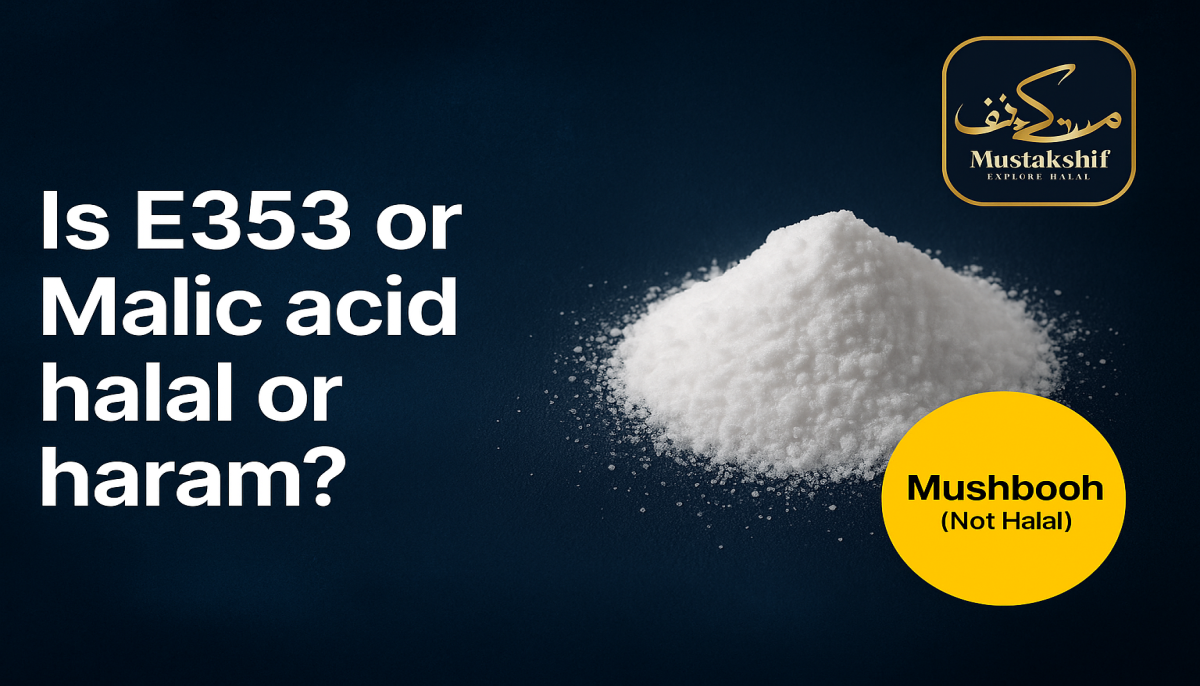
According to Mustakshif Shariah Board, E-353 is classed as mushbooh, which means doubtful or questionable. Although the base ingredient is tartaric acid, which comes from fruit, the concern lies in how it’s sourced. Much of it is obtained from wine by-products, raising doubts about its permissibility in Islamic diets. Unless the origin and production process are confirmed as free from alcohol, its status remains unclear.
What is E-353?
E-353 is a code specific for Metatartaric Acid. This food additive is used as a stabiliser in winemaking. It’s derived from tartaric acid, a naturally occurring acid found in fruits like grapes and bananas. This is especially important in wine, where it improves appearance, taste, and shelf life.
Source of E-353:
Metatartaric acid is produced by heating tartaric acid, which itself is usually collected during the wine-making process. After fermentation, tartaric acid is recovered as a by-product and then processed into metatartaric acid. Though it comes from plant sources, it’s classified as a stabiliser and preservative because of its role in keeping foods stable over time.
What’s it used for?
E353 or Malic Acid is mostly used in:
- Wine: To prevent tartrate crystals from forming in the bottle, keep the wine clear and stable.
- Food preservation: to maintain colour and flavour, especially in processed products that are stored for long periods.
- Acidity Regulator: Helps control and stabilise the acidity of food and beverages.
- Sequestrant: Binds metal ions (like calcium or iron) to prevent unwanted chemical reactions, such as discoloration or spoilage.
Its ability to keep things looking and tasting as they should makes it a handy ingredient in food production.
Final Word
E-353 (Metatartaric Acid) is a useful additive in wine and food for stabilising and preserving. Still, due to its ties to the wine industry, it holds a Mushbooh status for those following halal guidelines.