Mustakshif Shariah Board Rulings on E399 (Calcium Gluconate)
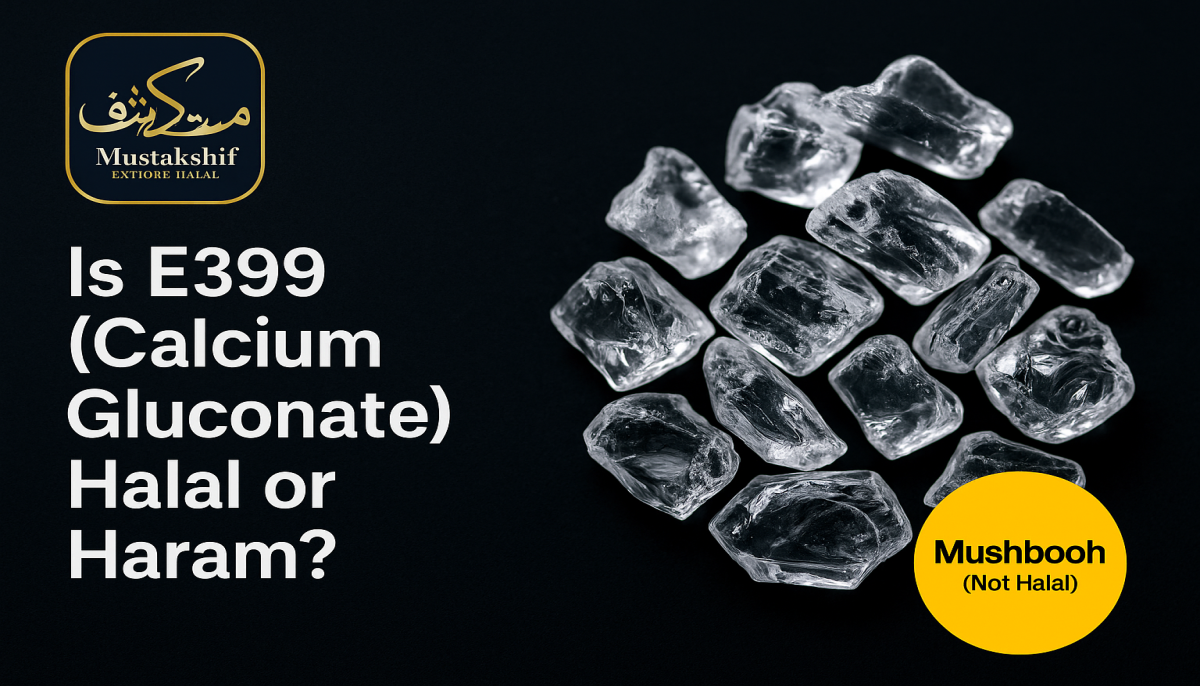
According to Mustakshif Shariah Board , calcium lactobionate is considered Mushbooh (doubtful). While the chemical itself is halal in its pure form, the source of calcium and gluconic acid can be problematic. If animal-derived materials are used, or if the fermentation process involves haram enzymes or dairy byproducts, the final product may not be halal. Without full transparency from the manufacturer, its permissibility remains unclear.
Fatwas concerning the ingredient
There are no specific fatwas available on E399. However, Islamic scholars generally advise avoiding ingredients with unknown or doubtful origins. The lack of detailed sourcing makes it necessary to check for halal certification before consumption.
Introduction of Ingredient
Calcium Gluconate, identified by the E-code E399, is used in food and pharmaceutical products. It serves mainly as a mineral supplement and firming agent. This compound is a calcium salt of gluconic acid. Its common synonyms include calcium salt of gluconic acid and E399. It helps maintain calcium levels in the body and improves the texture of processed foods.
How is it extracted?
E399, or calcium lactobionate, is produced through a multi-step process. First, lactose (milk sugar) undergoes oxidation to form lactobionic acid. This acid is then reacted with calcium hydroxide, resulting in the formation of calcium lactobionate. The final step involves purification, where impurities are removed to ensure the compound meets food-grade standards for safe use in food and pharmaceutical products.
Usage of E399
E399 is widely used in the food industry to enrich products with calcium. It also functions as a firming agent in canned fruits and vegetables, helping to preserve texture. In the pharmaceutical industry, it's used to treat calcium deficiency. Additionally, it can be found in some health supplements and injectable medications for medical purposes.
Conclusion
E399 is a useful additive in food and medicine. It helps maintain calcium levels and improves product texture. However, its halal status depends on how it is produced. Due to potential animal-based sources and fermentation agents, it is currently regarded as Mushbooh. Consumers should verify the source or look for halal certification before using it.