Mustakshif Shariah Board Rulings on E429
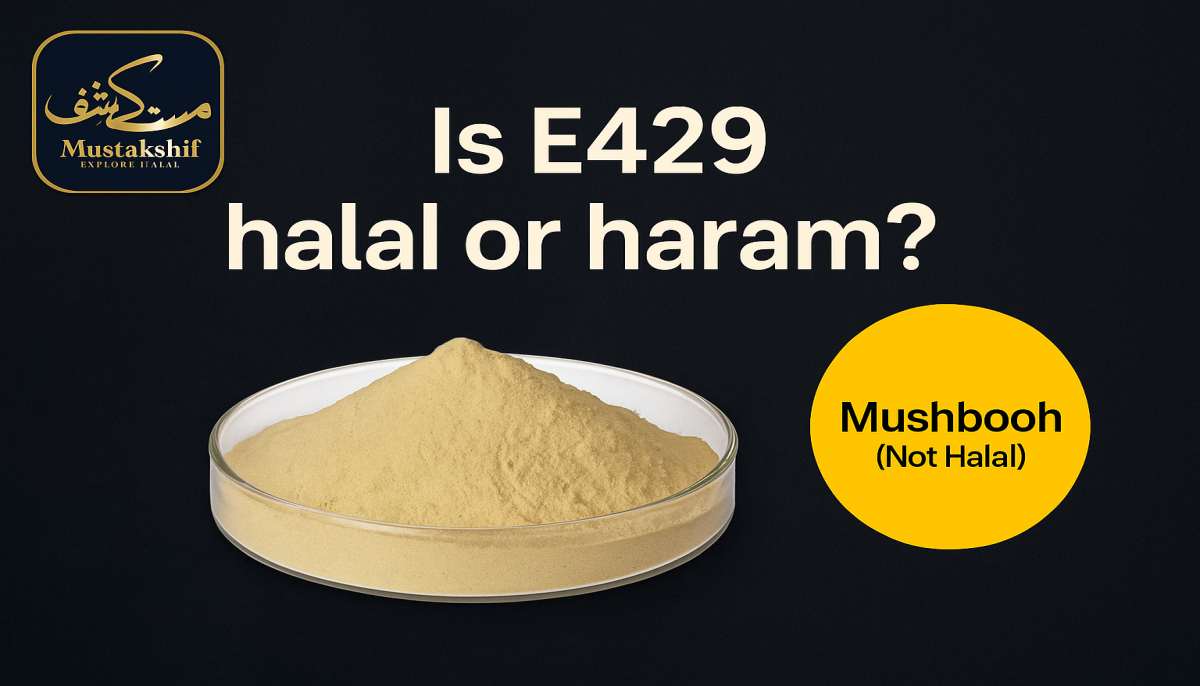
According to Mustakshif Shariah Board , The halal status of e429 depends entirely on its source. If peptones are derived from plant-based proteins or animals slaughtered according to Islamic guidelines, they are considered halal. However, if the protein source comes from non-halal animal products (e.g., pork or animals not slaughtered according to Islamic law), or if the hydrolysis process involves haram enzymes or contamination, then e429 would be haram. Because manufacturers often don’t disclose specific sourcing or processing methods, E429 is often classified as mushbooh (doubtful) unless halal certification is clearly stated.
Fatwas concerning the ingredient
Islamic scholars and halal authorities advise caution with peptones. They emphasise verifying the origin of the proteins and the enzymes used in the hydrolysis process. Without this transparency, peptones cannot be confirmed as halal. Some halal certifiers allow plant-based or halal-slaughtered animal-derived peptones, provided no cross-contamination or prohibited substances are involved.
Introduction
E429 refers to peptones, a group of protein-derived compounds commonly used as food additives, flavour enhancers, and in industrial and microbiological applications. Also known as protein hydrolysates or hydrolyzed proteins, peptones appear as powders or liquids and are valued for their ability to provide nutrients and enhance taste.
How is it extracted?
Peptones are produced through the hydrolysis of proteins, using either enzymatic (with protease enzymes) or acid treatment methods. The process begins with selecting protein sources, which can be either animal-based (e.g., meat, dairy, gelatin) or plant-based (e.g., soy, wheat). Once the proteins are hydrolyzed into smaller peptides and amino acids, the mixture undergoes purification to remove unwanted residues. Finally, the solution is concentrated and dried into a usable form, which is then tested for quality and safety.
Uses of the Ingredient
E429 (peptones) are widely used in the food industry as flavour enhancers, nutrient sources, and processing aids. They are also common in microbiological media for growing bacteria and fungi in laboratories. In food, peptones may appear in soups, broths, sauces, snacks, and meat products to boost umami taste and nutritional value.
Conclusion
E429 (peptones) are functional ingredients with widespread use in food and scientific industries. However, their halal status is uncertain without clear information on the protein source and processing methods. Due to this ambiguity, e429 is best regarded as mushbooh unless halal certification is available. Muslim consumers are encouraged to check labels or contact manufacturers to confirm halal compliance before consumption.