Mustakshif Shariah Board Rulings on E436
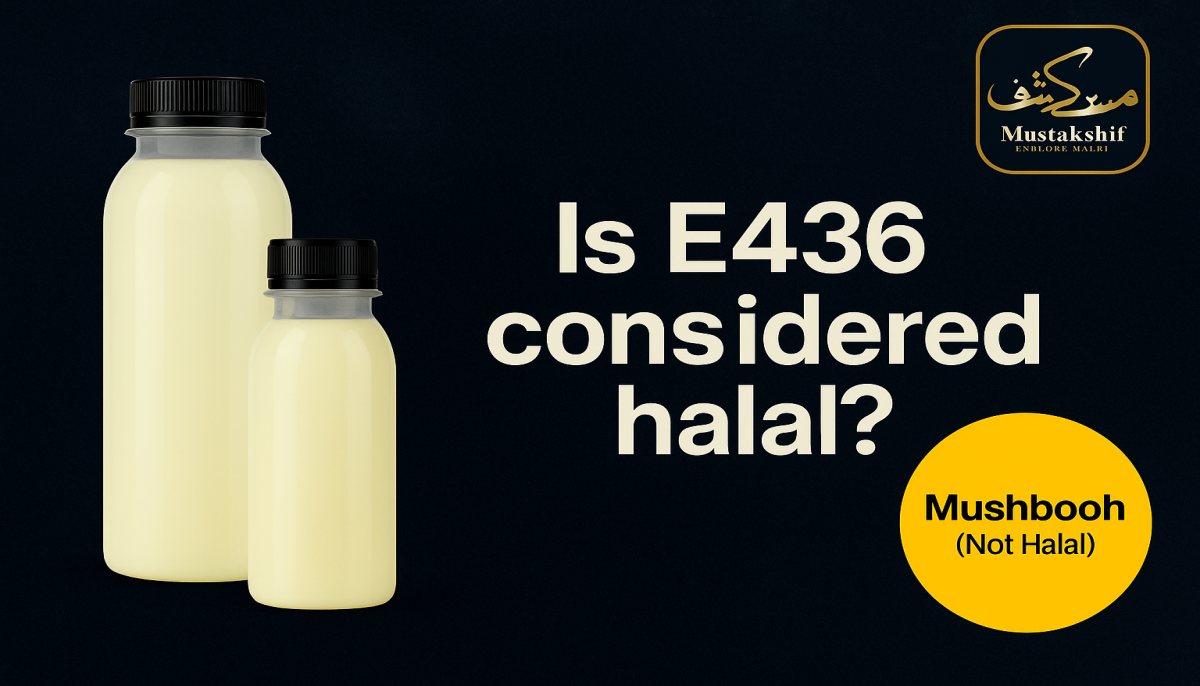
According to Mustakshif Shariah Board , E436 is considered mashbooh (doubtful) in Islamic dietary law because its source is unclear. It is an emulsifier made by reacting ethylene oxide with stearic acid, which can be derived from either animal fat (potentially non-halal) or plant-based oils. Without clear sourcing or halal certification, the permissibility of E436 remains uncertain, and caution is advised for Muslim consumers.
Fatwas concerning the ingredient
Most Islamic scholars agree that E436 is permissible as long as no non-halal substances are involved in its manufacture. Halal certification from trusted bodies confirms its acceptability for consumption.
Introduction of Ingredient
E436 refers to Polyoxyethylene (20) Sorbitan Tristearate, Polysorbate 65, Polyoxyethylene (20) Sorbitan Tristearate, and Tween 65, often used together as food additives. These compounds are salts of tartaric acid and are commonly called tartrate salts. They help stabilize food texture and act as emulsifiers in various products. Both sodium and potassium tartrates appear as white crystalline powders.
How is it extracted?
Polysorbate 65 is synthetically produced through a multi-step chemical process. It begins with the esterification of sorbitol, a sugar alcohol, and stearic acid, which is typically sourced from either vegetable oils or animal fats. This forms sorbitan monostearate. Next, the compound undergoes ethoxylation, where it is reacted with ethylene oxide to introduce polyoxyethylene chains, resulting in Polysorbate 65. The final product is carefully purified and tested to meet food-grade quality and safety standards.
Uses of the Ingredient
E436 is used primarily as a stabilizer and emulsifier. It helps maintain the consistency and texture of products like baked goods, confectionery, and beverages. These tartrates also regulate acidity and prevent crystallization, improving the shelf life of processed foods.
Conclusion
Sodium and potassium tartrates (E436) are typically halal due to their plant origins and chemical nature. Always look for halal certification for assurance when purchasing products containing these additives.