Mustakshif Shariah Board Rulings on E340 on E470: Sodium, Potassium, & Calcium Salts of Fatty Acids
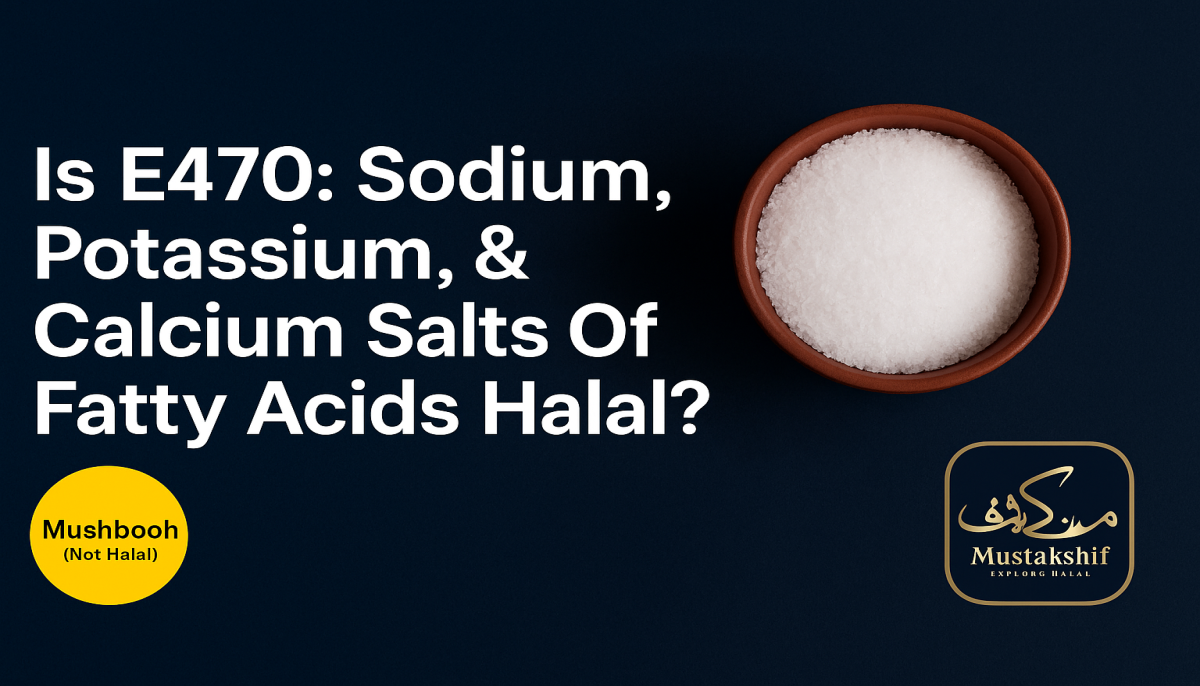
According to Mustakshif Shariah Board, E470 is considered mushbooh due to uncertainty around the source of fatty acids. If derived from vegetable oils, it is halal. However, when extracted from animal fats, its permissibility depends on the animal’s slaughter method. Consumers are advised to verify the origin to ensure compliance with dietary laws.
What do scholars say about it?
No official fatwas directly address E470. Islamic authorities recommend checking with manufacturers to confirm the ingredient’s source. In cases of doubt, consumers are encouraged to avoid the product or seek alternatives.
What is E470?
E470 is a food additive known as the Sodium, Potassium, and Calcium Salts of Fatty Acids, widely used for its emulsifying and stabilising properties. These compounds are also referred to as soap salts, fatty acid salts, or metallic salts of fatty acids. Derived from natural fats and oils, E470 plays a crucial role in maintaining texture and consistency in various processed foods.
Extraction process explained
E470 functions as an emulsifier, stabiliser, and anticaking agent.
- These salts are derived from natural fatty acids found in animal fats and vegetable oils.
- The extraction begins with isolating fatty acids from sources such as tallow, palm oil, or coconut oil.
- Saponification follows, where fatty acids react with sodium, potassium, or calcium hydroxides.
- The resulting salts are then purified to eliminate residual substances and impurities.
- Finally, they are dried and converted into powder or granules for further use.
How is this ingredient used?
E470 salts help stabilise oil and water mixtures in margarine and similar products.
- In dry mixes, they prevent clumping and help powders flow freely.
- Used in cake mixes and oven-ready fries, they enhance food texture and stability.
- These salts appear in baked goods, spreads, powdered foods, and confectionery items.
- In pharmaceuticals, they help tablets retain shape and reduce moisture clumping.
- Cosmetic products use them to stabilise water and oil-based formulations.
Conclusion
E470 is a versatile food additive with essential functions in emulsification and stabilisation. While generally safe, its Halal status depends on the fatty acid source, making it Mushbooh. Always check product certifications for assurance.