Mustakshif Shariah Board Rulings on E473
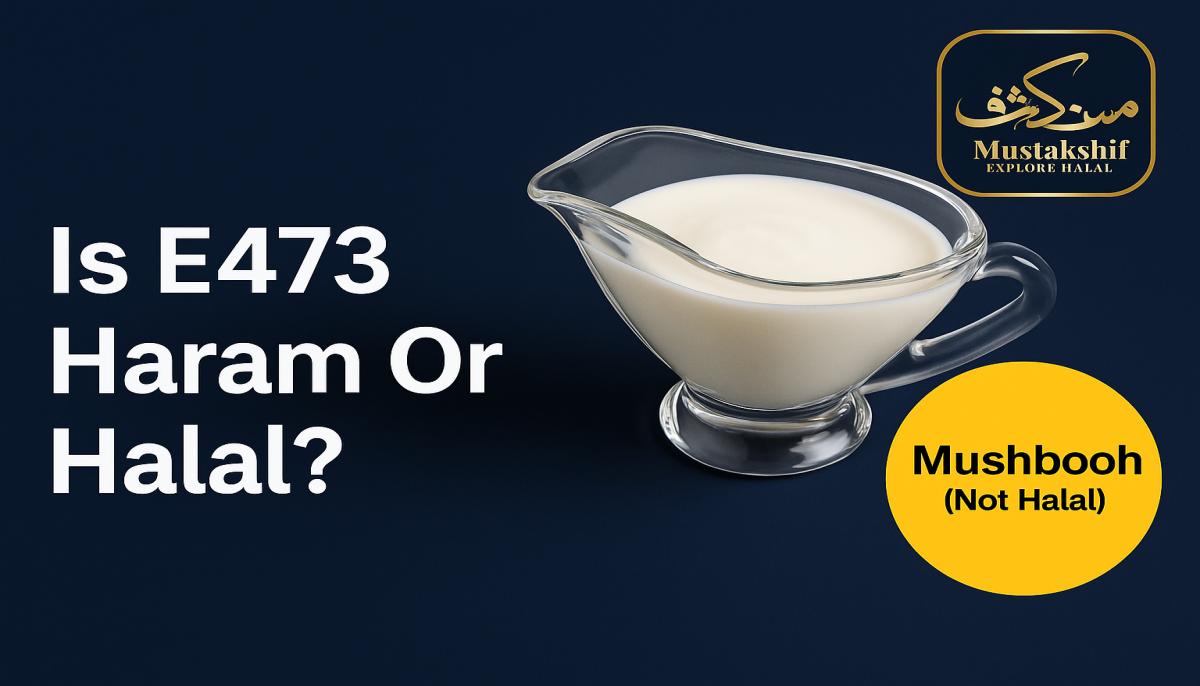
According to Mustakshif Shariah Board, E473 is classified as Mushbooh (not Halal) Though often derived from plant sources, there's no universal guarantee. Some manufacturers may use animal-based fatty acids, which raises questions about permissibility unless clearly labelled or certified.
Scholarly views and fatwas
Several Islamic scholars have issued cautionary advice. They recommend verifying the origin of the fatty acids before consumption. Without clear proof of plant-based sources, scholars urge Muslims to avoid it or seek halal-certified alternatives.
A closer look at E473
Known in food circles as E473, sucrose esters of fatty acids perform an essential role in modern manufacturing. This additive also referred to as sucrose esters, sucroglycerides, or sucrose monostearate (depending on its structure), appears in countless food, cosmetic, and pharmaceutical products. Its main advantage is mixing substances like water and oil that wouldn't normally combine.
How does this compound come to life?
Esterification is the process by which E473 is produced when fatty acids and sugar combine. Typically, sugar is derived from sugar beets or sugarcane. Conversely, the fatty acids may come from plant oils like palm, soybean, or coconut. But in certain situations, animal fats might also be utilised. Because of its amphiphilia, the resultant molecule can mix with both fat- and water-based substances.
Why E473 is used across industries?
The multifunctional character of E473 is very advantageous for food products.
- In dressings and sauces, it keeps oil and water from parting ways.
- In baked items: adds softness and improves volume.
- In chocolate and confectionery, it creates smoother, more stable textures.
- In dairy treats: delivers a richer, creamier mouthfeel.
- Soft drinks help flavour oils spread evenly.
Cosmetic brands also rely on it for smoothness in lotions, creams, and foundations.
Final word
E473, or sucrose esters of fatty acids, quietly supports the food and beauty industries by keeping mixtures stable, textures delightful, and products appealing. Still, for those concerned about halal compliance, checking the source is essential.