Mustakshif Shariah Board Rulings on E474: Sucroglycerides
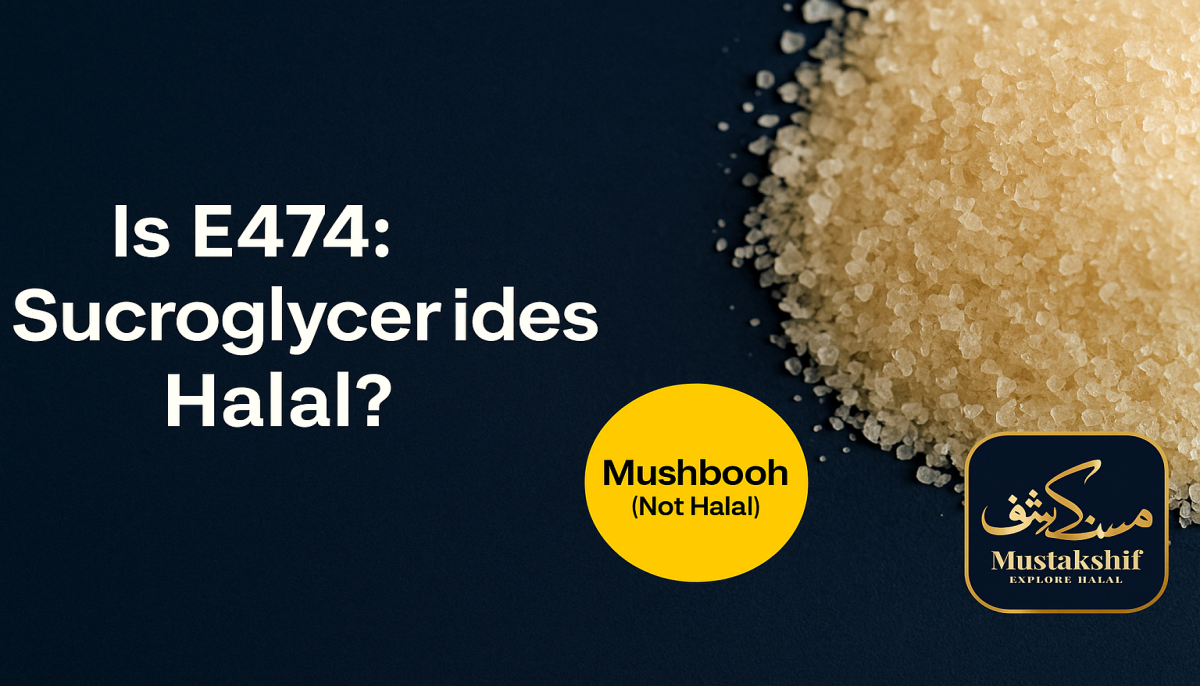
According to Mustakshif Shariah Board, E474: Sucroglycerides status falls under mushbooh, meaning its permissibility depends on the fat source. If derived from halal-certified plants, it’s acceptable; however, animal-based glycerides require verification. Without verification of the source, it cannot be conclusively marked as halal. Consumers following strict dietary laws are advised to confirm the source with manufacturers.
Are there any fatwas about E474?
Specific fatwas about E474 remain limited. However, scholars generally classify such additives as mushbooh when their origin isn’t clearly plant-based or when cross-contamination with animal derivatives is possible. It is frequently advised to speak with the producer or halal-certifying organisations directly.
What is e474? A brief introduction
E474, commonly called sucroglycerides, appears under several names, such as sugar esters, sucrose monoglycerides, and glycerol esters of fatty acids. These names refer to the same group of compounds. They’re known for their function as emulsifiers and stabilisers, keeping mixtures uniform in texture and consistency. Recognised globally, these additives are key in improving product texture, extending shelf life, and ensuring ingredient stability.
Where does sucroglyceride come from?
This additive comes from natural oils and fats. Most producers rely on plant-derived sources such as soybean or sunflower oils. Animal fats may also be used, but these are less frequent due to dietary laws and consumer demand. Extraction begins with hydrolysing oils to release glycerol and fatty acids. These are then chemically combined with sucrose under heat, a process known as esterification. Afterward, impurities and leftovers are removed to create a purified food-grade emulsifier.
How is e474 used in everyday products?
In food production, sucroglycerides maintain the smooth consistency of products like salad dressings, sauces, and margarine. They make baked goods fluffier by distributing ingredients evenly. By preventing oil separation, they also extend the shelf life of packaged foods.
Outside food, E474, plays a role in skincare and pharmaceuticals. Cosmetic creams rely on these emulsifiers for a stable, creamy texture. In the medical field, they help spread active ingredients evenly in drug formulations.
Final thoughts
E474, or sucroglycerides, plays a vital role in food and product manufacturing due to its emulsifying properties. Its halal status depends on where it comes from, even though it is commonly used and regarded as safe. Plant-based versions are generally acceptable, but the presence of animal fats without clear labeling makes this additive a matter of caution for observant consumers.