Mustakshif Shariah Board Rulings on E479b
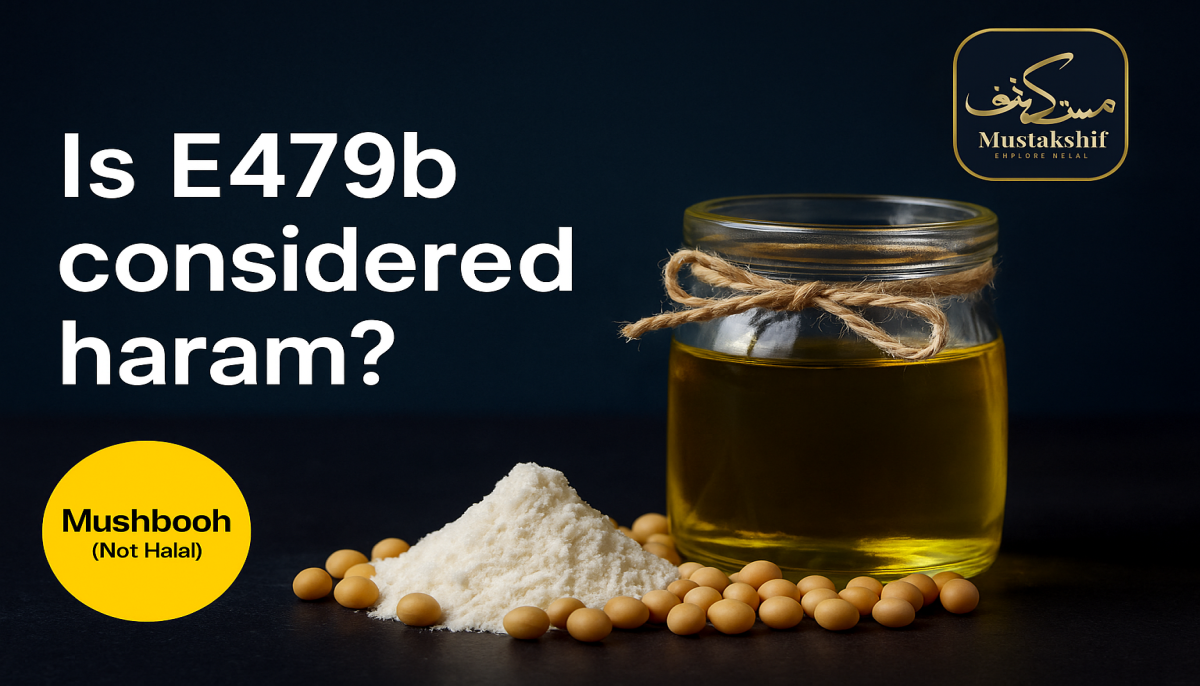
According to Mustakshif Shariah Board, E479b Classified as mushbooh, this additive falls into a doubtful category in Islamic dietary law. The reason lies in the uncertain origin of the fatty acids used in the mono-- and diglycerides. If sourced from animal fat, it may not meet halal requirements. Unless labels confirm vegetable-only ingredients, its status remains questionable.
Guidance from religious scholars
Most fatwas regarding this additive advise caution. Islamic scholars recommend seeking clarity from manufacturers or choosing alternatives clearly labelled as plant-based.
Introduction
E479b, also called thermally oxidised soya bean oil, interacts with mono- and diglycerides and serves as a key emulsifier in food manufacturing. This additive ensures fats and water blend smoothly in products. Alternative names include oxidised soya bean oil emulsifier and thermally treated soya oil-MG/DG.
How is the substance prepared?
Manufacturing starts with extracting oil from soybeans. This is usually done using mechanical pressing or chemical solvents. The next stage involves heating the oil under controlled conditions to deteriorate it. Afterward, the oxidised oil is combined with mono- and diglycerides, compounds created by reacting fatty acids with glycerol. Purification follows, ensuring safety and meeting regulatory food standards.
Sources for the fatty acids in mono-- and diglycerides may be plant-based or animal-based, adding uncertainty for those following specific dietary rules.
How does e479b function in foods?
This additive improves the quality of fried and baked items. The E479B creates a consistent texture, limits oil absorption during frying, and preserves the product’s structural integrity. Emulsification helps keep ingredients from separating, especially in products that mix oil and water. It also extends shelf life, keeping items fresher for longer.
where it’s used
- Snack foods: commonly added to crisps and fried snacks for crunch and reduced oiliness
- Baked goods: enhances texture in cakes, rolls, and pastries
- spreads: improves uniformity and spreadability in margarine
- Industrial frying: reduces oil breakdown, enhancing product stability in large-scale cooking
Final thoughts
Widely utilised for stabilising processed foods, E479b’s halal status depends on its sourcing. Transparency from producers helps Muslim consumers make informed dietary choices. Always review labels or seek halal-certified alternatives when in doubt.