Mustakshif Shariah Board Rulings on E482: Calcium stearoyl-2-lactylate
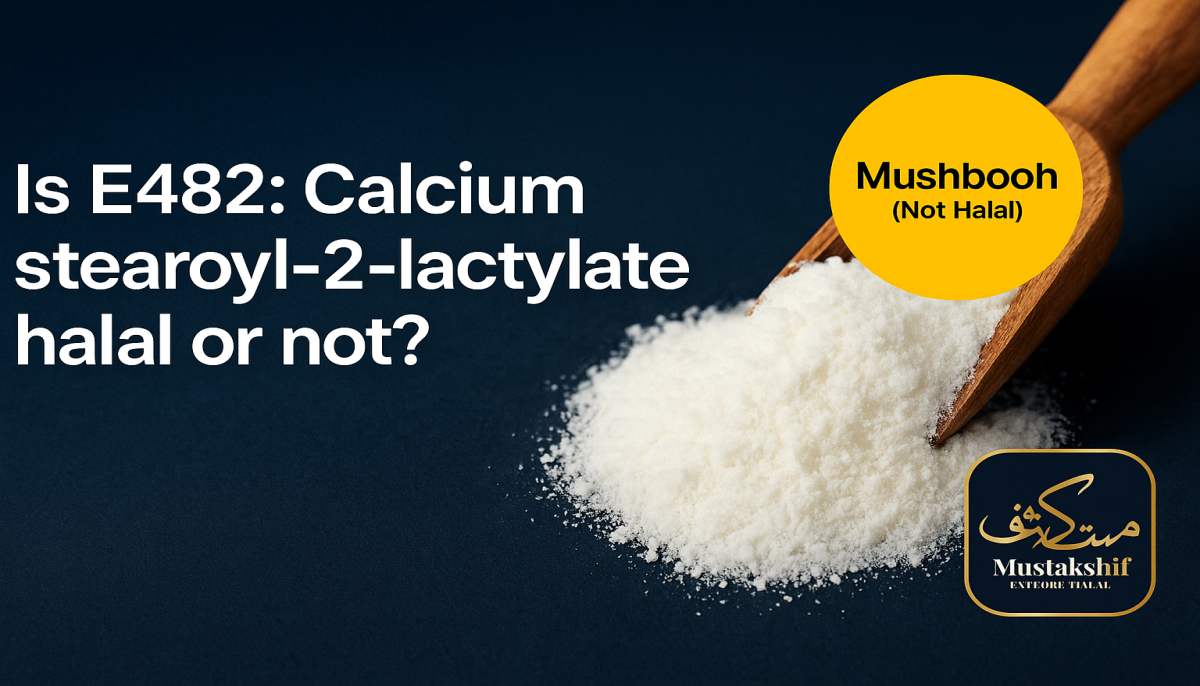
According to Mustakshif Shariah Board, Calcium stearoyl-2-lactylate is regarded as mushbooh. This status exists because the origin of stearic acid remains ambiguous unless specified. If derived from animal sources, and those animals weren’t slaughtered according to Islamic law, the additive could be impermissible.
Opinions from religious authorities
Specific fatwas vary by institution and region. Some scholars advise avoidance unless the product label clearly states vegetable-based sourcing. Others accept it when manufacturers confirm non-animal origins. The main concern is the unpredictability of the raw materials.
What is e482?
Calcium stearoyl-2-lactylate is the food additive coded as E482. This compound often appears on ingredient labels under several names, including calcium stearoyl lactylate. Classified as an emulsifier, stabiliser, and anti-staling agent, its function revolves around improving texture and extending shelf life across various processed goods.
How is e482 created?
Manufacturing E482 involves a multi-step process. Stearic acid, either sourced from plant fats or animal-based materials, combines with lactyl lactate, originating from sugar fermentation processes. The resulting stearoyl lactylate then reacts with calcium salts. Following this, the mixture is purified, dried into powder, and thoroughly tested for food safety compliance.
How does it behave in foods?
E482 improves food quality in a number of ways:
- Blending immiscible components: Oil and water mix uniformly in margarine and dressings.
- Preserving consistency: Prevents separation in dairy items like processed cheese.
- Extending freshness: Slows starch recrystallisation in baked goods, keeping bread soft longer.
Common applications span bakery items, confectionery, sauces, and spreads, where it improves dough workability and shelf stability.
Summary
E482, or calcium stearoyl-2-lactylate, is a food additive valued for its emulsifying, stabilising, and anti-staling properties. Although used widely in baking, confectionery, dairy, and sauces, its halal status remains uncertain due to the unclear sourcing of key components. Always check with manufacturers or certified authorities if religious compliance is a concern.