Mustakshif Shariah Board Rulings on E492 (Sorbitan Tristearate)
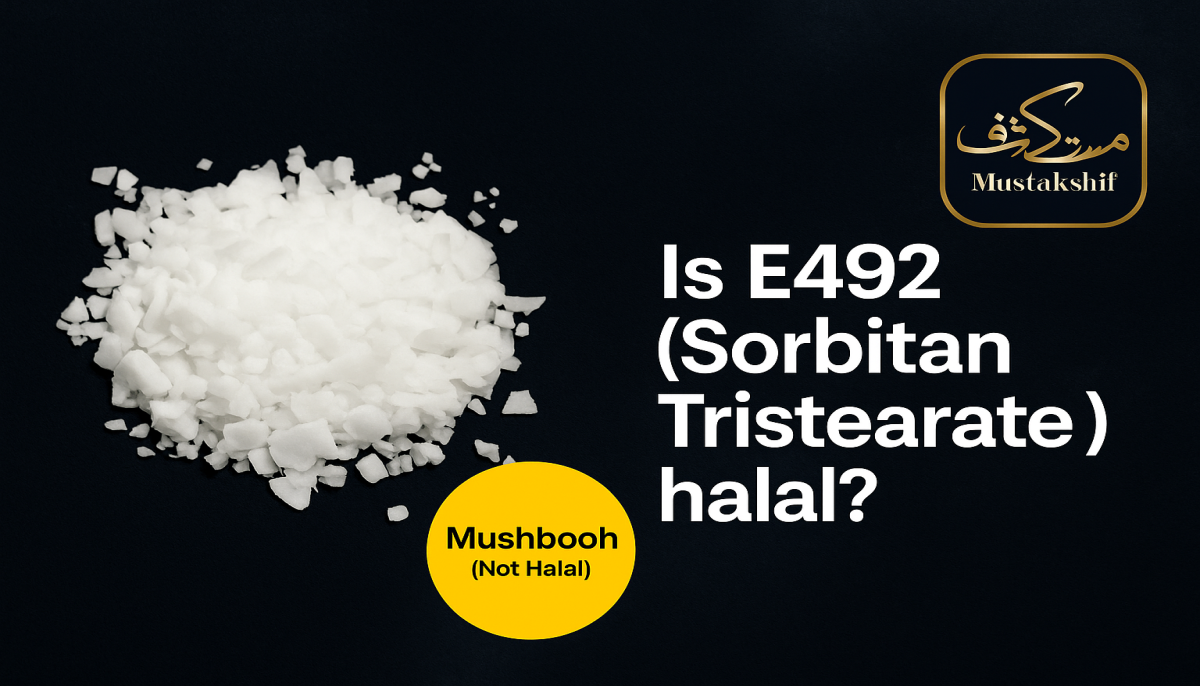
According to Mustakshif Shariah Board, E492 is considered Mushbooh. If it is made using plant-based stearic acid, it is halal. But if it comes from non-halal animal fat, then it becomes haram. Since the source is not usually listed on packaging, the ingredient remains doubtful unless certified.
Fatwas Concerning the Ingredient
Many Islamic scholars and halal bodies advise avoiding E492 if its source is unclear. Only E492 made from halal-certified plant sources is considered permissible. In absence of such confirmation, it is best treated as mushbooh.
Introduction of Ingredient
E492 is the food additive known as Sorbitan Tristearate. It is also called sorbitan tristearate ester or sorbitan trioctadecanoate. This ingredient is widely used in processed foods. It appears as a waxy solid and serves as an emulsifier. Its main job is to mix oil and water in food products.
How is it extracted?
Sorbitan Tristearate is made by reacting sorbitol and stearic acid. Sorbitol is a sugar alcohol usually obtained from corn syrup or other plant starches. Stearic acid, however, can be derived from animal fat or plant fat. This makes the source of E492 highly variable. If the stearic acid comes from plant oils, the ingredient is plant-based. But if it comes from animal sources, it may be non-halal unless confirmed otherwise.
Usage of E492
E492 functions as an emulsifier and stabiliser in many food items. It is commonly found in bakery products, margarine, chocolate, and chewing gum. It helps mix fats with water and keeps food products smooth. It also improves shelf life and prevents oil separation in products.
Conclusion
E492 (Sorbitan Tristearate) may be halal or haram depending on its origin. As the source is often not mentioned, it is classified as mushbooh. Always check for halal certification before consumption to ensure compliance with Islamic dietary rules.