Mustakshif Shariah Board Rulings on E542 (Edible Bone Phosphate)
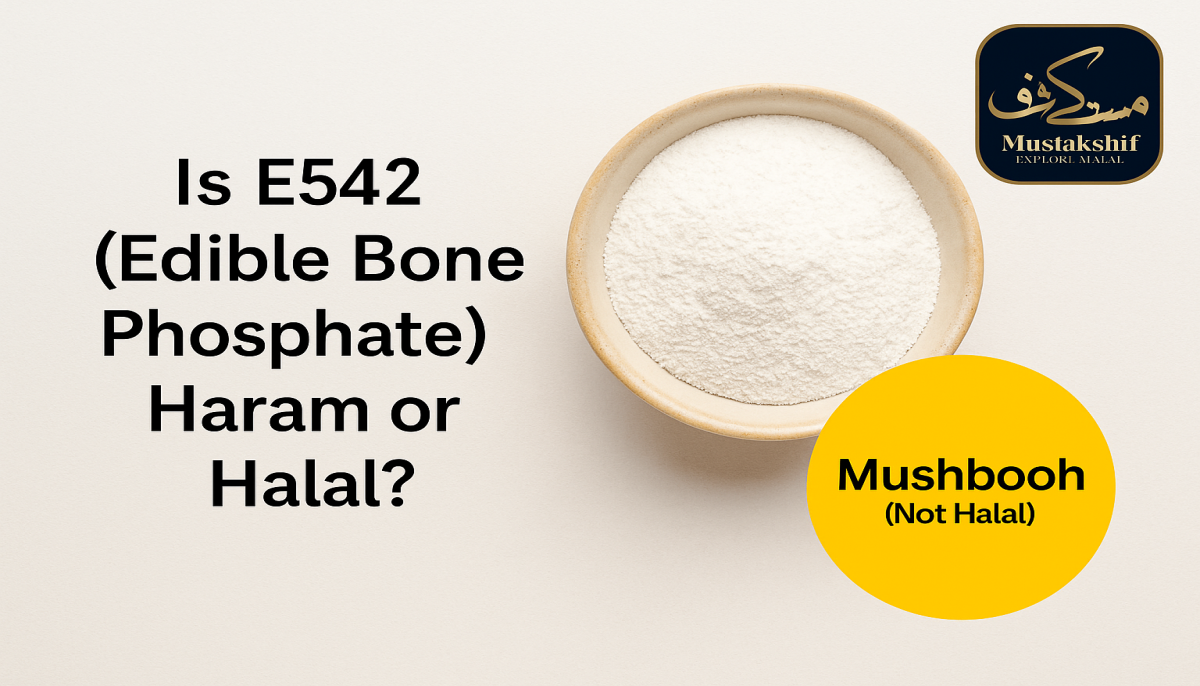
According to Mustakshif Shariah Board, E542 (Edible bone Phosphate ) is classified as Mushbooh (not Halal) which means its permissibility is uncertain. The concern lies in whether the bones used come from halal-slaughtered animals. If the source cannot be confirmed, the ingredient remains doubtful for those following halal dietary laws. Its classification reflects this ambiguity rather than a clear prohibition.
Ingredient overview
Edible bone phosphate is labelled under the E-code 542. It may also appear on ingredient lists as Calcium Phosphate or Tricalcium Phosphate. This additive is mainly used to improve food texture and flow properties in powder-based products.
How is E542 extracted?
E542, also known as edible bone phosphate, is derived from animal bones, most commonly from cattle. The manufacturing process involves the following steps:
- Cleaning and preparing the bones
Animal bones are thoroughly cleaned to remove any remaining organic matter, fats, or tissues, ensuring only the mineral-
rich part of the bone remains.
- High-temperature treatment (Calcination)
The cleaned bones are then exposed to very high temperatures. This process, called calcination, transforms the calcium
carbonate in the bones into calcium oxide (commonly known as lime).
- Chemical reaction with phosphoric acid
The calcium oxide is then reacted with phosphoric acid, producing calcium phosphate, the main component of E542.
- Purification and final processing
The resulting calcium phosphate is purified to remove any leftover acids or contaminants. It is then dried, resulting in the
final edible-grade E542 used in various food and pharmaceutical applications.
Uses of E542
E542 helps maintain the quality of powdered food products by preventing clumping, making it essential in items like spices, baking mixes, and ready-to-cook soups. It also improves the mouthfeel of some dairy-based foods. In medicine, it’s used to bind ingredients in tablets and ensure consistent, accurate dosing.
Conclusion
E542 is a widely used food additive with practical roles in production. However, its animal-based origin creates uncertainty for halal-conscious consumers. Unless certified, many prefer to avoid E542 and opt for plant-based or halal-verified alternatives.