Mustakshif Shariah Board Rulings onE570 (Stearic Acid)
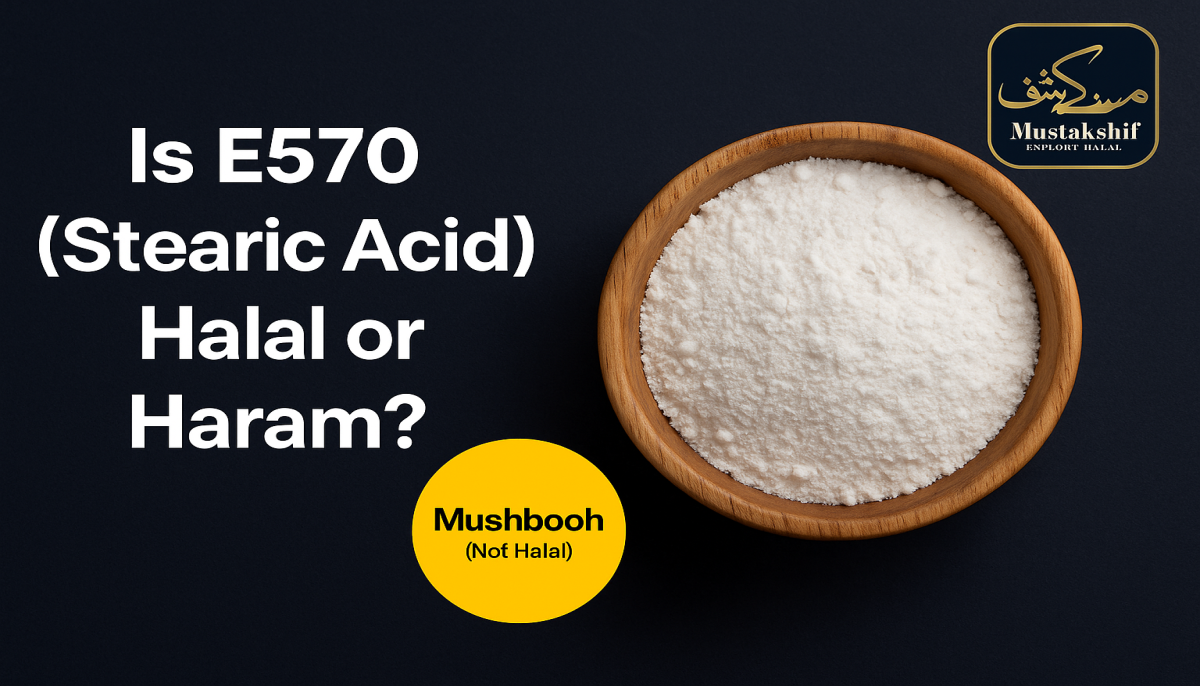
According to Mustakshif Shariah Board, The halal status of E570 depends on its source. If derived from plant oils, it is considered halal. However, if it is sourced from animal fats, especially from pigs or animals not slaughtered according to Islamic law, it is haram. Due to the lack of clear labeling about the source, many scholars classify E570 as mushbooh (doubtful) unless it comes with halal certification.
Fatwas concerning the ingredient
Islamic scholars recommend caution with E570 if the source is unknown. Most halal certification bodies require confirmation that the stearic acid is plant-based or from halal-slaughtered animals. Without such verification, it is advised to avoid products containing E570.
Introduction of Ingredient
E570 is the food additive code for Stearic Acid. It is a saturated fatty acid commonly found in animal and plant fats. This ingredient is also popular with some other names, such as octadecanoic acid, C18 fatty acid, or simply stearic acid. This ingredient is widely used in food and cosmetics for its emulsifying and stabilising properties.
How Is It Extracted?
Stearic acid is typically extracted through the hydrolysis and saponification of fats and oils. These fats can be animal-based (such as tallow from cows or pigs) or plant-based (like palm oil or coconut oil). The source depends on the manufacturer. The extraction involves breaking down triglycerides into fatty acids, then isolating stearic acid in a purified form suitable for use in food products.
Functions of E570
E570 functions mainly as an emulsifier and thickening agent. It helps stabilise processed foods, giving them the right texture and consistency. You can find stearic acid in products such as chocolates, margarine, chewing gum, and baked goods. It is also used in pharmaceuticals and cosmetics for its lubricating and binding properties.
Conclusion
Stearic acid (E570) is a common food additive used as an emulsifier or stabilizer in products like candy, baked goods, and supplements. It can be derived from either plant or animal sources. While plant-based stearic acid is generally halal, animal-derived sources may not be permissible if they come from non-halal animals. Since labels often don’t specify the source, this raises concerns for Muslim consumers. To ensure compliance with halal dietary laws, look for halal-certified products, choose items labeled vegetarian or vegan, or contact manufacturers directly to confirm the origin of stearic acid used in the product.