Mustakshif Shariah Board Rulings on E631
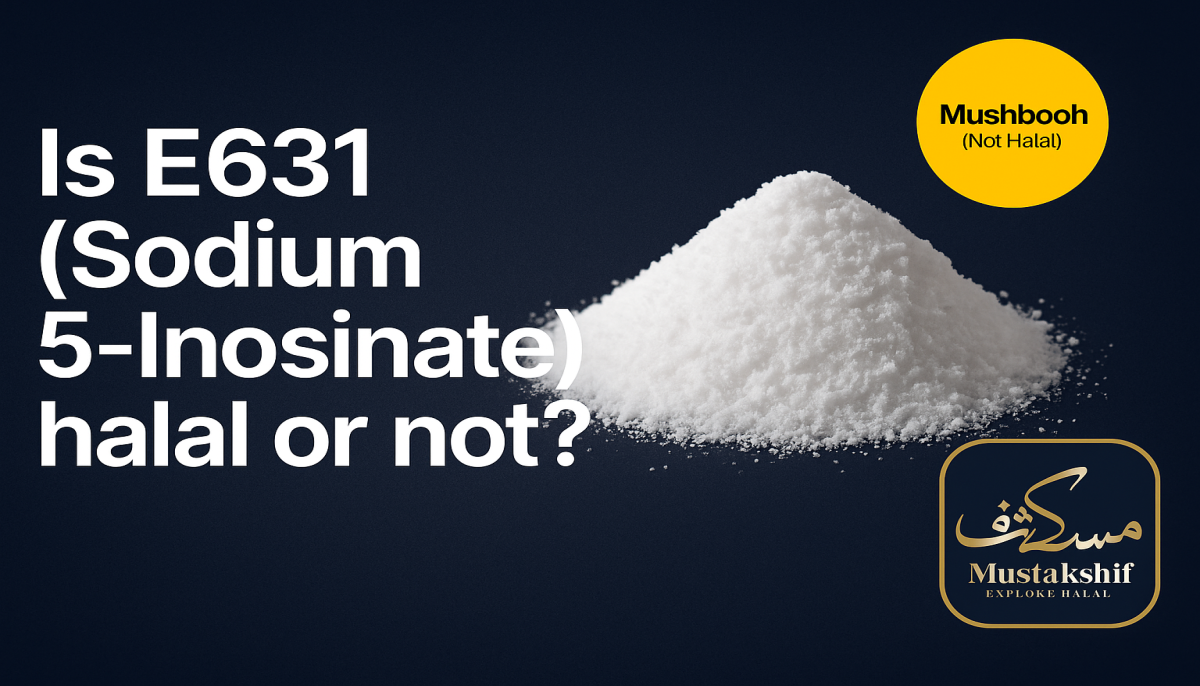
According to Mustakshif Shariah Board, E631 is classified as mushbooh. The halal status of Sodium 5-Inosinate depends on its source. If derived from non-halal animal parts, it is haram. When produced via plant-based fermentation or halal-certified sources, it is considered halal. Without clear information or certification, it is classified as mushbooh and should be avoided by cautious consumers.
Fatwas concerning the ingredient
Several Islamic scholars advise confirming the source before consumption. Many fatwas prohibit E631 if sourced from pork or non-halal meat. Some permit it if it comes from halal fermentation processes.
Introduction of Ingredient
E631 is the food additive code for Sodium 5-Inosinate. It is also called disodium inosinate or IMP (inosine 5'-monophosphate). This ingredient is a flavour enhancer commonly used alongside monosodium glutamate (MSG) to intensify savory tastes in foods.
How is Sodium 5-Inosinate extracted?
Sodium 5-Inosinate is extracted mainly from animal sources such as fish or meat. It can also be produced by the fermentation of carbohydrates using bacteria. The animal-based source raises halal concerns because it may come from pork or non-halal animals. Fermentation-based production uses plant sugars, making it potentially halal if processed under appropriate conditions.
Uses of the Ingredient
E631 acts as a flavour enhancer. It improves the umami taste in processed foods like soups, snacks, sauces, and instant noodles. It works well with MSG to make flavours richer and more appealing. It is also used in pet foods.
Conclusion
Sodium 5-Inosinate (E631) enhances flavour but may cause halal doubts due to animal sources. Always look for halal certification or a reliable source of information.