Mustakshif Shariah Board Rulings on E641 (L-leucine)
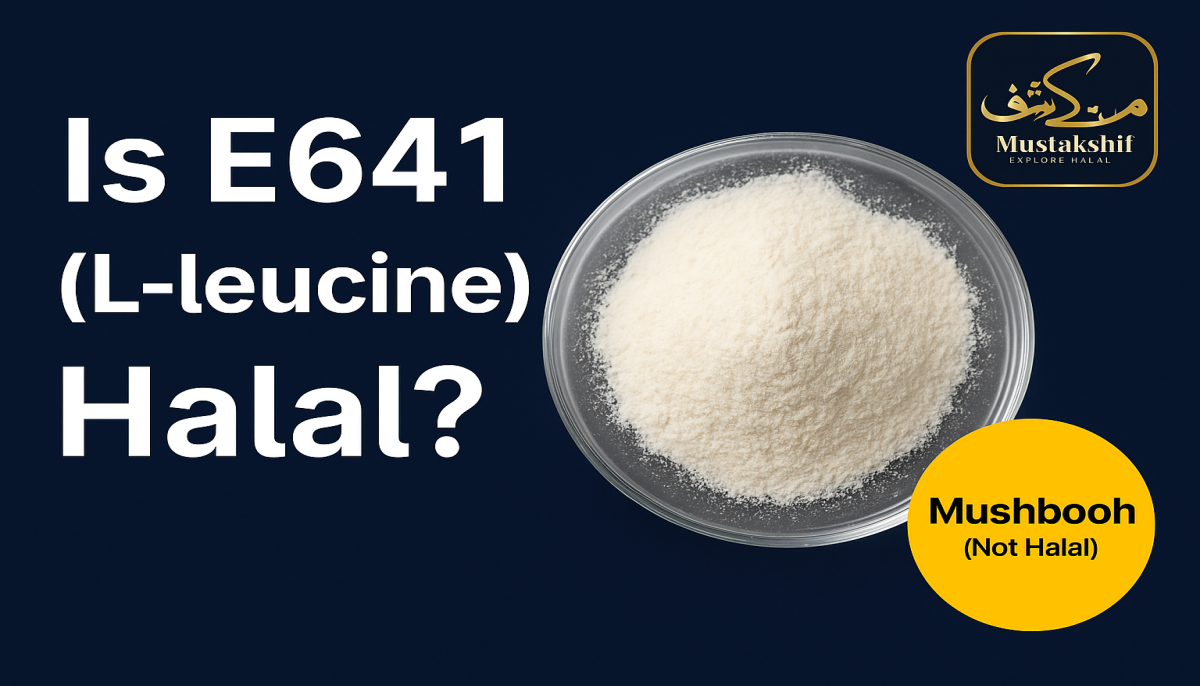
According to Mustakshif Shariah Board, E641 (L-Leucine) is classified as Mushbooh (not Halal) Its ambiguous origin, plant or animal, is the source of this. The outcome may not satisfy halal requirements if the source uses non-halal animal products or production procedures that are not properly supervised. Consumers should verify sourcing with manufacturers or halal certifiers.
Religious perspectives on e641
There aren't many specific fatwas on e641 or L-leucine. However, many scholars advise caution unless the product is clearly labelled halal. Some halal certification bodies may approve it if plant-based or fermentation-derived and free from contamination during production.
About ingredient E641: the basics
Labelled under e-code E641, L-leucine is an amino acid found in many foods. Known by names such as l-2-amino-4-methylpentanoic acid, (s)-2-amino-4-methylpentanoic acid, and leu, it’s part of the branched-chain amino acids (BCAS) vital for human health. This essential nutrient contributes to building and repairing muscle tissues and finds regular application in the nutrition and wellness industries. Unlike non-essential amino acids, the body cannot produce them, making dietary intake crucial.
How L-leucine is obtained
This substance is categorised as a dietary supplement or vitamin. It can be traced back to components derived from either plants or animals. Soy, corn, wheat, milk and eggs are a few examples. Another well-liked method involves using specialist microorganisms to digest glucose and other carbs. Purified, crystallised L-leucine suitable for usage in industrial and nutritional goods is the result. Because of the great purity guaranteed by the procedure, it can be used in supplements and fortified foods.
How does it benefit food and industry?
In food, L-leucine acts mainly as a nutritional booster. Its role in enhancing protein content makes it a staple in health drinks and performance-focused meals. Medical nutrition formulas also benefit from its presence due to its ability to promote muscle recovery. Although less frequently, it may serve to improve flavour. Outside food, you’ll find it in cosmetics for its hydration support and pharmaceuticals, where it’s added as a filler or carrier.
Final words
E641, or L-leucine, supports nutrition and wellness across industries. Whether in health foods or skincare, its impact is notable. However, due to mixed sourcing methods, consumers concerned with halal compliance should look for certified alternatives or contact manufacturers for verification.