Mustakshif Shariah Board Rulings on Gelling Agents
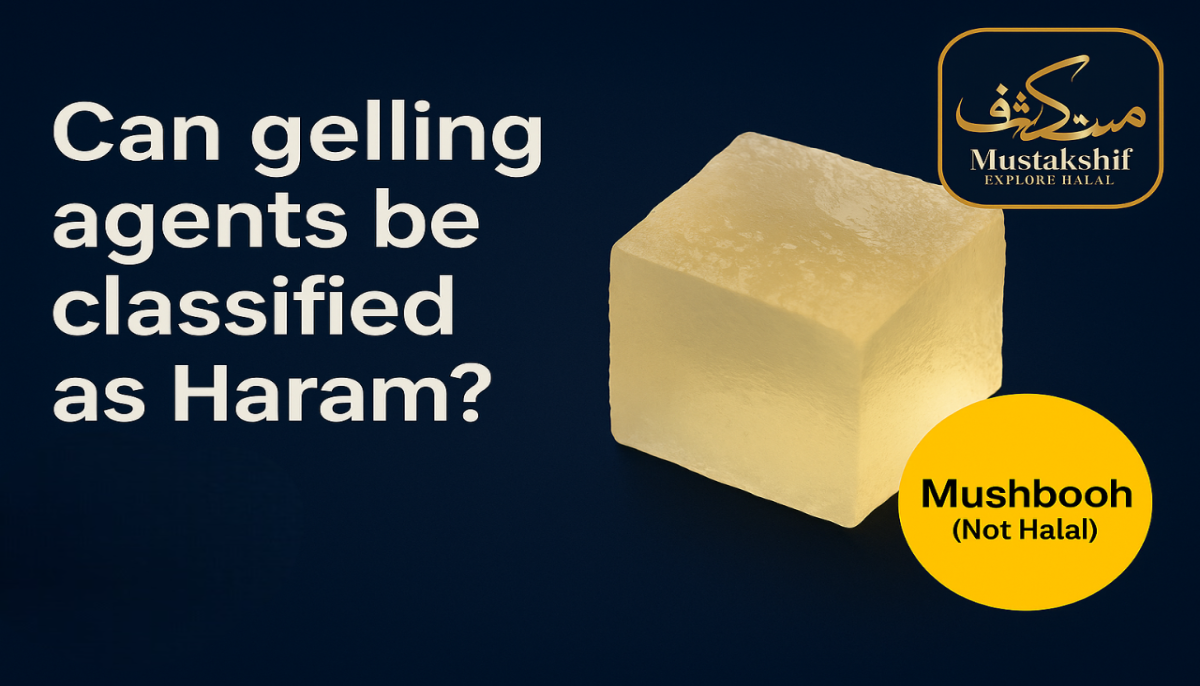
According to Mustakshif Shariah Board, Gelling Agent is regarded as mushbooh (doubtful). Gelling agents fall into this uncertain category due to diverse origins. Plant- and microbial-based versions generally meet halal standards. However, gelatin often comes from animals not slaughtered according to Islamic law, making its permissibility questionable. Clarity on the halal status depends heavily on verification from producers or certification bodies.
Scholarly opinions and fatwas
While no universally binding ruling exists, many scholars recommend caution unless the source is verified. Several fatwa councils advise Muslim consumers to opt for plant- or bacterial-based gelling substances unless gelatin or synthetic types are certified halal by trusted authorities.
Understanding the gelling agent
Gelling agents transform liquids into semi-solid gels. These substances go by multiple names, including gelation agents, gelifiers, or thickeners, when focusing on their binding properties.
Extraction and origin
Gelling agents belong to the class of protein or polysaccharide-based hydrocolloid additives. Their sources span across four major categories:
- Plants: agar-agar extracted from red algae, pectin from apples and citrus, and starch from tubers or grains.
- Animals: Gelatin is processed from collagen found in bones and skin.
- Microbes: Xanthan gum is generated by bacterial action on sugars.
- Lab-made: Synthetic options like carboxymethyl cellulose (CMC) are created through chemical processes.
Each source involves a distinct method. For instance, agar comes from boiling seaweed, followed by purification. Pectin results from acidic extraction of fruit peels. Gelatin is obtained by simmering animal tissue to retrieve collagen. Xanthan gum stems from fermentation. CMC is chemically altered from cellulose.
Functional use across industries
Gelling agents influence product texture and structure across many applications:
- In food: used in jams, jelly, dairy products, sauces, and sweets to create a soft-solid consistency and stabilise mixtures.
- In medicine, essential in gels, capsules, and time-release pills, ensuring consistent delivery and safe handling.
- In personal care, found in lotions, shampoos, and creams to maintain consistency and shelf stability.
- In manufacturing, applied in paints, glues, and coatings needing a stable, gelled format.
By retaining water and forming a gel matrix, these additives maintain quality, improve mouthfeel, and prevent ingredient separation.
Closing notes
Gelling agents are widely used across several industries to stabilise and create structure. Though useful, their halal status requires scrutiny due to varied sourcing. Consumers seeking halal options should prioritise plant or certified synthetic alternatives. Always check labels for transparency and choose verified plant or microbial alternatives while selecting.