Mustakshif Shariah Board Rulings on Confectionery Glaze
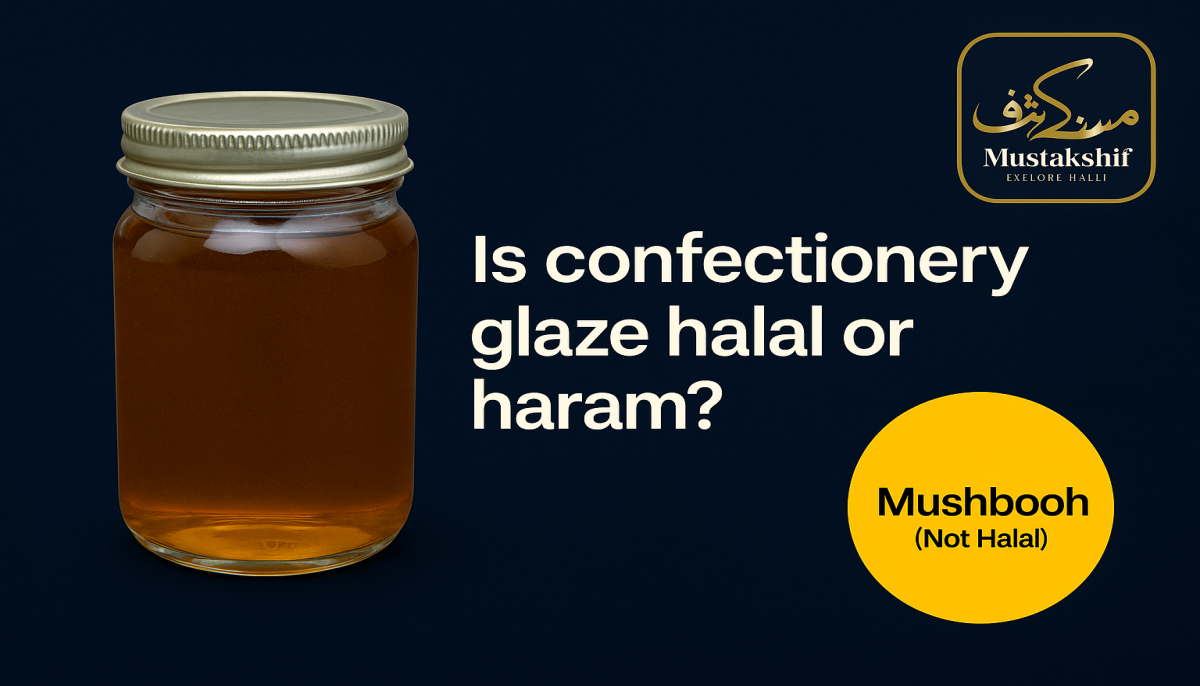
According to Mustakshif Shariah Board, confectionary glaze is regarded as mushbooh (nothalal). Islamic scholars are divided on the permissibility of shellac, the primary component of confectionery glaze. Some scholars consider it halal, reasoning that it is a resin secreted by the lac bug and not the insect itself. However, many other scholars classify it as haram or mashbooh due to its insect origin and the fact that it is often processed using alcohol. Notably, fatwas from the Hanafi school, such as from Mufti Arshad Ali, advise Muslims to avoid shellac-based products unless their halal status is clearly verified.
Introduction
Confectionery glaze is a shiny, food-safe coating that adds a smooth, glossy finish to sweets like candies, chocolates, and pastries. Beyond its visual appeal, it also acts as a protective barrier, helping to seal in freshness and prevent treats from sticking together. This versatile glaze is known by multiple names, including confectioner's glaze, pharmaceutical glaze, resinous glaze, and natural glaze.
What Is Confectionery Glaze?
Confectionery glaze is a food-grade coating that gives a glossy finish to candies, chocolates, pastries, and other sweet treats. This food additive is widely used to prolong shelf life and prevent sticking.
How is confectionery glaze produced?
The production of confectionery glaze follows a carefully controlled process that transforms natural resin into a food-grade coating. Here's a breakdown of the key steps involved:
- The process begins with the collection of shellac, a natural resin secreted by the lac bug (Kerria lacca). These insects colonise certain trees in Southeast Asia and India, leaving behind resinous deposits on the branches. The resin is harvested by scraping it from the tree bark.
- The raw shellac is then cleaned and refined to remove debris, insect parts, and other impurities. This step ensures the shellac is safe and consistent in quality for food use.
- The purified shellac is dissolved in a solvent, typically alcohol, to create a smooth liquid glaze. This makes it suitable for easy application to a variety of food products.
- The liquid glaze is applied to confections and baked goods using methods like dipping, spraying, or brushing, depending on the desired finish and type of product.
- Once applied, the glaze is left to dry. As the solvent evaporates, it leaves behind a hard, glossy coating that enhances appearance, prevents sticking, and extends shelf life.
Functions of confectionery glaze:
Coating
This glaze forms a glossy, protective layer on confectionery products such as candies, chocolate, and nuts, contributing to both appearance and preservation.
Sealing
It serves as a barrier against moisture loss, helping maintain product freshness and extend shelf life.
Decoration
The glaze adds a smooth finish that enhances the look and presentation of sweets and chocolates.
Final Thoughts:
Confectionery glaze serves important functional and aesthetic purposes in the food industry, providing shine, protection, and longer shelf life. Its Islamic permissibility remains a subject of debate. While its origin and processing leave questions about its permissibility. So, Muslims are advised to exercise caution and opt for halal-certified alternatives whenever possible to ensure compliance with Islamic dietary guidelines.