Mustakshif Shariah Board Rulings on Sodium Caseinate
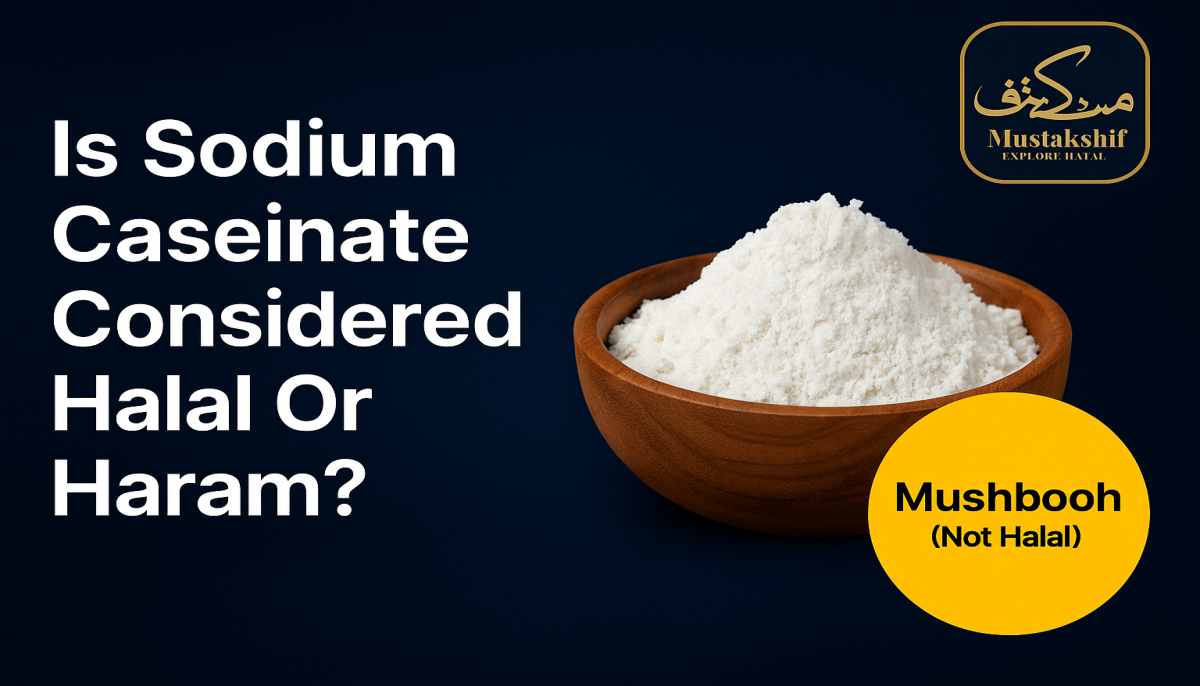
According to Mustakshif Shariah Board, sodium caseinate is classified as mushbooh due to potential uncertainties during processing. While the milk source itself is halal, concerns arise regarding:
- The origin of the enzymes used in coagulation
- Cross-contamination with non-halal substances
- Processing equipment shared with haram ingredients
Several halal certification bodies permit their use when manufacturers provide verifiable documentation about sourcing and production controls.
Religious rulings and scholarly perspectives
Some halal authorities caution against consuming sodium caseinate unless its enzyme source is verified. Others permit it when plant-based or microbial enzymes are confirmed. No universal fatwa exists, and Muslims are advised to check product certifications or contact manufacturers directly for clarity.
A brief introduction to sodium caseinate
Sodium caseinate belongs to a group of compounds called caseinates, formed by treating casein with sodium hydroxide. This white, odourless powder serves multiple roles in food manufacturing due to its water-soluble nature and binding capabilities. Unlike some additives with limited applications, this ingredient features prominently across various product categories.
The extraction and formation process
Sourced from cow’s milk, sodium caseinate belongs to protein-based emulsifiers. The creation process begins by acidifying fresh milk, which separates casein proteins from the liquid whey. Following separation, the curds go through a thorough washing and purifying step to remove fats and unwanted elements. Once refined, these curds react with sodium hydroxide or sodium carbonate. This step transforms pure casein into its sodium salt form. The resulting material is dried into a fine powder for versatile industrial use.
How does this ingredient function across food products
Sodium caseinate offers multiple benefits:
- Creating stable emulsions in coffee whiteners and cream liqueurs
- Improving mouthfeel in low-fat dairy alternatives
- Extending freshness in packaged bakery items
- Enhancing protein content in nutritional supplements
The confectionery industry incorporates it to prevent sugar crystallisation, while processed meat producers rely on its moisture-binding qualities. Even non-dairy creamers contain this milk derivative despite their plant-based marketing claims.
Final thoughts
Sodium caseinate continues to serve as a multipurpose ingredient in food manufacturing. While rich in functional value, its source raises legitimate concerns for observant individuals. Verifying its origin remains key for those seeking to follow strict dietary guidelines.