Mustakshif Shariah Board Rulings on Sour Cream
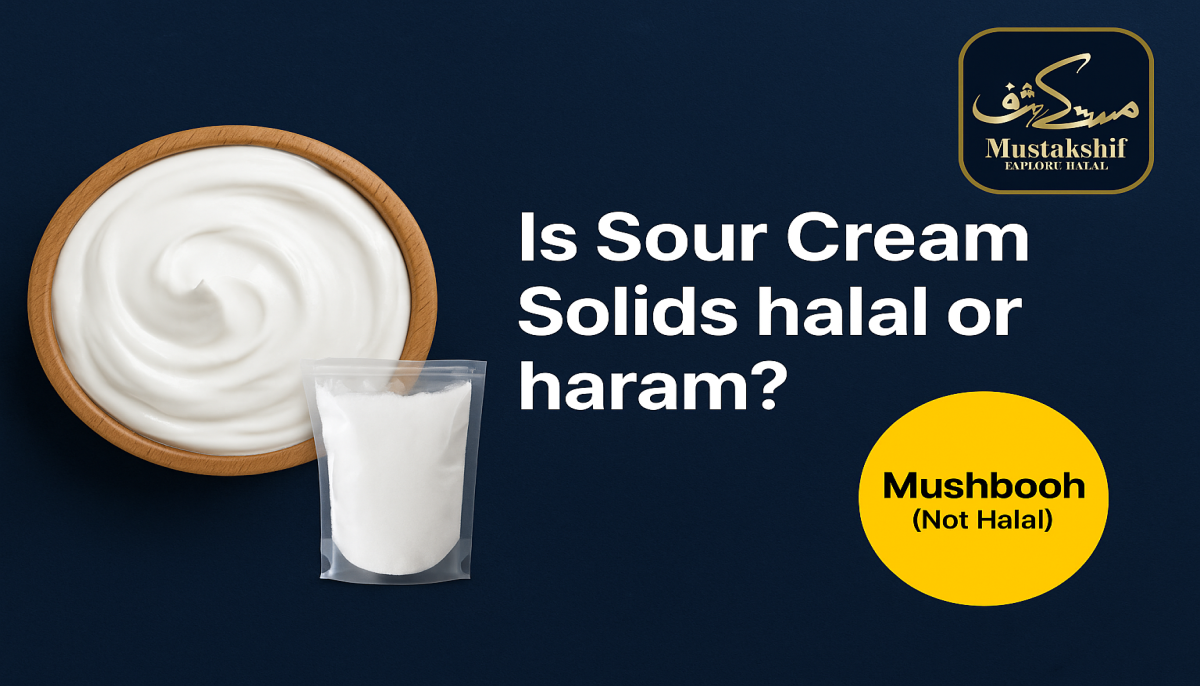
According to Mustakshif Shariah Board, sour cream solids is Mushbooh (doubtful). This uncertainty arises due to the potential inclusion of non-halal ingredients during production, such as:
Gelatin: Often used as a stabilizer, which may be derived from non-halal animal sources.
Enzymes: Utilized in fermentation, which can be sourced from animals not slaughtered according to Islamic law.
Without clear labeling or certification, it's challenging to determine the permissibility of these additives, leading to a Mushbooh classification.
Fatwas Concerning the Ingredient
Islamic scholars advise caution with ingredients like sour cream solids that have ambiguous sources. They recommend:
Seeking halal certification: Ensures all components meet Islamic dietary laws.
Contacting manufacturers: To inquire about the sources of additives and processing aids.
This approach aligns with the principle of avoiding doubtful matters in Islamic jurisprudence.
Introduction of Ingredient
Sour Cream Solids are dehydrated forms of sour cream, commonly used in the food industry for their tangy flavor and creamy texture. They are also known as dried sour cream or sour cream powder. These solids are favored for their extended shelf life and ease of storage compared to fresh sour cream.
How is it extracted?
Sour cream solids are produced by fermenting pasteurized cream with lactic acid bacteria, resulting in the characteristic sour taste and thick consistency. The fermented cream is then dehydrated, typically through spray drying, to remove moisture and create a powder form. This process preserves the flavor and allows for longer storage without refrigeration.
Uses of the Ingredient
In the food industry, sour cream solids are utilized as flavor enhancers and texture improvers. They are commonly found in:
Snack seasonings: Providing a tangy flavor to chips and crackers.
Baked goods: Enhancing moisture and richness in products like muffins and breads.
Sauces and dressings: Contributing creaminess and depth of flavor.
Instant mixes: Used in soup and sauce powders for convenience.
Their versatility makes them a popular choice in various culinary applications.
Conclusion
Sour cream solids are widely used in the food industry for their flavor and functional properties. However, due to the potential inclusion of non-halal additives, their status is considered Mushbooh. Consumers concerned with halal compliance should look for certified products or verify ingredient sources with manufacturers to ensure permissibility.