Mustakshif Shariah Board Rulings on Synthetic Colour Additives
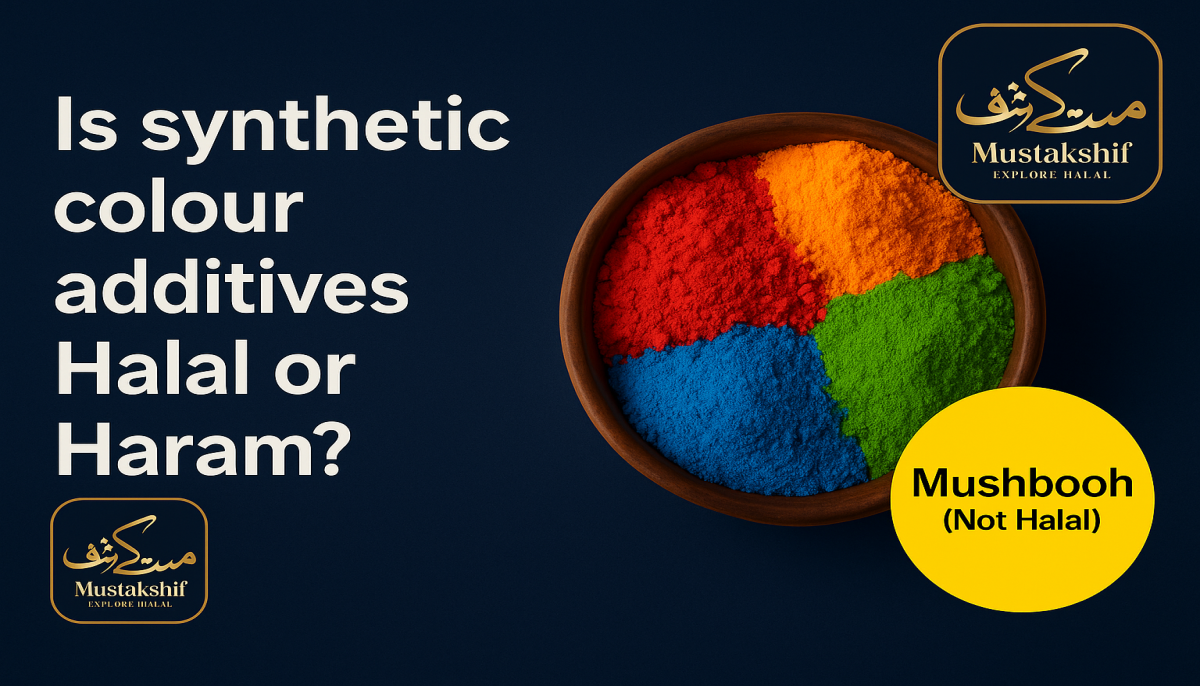
According to Mustakshif Shariah Board, Artificial colours are classified as mushbooh (doubtful). This uncertainty is mainly due to their petrochemical origins and the ambiguity in their processing methods. Stabilisers or carriers used in the synthesis may include alcohol or ingredients derived from non-halal sources. Consumers are advised to seek certified halal products or opt for natural alternatives when uncertain.
Available fatwas and scholarly advice
Fatwas from organisations like the Islamic Food and Nutrition Council of America (IFANCA) emphasise scrutinising individual additives. While some synthetic colours receive halal certification after rigorous checks, others remain questionable without transparent manufacturing details. Scholars encourage manufacturers to disclose processing methods to ease consumer concerns.
What are artificial colours?
Artificial colours, commonly known as synthetic dyes, food colourants, or colour additives, are chemically produced substances used to enhance or modify the appearance of various products. Although they carry specific E-numbers depending on the colour used, the general group is often simply referred to as artificial colourants. These additives are classified as dyes due to their main function in altering visual characteristics.
Chemical production and sources
Manufactured through controlled chemical synthesis, these dyes undergo multiple stages. Raw petrochemical compounds react to form specific pigments, followed by purification to eliminate impurities. Stabilisers are then added to maintain colour intensity under various conditions, ensuring longevity in products. The result is a concentrated, uniform dye suitable for industrial applications.
Role and application in modern Industries
Used widely in confectionery, fizzy drinks, ready meals, bakery goods, and sauces, artificial colours make products more visually appealing and consistent.
Cosmetics manufacturers incorporate them into lipsticks, lotions, and blushes for precise shades. Pharmaceutical companies add them to tablets and syrups for easy identification.
Outside consumables, synthetic dyes are employed in textile manufacturing and even industrial materials to achieve vivid, lasting colours.
Closing Reflection
While synthetic colours offer broad functionality in numerous industries, questions about their permissibility in Islam remain. Due to uncertain production methods and sources, artificial colours currently fall under the mushbooh category, warranting careful scrutiny by conscious consumers.