Mustakshif Shariah Board Rulings on Thiamine Monophosphate
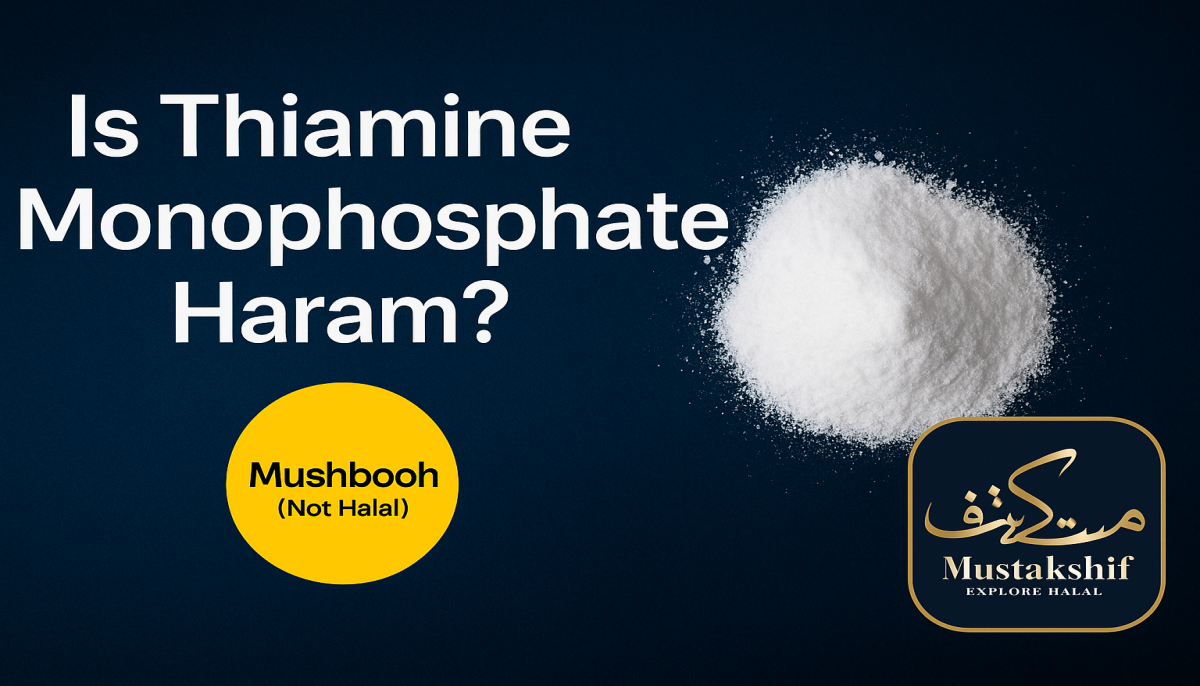
According to Mustakshif Shariah Board, Thiamine monophosphate is classified mushbooh. Its chemical processing, which may use alcohol-based catalysts or non-halal sources, is the source of this uncertainty. Religious scholars cannot proclaim something to be halal or haram with confidence if the production facts are not fully transparent.
Scholarly insights and religious guidance
No specific fatwas address TMP directly, but general guidelines advise checking sourcing methods. Consumers should seek halal-certified supplements or consult religious authorities when in doubt.
A quick overview of thiamine monophosphate
Thiamine monophosphate, commonly shortened to TMP, belongs to the group of vitamin derivatives. It is a phosphorylated form of vitamin B1 compounds and is often included in nutritional formulations. TMP holds relevance in both dietary supplementation and food fortification. This derivative offers enhanced stability, making it ideal for food fortification.
Origin and production
TMP naturally exists in certain whole foods, including legumes, pork, and unrefined grains. It is typically manufactured by transforming thiamine through chemical or enzymatic treatment. The outcome is a more stable compound suitable for incorporation into commercial products. This method retains the integrity of thiamine while improving its durability in processing.
Practical applications and food-related uses
TMP increases thiamine levels in a range of food goods. It supports the metabolic conversion of carbohydrates into usable energy while also contributing to the health of the nervous system. Manufacturers use it to prevent low vitamin B1 levels, particularly in populations at risk of deficiency. It appears in dietary supplements, cereals, and energy drinks, offering an accessible source of essential vitamins.
Final thoughts
Through its role in energy synthesis and neurological health, thiamine monophosphate provides nutritional advantages. Although its application in food fortification is expanding, people who are on a restricted diet should use caution. Because of its mushbooh status, more research into its manufacturing and well-informed decision-making is required.