Mustakshif Shariah Board Rulings on Vitamin A (Retinol)
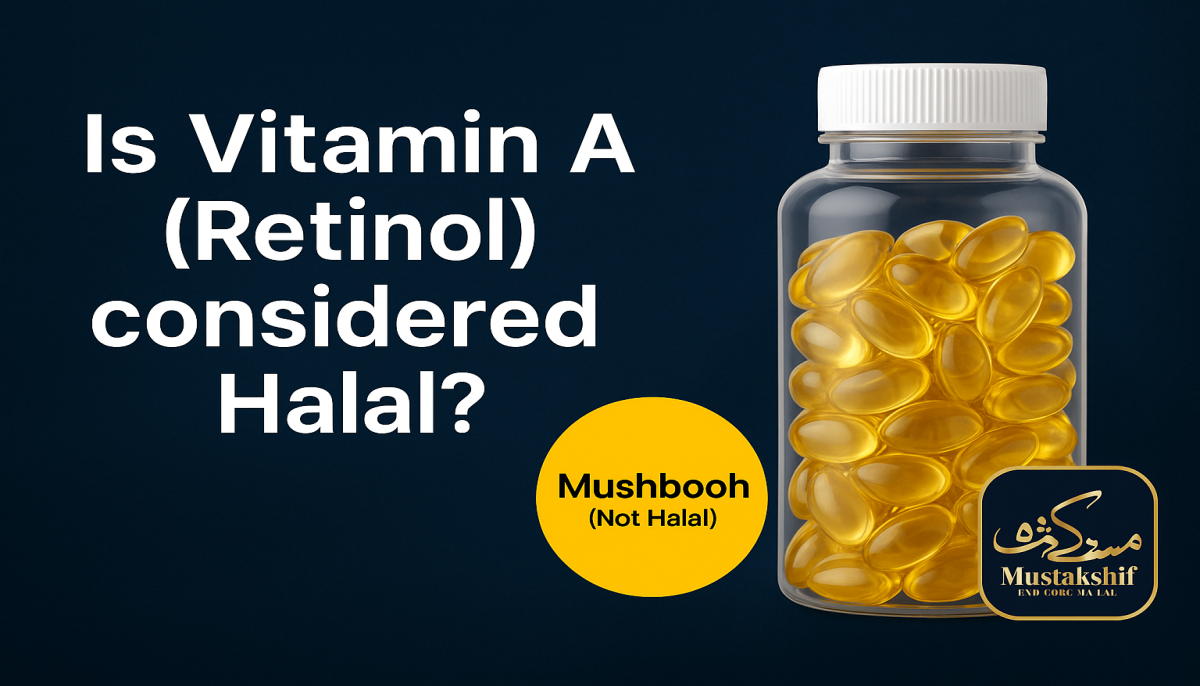
According to Mustakshif Shariah Board, Vitamin A (Retinol) is considered Mushbooh (doubtful). The halal status of Retinol depends on its source and the materials used in its production. If derived from halal-slaughtered animals or synthesized using halal-compliant ingredients, it’s considered halal. However, if sourced from non-halal animals or involves haram substances during synthesis, it is deemed haram.
Introduction of Ingredient
Vitamin A, specifically in the form of Retinol, is a fat-soluble vitamin essential for vision, immune function, and skin health. It is commonly found in animal-derived foods and is also used in dietary supplements and cosmetic products. Synonyms for Retinol include Vitamin A1, all-trans-retinol, and retinyl alcohol.
How is it extracted?
Retinol can be obtained from both natural and synthetic sources. Naturally, it is present in animal products like liver, dairy, and fish. Industrially, Retinol is synthesized using chemical processes starting from compounds like β-ionone, which can be derived from plant-based sources or synthesized chemically. The synthetic form is often used in fortified foods and cosmetics.
Functions of Vitamin A
Retinol is widely used in the food industry to fortify products such as margarine, cereals, and dairy, aiming to prevent Vitamin A deficiency. In cosmetics, it’s valued for its role in skin health, commonly found in anti-aging creams, serums, and lotions. It helps in reducing wrinkles, improving skin texture, and treating acne.
Conclusion
Retinol (Vitamin A) is a vital nutrient with widespread use in the food and cosmetic industries. Its halal status is contingent upon its source and the methods employed in its production. Consumers concerned with halal compliance should seek products with clear labeling or halal certification to ensure permissibility.