Mustakshif Shariah Board Rulings on E354: Calcium tartrate
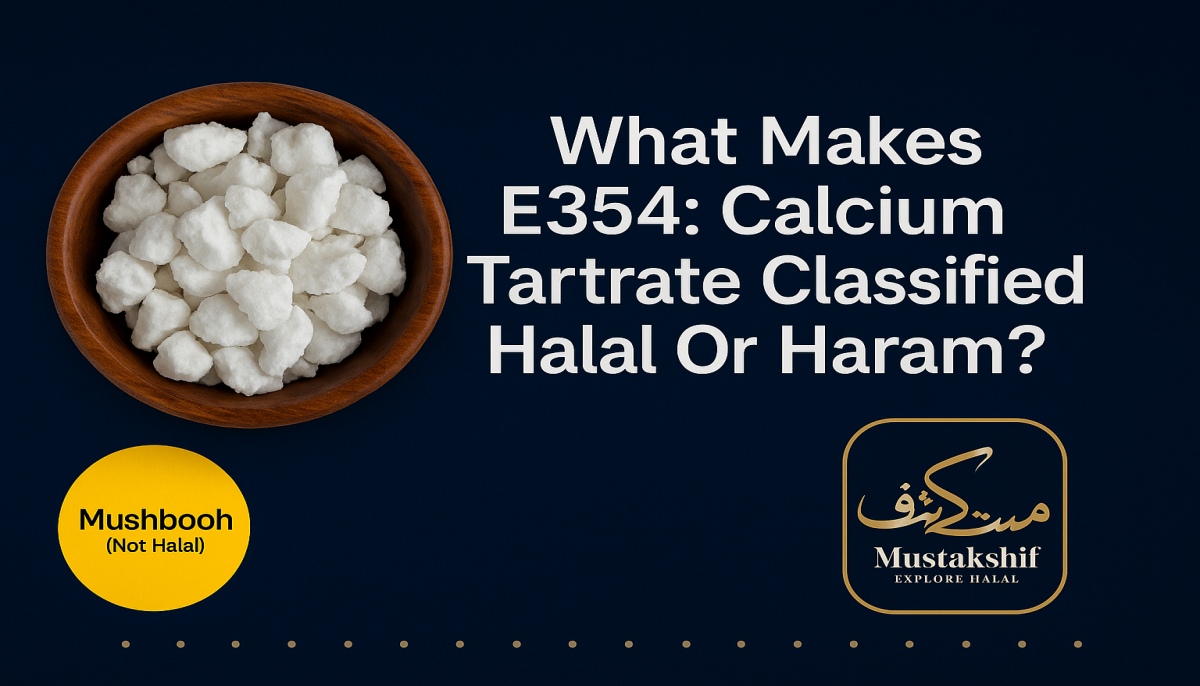
According to Mustakshif Shariah Board, Calcium tartrate has been labelled mushbooh, meaning its halal status is uncertain. Although the base material comes from a natural source, there are concerns about possible cross-contamination during manufacturing. Particularly if they are obtained industrially, the chemicals or processing aids used may not be halal. Its unclear categorisation under Islamic dietary regulations results from this lack of openness.
Religious rulings and guidance
At present, no conclusive fatwa has declared E354 entirely halal or haram. Islamic scholars and food certification bodies urge consumers to verify sourcing when possible or opt for certified alternatives.
Introduction to calcium tartrate (E354)
Ingredient E354, more commonly known as calcium tartrate, also appears under the names tartaric acid calcium salt or calcium salt of tartaric acid. This compound is widely recognised as a stabiliser and sequestrant in processed food and beverages. The code E354 identifies its regulated use across international food standards. Its role in food processing ensures product consistency and longevity.
Where it comes from and how it’s made
This additive originates from tartaric acid, a naturally occurring compound found in grapes and some other plants. During wine fermentation, tartaric acid is extracted as a natural by-product. Once collected, it undergoes a reaction with calcium carbonate or calcium hydroxide. This chemical interaction forms calcium tartrate. After this, it goes through purification to eliminate remaining impurities, followed by drying and quality testing before it’s used in consumables.
Functions
In baked goods, calcium tartrate boosts structure and helps achieve better texture and volume. In dairy production, it enhances product consistency and shelf stability. Food technologists rely on it to trap unwanted metal ions, stopping reactions that may spoil colour or taste. Even pharmaceutical companies use it in tablets and capsules. Within the winemaking sector, it serves an essential purpose: stopping tartrate crystals from forming in bottled wine.
Final thought
E354, or calcium tartrate, serves several important roles in food, wine, and medicine. Despite its plant origin, the mushbooh classification calls for cautious consumption among observant Muslims.