Mustakshif Shariah Board Rulings on E475: Polyglycerol Esters
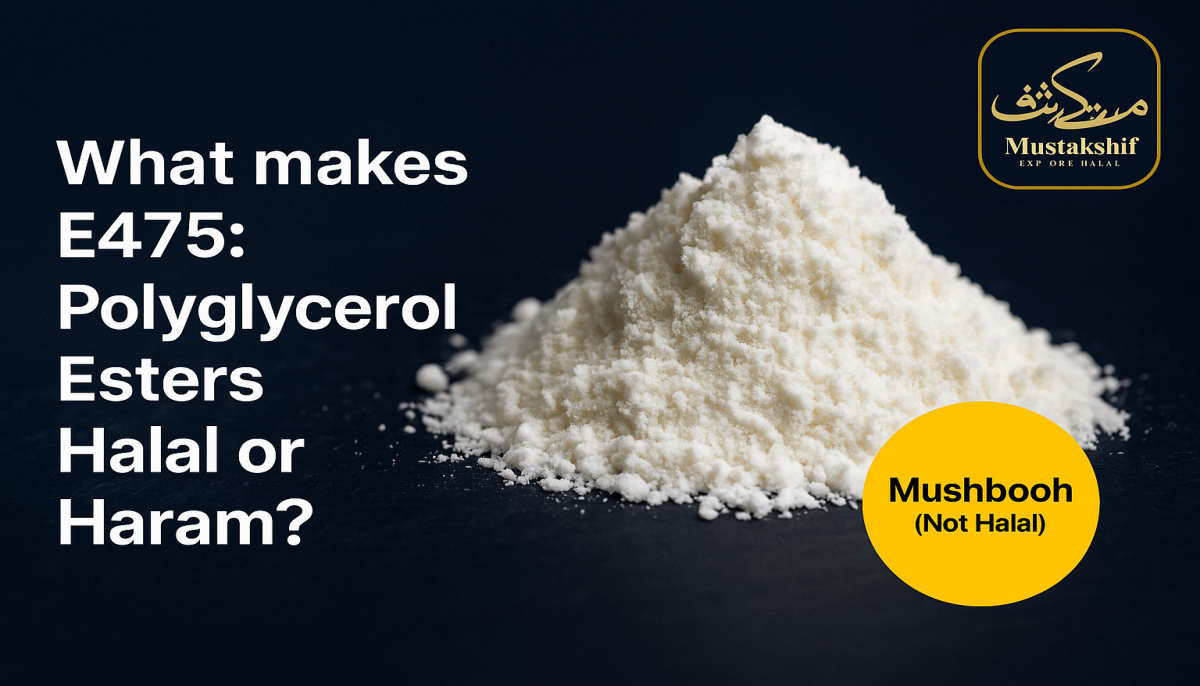
According to Mustakshif Shariah Board,E475: Polyglycerol Esters is classified as mushbooh. While its primary elements originate from plant-based materials, the exact source of fatty acids isn’t always known or confirmed. If derived from animal fat not slaughtered per Islamic law, it may not meet halal standards. The uncertainty around sourcing keeps it under scrutiny.
Fatwas and religious guidance
In general, reputable halal bodies advise using e475 with caution. Scholars frequently advise against it because of the potential for contamination with animal fats unless the maker offers complete traceability of its vegetable-only origin. Until it is confirmed to be plant-based, several organisations classify it as dubious.
Quick overview on E475
E475, labelled as polyglycerol esters of fatty acids (PGE). You might also find them labelled as polyglycerol esters, polyglycerides or PGFA. This synthetic additive is mainly used in the food industry for its stabilising and texturising properties.
Ingredient sourcing – where E475 begins
This additive belongs to the group of emulsifiers. The fatty acid element generally comes from vegetable oils like soy, sunflower, or palm. Polyglycerol, the other half of the molecule, is created by heating glycerol. Interestingly, glycerol itself may either be sourced from vegetable oils or left over from biodiesel manufacturing.
How is it manufactured?
The production of e475 involves a step-by-step chemical interaction:
- Polyglycerol creation: glycerol undergoes polymerisation using heat and a catalyst.
- Esterification: Polyglycerol is combined with fatty acids through a tightly controlled chemical reaction.
- Final refinement: Excess or unwanted elements are filtered out, leaving behind a clean additive suitable for consumption.
Multiple roles across food production
This additive excels in multiple roles:
- keeps oil and water from separating, especially in margarine or sauces
- enhances volume in bakery products, resulting in softer loaves and lighter cakes
- improves texture by offering a smoother bite in chocolates and pastries
- prevents ingredient breakdown over time, keeping mixtures consistent and stable
Final paragraph
E475, or polyglycerol esters of fatty acids, is a multifunctional ingredient in everyday food and personal care items. Although largely created from vegetable oils, ambiguity around its fatty acid source earns it a mushbooh status. Checking product labels or contacting manufacturers can help clarify its origin before use.