Mustakshif Shariah Board Rulings on Potassium Nitrate (E252)
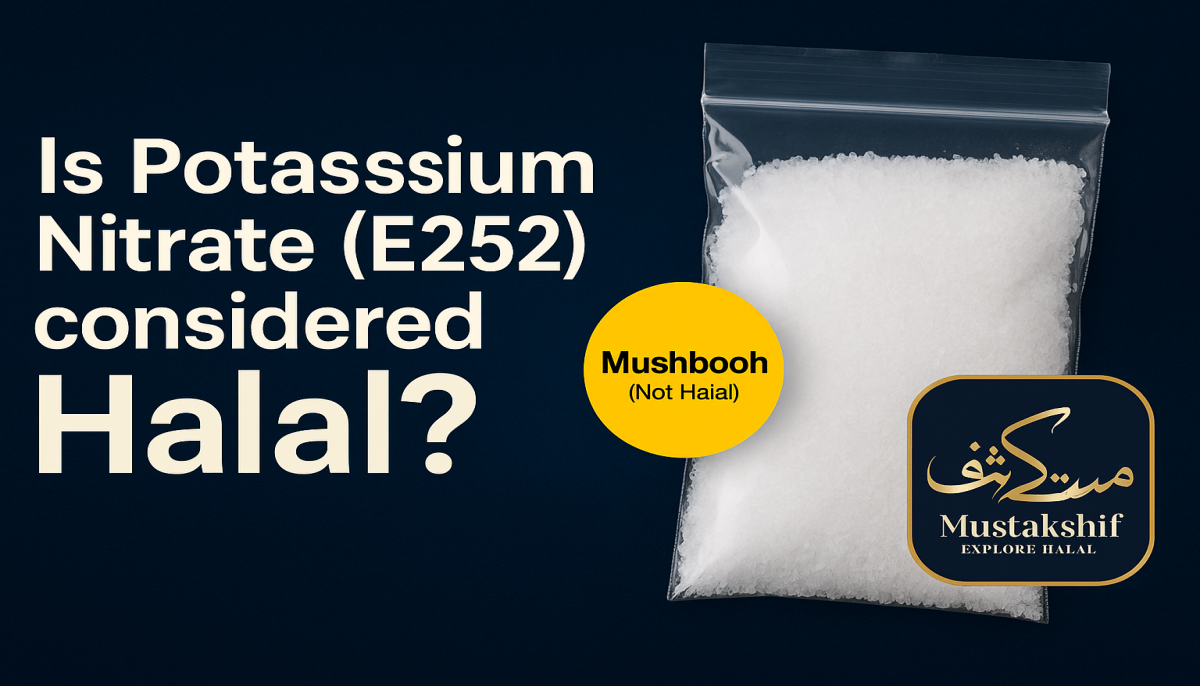
According to Mustakshif Shariah Board, the status of potassium nitrate is marked as mushbooh, meaning doubtful. The concern arises from potential sources used during manufacturing, which may involve waste materials derived from animals or plants. When the origin isn't clearly plant-based or synthetic, it causes uncertainty among scholars.
Scholarly opinions and rulings
While official fatwas specifically about E252 remain limited, Islamic scholars generally advise caution with ingredients of unclear origin. In the absence of confirmed halal certification or guaranteed synthetic production, consumers are often recommended to avoid it when possible or seek certified alternatives.
Understanding the compound known as E252
Potassium nitrate, labelled as E252, is a chemical compound widely used in various industries. Often referred to as saltpetre or simply KNO₃, it’s particularly recognised for its role in preserving food, especially meat products.
Origins: Where does E252 come from?
Classified as a preservative, E252 originates from both natural and manufactured sources. Naturally, it occurs in mineral deposits and soil. However, to meet commercial demand, it’s frequently created through chemical synthesis. One method involves reacting potassium chloride with sodium nitrate. Another approach combines potassium chloride with nitric acid. Following synthesis or extraction, the compound undergoes purification to remove unwanted elements and ensure it’s fit for consumption. Both sources aim to deliver a refined, food-grade substance suitable for consumption.
purposes and functions in practical use
In the culinary world, E252 serves as a trusted curing agent. It enhances the shelf life of meat products by hindering bacterial development, particularly those microbes linked to botulism. In addition, the potassium nitrate helps cured meats retain their appealing pink hue, commonly associated with traditional ham, bacon, and sausages.
Outside food processing, potassium nitrate finds purpose in fertilisers due to its nitrogen-rich content. In chemical sectors, it’s instrumental in explosive formulations, owing to its ability to support combustion.
Final thoughts
Potassium nitrate (E252) plays a crucial role in modern food preservation and agricultural production. However, due to its doubtful status in Islamic law, careful consideration is essential for those observing halal guidelines. Understanding both its source and function can aid in making informed choices.